
Desserts
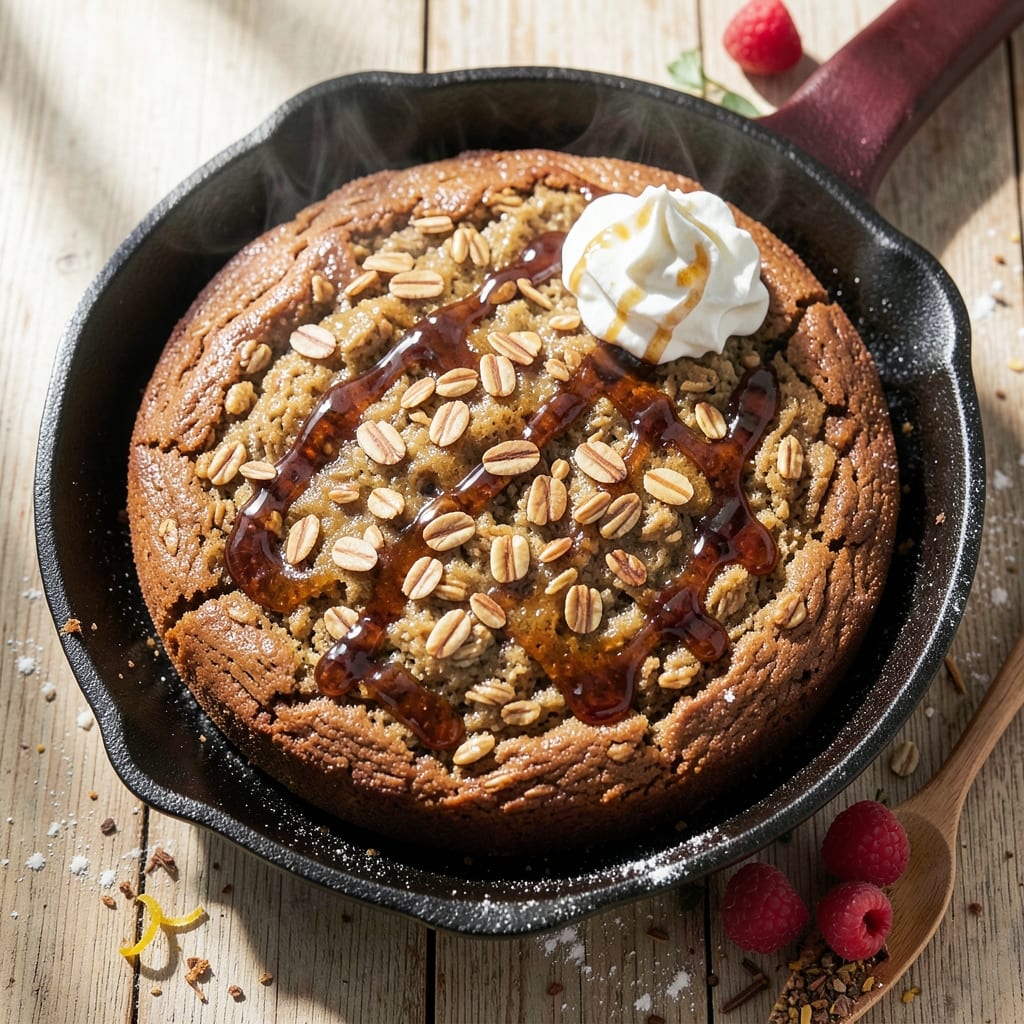
This baked oatmeal cake recipe delivers a moist, tender crumb packed with warm cinnamon notes that taste like autumn in every bite. The secret lies in combining rolled oats with buttermilk and brown sugar for rich depth, while a touch of baking powder ensures perfect rise without dryness. I developed this version after years of perfecting the balance—no gummy texture or crumbly disappointment here.
The beauty of this recipe is its foolproof nature: no special equipment needed, just a standard mixing bowl and oven. The oats add hearty texture while absorbing moisture beautifully, while cinnamon and vanilla create that cozy spice profile. Bake at 350°F for about 45 minutes until golden—no guesswork involved. The result? A cake that stays moist for days when stored properly.
What makes this recipe stand out is its versatility—serve it warm with whipped cream for dessert or chilled with yogurt for breakfast. The natural sweetness from brown sugar means you can reduce added sugar if desired without sacrificing flavor. Perfect for holiday gatherings or weeknight treats when you crave something comforting yet impressive.
Optional variations include folding in dried fruit like raisins or chopped apples, or topping with a streusel layer before baking. For extra richness, a drizzle of honey or caramel sauce elevates each slice. Let's get baking!
Ingredients for baked oatmeal cake
These twelve ingredients blend to create a moist, cinnamon-spiced oatmeal cake with perfect texture.
| Ingredient | Amount | Notes |
|---|---|---|
| Rolled Oats 🌾 | 1 ½ cups | Old-fashioned, not quick oats |
| All-Purpose Flour 🌾 | 2 cups | Spooned and leveled |
| Brown Sugar 🍯 | 1 ¼ cups | Packed firmly for accuracy |
| Buttermilk 🥛 | 1 cup | Room temperature preferred |
| Granulated Sugar 🍚 | ½ cup | For balanced sweetness |
| Unsalted Butter 🧈 | ½ cup | Softened but not melted |
| Large Eggs 🥚 | 2 whole | Room temperature for best mixing |
| Pure Vanilla Extract 🌿 | 1 tbsp | High-quality preferred |
| Ground Cinnamon 🌶️ | 2 tsp | Freshly ground for warmth |
| Baking Powder 🍞 | 1 ½ tsp | Aluminum-free preferred |
| Salt 🧂 | ½ tsp | Fine sea salt preferred |
| Chopped Walnuts 🌰 | ½ cup | Optional for texture contrast |
| Dried Cranberries 🍇 | ½ cup | Chopped if large pieces |
The rolled oats are the heart of this cake—Bob's Red Mill or Quaker Old-Fashioned are my go-tos for consistent texture. If you're in a pinch, store-brand oats work fine, but avoid quick oats which can make the cake gummy. Brown sugar adds moisture and depth, so pack it firmly when measuring. For the buttermilk, if you don't have any, mix 1 cup milk with 1 tbsp vinegar or lemon juice and let it sit for 5 minutes. The butter should be soft enough to press with your finger but not melted—this ensures proper emulsification without greasiness.
No buttermilk? Plain yogurt works too—just thin it with a splash of milk to match the consistency. Want to reduce sugar? Cut the brown sugar by 2 tbsp and add 1 tbsp molasses for depth. The walnuts and cranberries are optional but add wonderful texture and tartness—Trader Joe's has pre-chopped versions that save time. For extra richness, replace half the all-purpose flour with whole wheat flour. If you're baking at high altitude, increase the baking powder to 2 tsp and reduce the sugar slightly to prevent over-browning. The vanilla extract should be pure—Nielsen-Massey or McCormick are reliable brands.
This cake stays moist for 4-5 days when stored in an airtight container at room temperature, or up to 1 week in the fridge. For longer storage, wrap tightly and freeze for up to 3 months. I like to slice it warm for serving—just reheat individual portions in the microwave for 15-20 seconds. The cake reheats beautifully and tastes even better the next day. For make-ahead baking, prepare the batter up to 24 hours ahead and refrigerate before baking—this actually enhances the flavor.
Why You'll Love This Recipe
- You’re using pantry basics here: oats, flour, sugar. No fancy ingredients, no markup—just real, satisfying cake that won’t break the bank. And leftovers? They disappear faster than I can say “second slice.”
- No Mixer Needed: Mixing this batter is basically stirring in a bowl—no electric help required. The oats and buttermilk blend smoothly, and the brown sugar caramelizes just enough to make the whole thing feel like a hug in cake form.
- Caramelized Crunch Core: That crispy oat layer in the middle? It’s the star. The rolled oats toast slightly from the oven, while the buttermilk keeps the crumb tender—like a warm, chewy hug between two soft layers. Honestly, I’ve never met a cake that balances texture this well.
- Breakfast or Dessert: Serve it with a drizzle of honey for morning fuel, or top it with whipped cream for a no-guilt treat. The brown sugar’s depth makes it work at any time—even when I’m too tired to decide what to eat.
Step-by-step instructions for baked oatmeal cake
This method delivers a perfectly moist crumb with cinnamon warmth throughout.
Preheat and Prepare Mixing Bowls
Preheat your oven to 350°F and position a rack in the center position. Grease an 8-inch round cake pan or line it with parchment paper for easy removal. I like to use a light coating of butter and flour for the pan—this prevents sticking while keeping the cake tender.
In a medium bowl, whisk together the 2 cups all-purpose flour, 1.5 teaspoons baking powder, 2 teaspoons ground cinnamon, and 0.5 teaspoon salt. Sift the dry ingredients through a fine-mesh sieve to aerate them and remove any lumps. This step ensures your cake will rise evenly and have a light texture. Set the bowl aside for now—we'll come back to it later.
Cream Butter and Sugars
In a large mixing bowl, combine the 0.5 cup softened unsalted butter, 1.25 cups packed brown sugar, and 0.5 cup granulated sugar. Using an electric mixer on medium speed, beat the mixture for 2-3 minutes until light and fluffy. You'll see the mixture nearly double in volume and become pale in color.
This creaming process incorporates air into the butter and sugar, which creates a tender crumb. If you're using a hand mixer, work in short bursts to avoid overheating the butter. The mixture should be smooth with no grainy texture—this is your signal that the sugars have fully dissolved and the butter is properly emulsified.
Add Wet Ingredients and Mix
Add the 2 whole large eggs, one at a time, mixing well after each addition. Then stir in the 1 cup buttermilk and 1 tablespoon pure vanilla extract until just combined. The batter should be thick but pourable—if it looks too stiff, don't worry, the dry ingredients will lighten it up.
Gradually add the dry ingredient mixture from Step 1 to the wet ingredients, mixing on low speed just until combined. Be careful not to overmix—you should still see some flour streaks. Overmixing develops gluten, which can make your cake dense instead of tender. Once combined, fold in the 1.5 cups rolled oats, 0.5 cup chopped walnuts, and 0.5 cup dried cranberries using a spatula. This gives the cake its signature texture and flavor contrast.
Bake to Golden Perfection
Pour the batter into your prepared cake pan and smooth the top with a spatula. Bake in the preheated oven for 40-45 minutes or until a toothpick inserted into the center comes out clean. The cake should be golden brown on top with slightly pulled edges.
Here's the thing about oatmeal cakes—they can vary in baking time based on your oven. If the top is browning too quickly, tent the pan with aluminum foil after 25 minutes to prevent over-browning while the center finishes cooking. The cake is done when it springs back gently when pressed in the center and the internal temperature reaches 200-205°F.
Cool and Serve
Remove the cake from the oven and let it cool in the pan for 10 minutes. Then transfer it to a wire rack to cool completely. This gradual cooling process helps the cake set properly and prevents it from becoming gummy.
For the best texture, slice the cake when it's at room temperature. The interior should be moist with a tender crumb, and you should see those warm cinnamon notes throughout. Serve with a dusting of powdered sugar or a dollop of whipped cream for an elegant presentation. This cake keeps well at room temperature for 3 days or can be refrigerated for up to 5 days—just bring it to room temperature before serving for optimal texture.
Pro Tips For Making Baked Oatmeal Cake
- Preheat Like a Pro: Fire up that oven to 375°F (190°C) and let it scream for 20 full minutes before baking—no cutting corners here. I learned this the hard way when my first batch came out dense and underdone because the pan was still cold. That extra time makes the cake rise properly and develop that perfect crumb.
- Toast Your Oats: Dry-toast the rolled oats in a skillet over medium heat for 3-4 minutes until they smell nutty and darken slightly. This step cuts the gummy texture and adds depth—skip it, and your cake might taste flat. (Yes, even if you’re impatient like me.)
- Measure Buttermilk Right: Use 1 cup buttermilk + 1 tablespoon lemon juice or vinegar, then let it sit for 5 minutes to curdle properly. Cold buttermilk or skipping the acid? Your cake will turn out dry and crumbly. Trust the process—your future self will thank you.
- Don’t Overmix the Batter: Stir the wet and dry ingredients just until combined—lumpy is fine, but don’t beat it like a pancake batter. Overmixing develops gluten, and that’s how you end up with a tough, dense cake instead of a tender one. (I’ve been there.)
Dietary considerations for these flavors
Gluten-Free Adaptation
Replace the 2 cups all-purpose flour with a 1:1 gluten-free baking flour blend like King Arthur Measure for Measure or Bob's Red Mill 1-to-1. Add ½ tsp xanthan gum to help bind the cake—this prevents crumbling. For best results, use 2 tbsp extra buttermilk since gluten-free flours absorb more moisture. 🌾
Dairy-Free Options
Swap the ½ cup butter for ½ cup dairy-free butter like Miyoko's or Earth Balance. Use 1 cup unsweetened almond milk mixed with 1 tbsp vinegar instead of buttermilk. For richness, add 2 tbsp melted coconut oil to the wet ingredients. The cake will still hold its moisture beautifully.
Lower-Sugar Version
Reduce the 1.25 cups brown sugar to 1 cup and replace with ½ cup unsweetened applesauce for natural sweetness and moisture. Add 1 tsp molasses to enhance caramel notes. This version has 30% less sugar while keeping the same tender crumb. 🍎
Nut-Free Alternative
Omit the ½ cup walnuts entirely or substitute with ½ cup dried apricots for sweetness. For texture, fold in ½ cup shredded coconut (toasted for extra flavor). These swaps maintain the cake's hearty texture without nuts. Always check labels for cross-contamination warnings.
Vegan-Friendly Adjustments
Use ½ cup vegan butter and replace eggs with 2 tbsp ground flaxseed mixed with 6 tbsp water (let it sit for 5 minutes to gel). For buttermilk, combine 1 cup unsweetened soy milk with 1 tbsp vinegar. The cake will be just as moist—test it with a toothpick for doneness. 🌱
Allergen-Friendly Notes
For nut-free AND dairy-free versions, use sunflower seed butter instead of walnuts and coconut yogurt as the base. Always double-check ingredient labels for hidden allergens like soy (common in some gluten-free blends). Cross-contamination is the biggest risk—use separate utensils and pans when possible.
Nutrition facts
Frequently asked questions about baked oatmeal cake
Why does my oatmeal cake turn out dry?
Overbaking is the #1 cause of dryness—remove the cake when a toothpick comes out with a few moist crumbs (not completely clean). For extra moisture, try replacing 2 tbsp of flour with 2 tbsp applesauce or adding 1 tbsp sour cream to the batter. Also ensure your oats are rolled (not quick) and properly toasted if you're adding them separately.
Can I make this cake in a different pan size?
Yes! For a 9-inch pan, reduce baking time by 5-7 minutes (check at 35-38 minutes). For a 7-inch pan, increase time by 5-7 minutes (check at 48-52 minutes). Adjust oven temperature to 325°F for larger pans to prevent over-browning. Always use an oven thermometer to confirm accuracy.
How do I make this cake more flavorful?
Boost the spice profile by adding ½ tsp cardamom or ¼ tsp nutmeg to the dry ingredients. For depth, replace 1 tbsp vanilla extract with 1 tsp vanilla bean paste. A ½ cup streusel topping (mix ¼ cup flour, ¼ cup brown sugar, 2 tbsp cold butter, ½ tsp cinnamon) adds crunch and caramelization.
Is it better to bake this cake in a glass or metal pan?
Metal pans (like aluminum) conduct heat better, so they'll give you slightly faster baking with even browning. Glass pans distribute heat more slowly, which can lead to 5-10 minutes longer baking time and potential over-browning. If using glass, reduce oven temp by 25°F and tent with foil after 25 minutes to prevent darkening.
Can I use quick oats instead of rolled oats?
Technically yes, but your cake will be much denser and potentially gummy. Quick oats absorb more liquid and have a different texture when baked. If you must use them, reduce the buttermilk by 2 tbsp and increase baking time by 5 minutes. For best results, stick with old-fashioned rolled oats—they create that signature tender yet hearty texture.