
Desserts
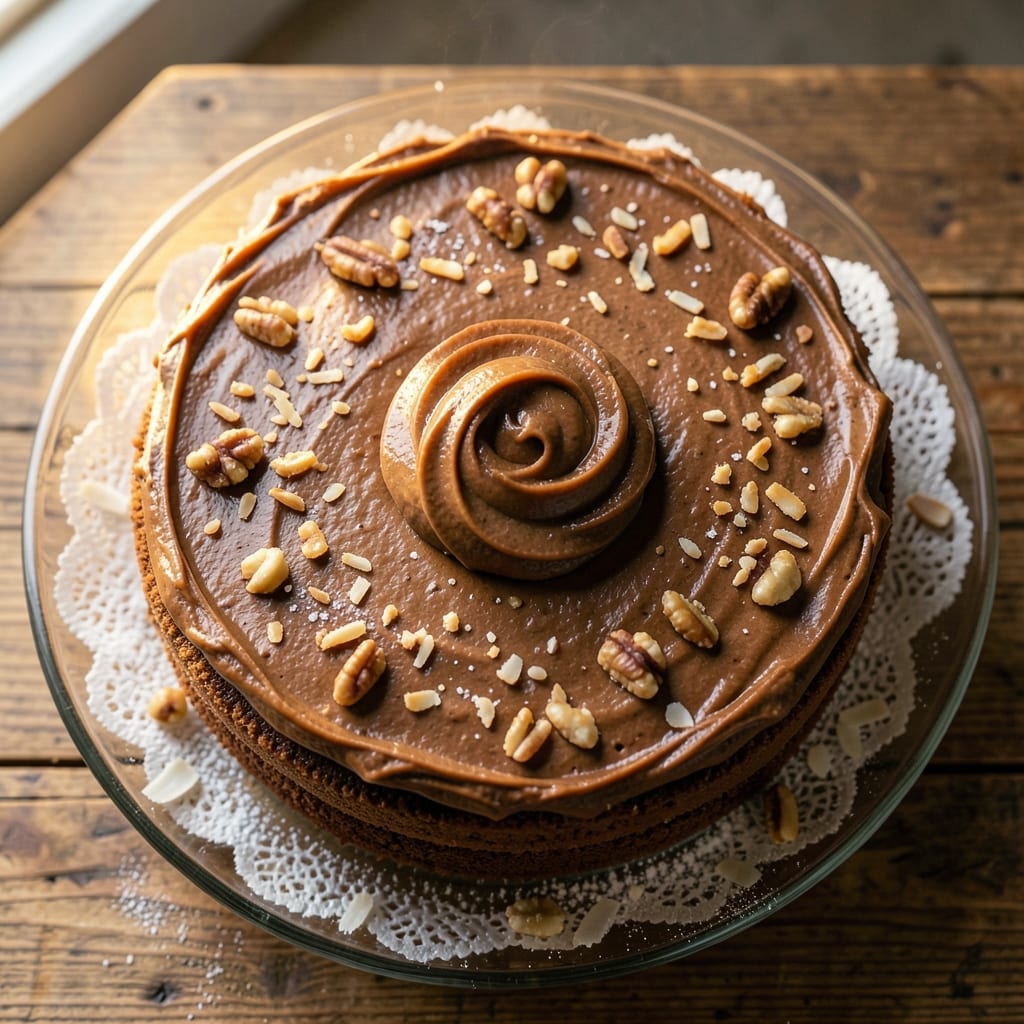
This Baker's German Chocolate Cake recipe solves the high-altitude baking puzzle—dry, dense layers become a thing of the past. At elevations above 3,500 feet, traditional recipes fail, but I’ve adjusted moisture levels, leavening agents, and baking times to guarantee perfectly moist layers every time. The secret lies in precise ingredient ratios and a two-stage baking process that prevents over-browning while locking in tenderness.
High-altitude baking presents unique challenges: lower air pressure causes cakes to rise too quickly, then collapse, while moisture evaporates faster, leaving a crumbly texture. This recipe counters those issues by increasing flour slightly (for structure), reducing baking powder (to prevent over-rising), and incorporating extra sour cream and vegetable oil to maintain moisture. The result? A rich, fudgy cake with just the right crumb, where every slice stays tender—not dry.
What sets this version apart is the altitude-specific baking technique: a lower starting temperature that gradually increases to prevent over-browning, paired with a toothpick check that accounts for higher elevation. The frosting—a classic German chocolate glaze—adds the signature peanut butter richness without weighing down the cake. Once you try this method, store-bought high-altitude mixes will never compare.
Whether you're baking at 5,000 feet or 10,000 feet, this recipe delivers restaurant-quality layers that rise evenly, hold their shape, and stay moist for days. The adjustments are simple but transformative, ensuring your cake turns out as beautifully as it does at sea level. Ready to master high-altitude German chocolate cake? Let’s get started.
Ingredients for baker's german chocolate cake high altitude
Precision ingredients for high-altitude baking—where moisture meets structure in perfect layers.
| Ingredient | Amount | Notes |
|---|---|---|
| All-Purpose Flour 🌾 | 2 ½ cups | Sifted for optimal aeration |
| Granulated Sugar 🍚 | 2 cups | Superfine preferred for smooth texture |
| Unsalted Butter 🧈 | 1 ½ cups | Room temperature, European-style preferred |
| Sour Cream 🥛 | 1 cup | Full-fat for moisture retention |
| Vegetable Oil 🫒 | ½ cup | Light, neutral flavor |
| Large Eggs 🥚 | 3 whole | Room temperature, separated |
| Baking Powder 🌶️ | 1 ½ tsp | High-altitude adjusted |
| Salt 🧂 | ½ tsp | Fine sea salt preferred |
| Vanilla Extract 🌿 | 2 tsp | Pure Madagascar bourbon |
| Hot Water 💧 | ½ cup | For dissolving cocoa powder |
| Unsweetened Cocoa Powder 🍫 | ¾ cup | Dutch-process for smoothness |
| Peanut Butter 🥜 | 1 cup | Creamy, natural style |
| Powdered Sugar 🍚 | 3 cups | For frosting, sifted |
| Milk 🥛 | ¼ cup | Whole milk for frosting |
| Semisweet Chocolate Chips 🍫 | 1 ½ cups | Enrobed in cocoa |
The flour and cocoa powder are non-negotiable for high-altitude success. King Arthur Measure for Measure flour handles altitude best due to its protein balance, but any all-purpose works if you're in a pinch. For cocoa, Hershey's Special Dark dissolves smoothly without graininess—avoid natural cocoa unless you're willing to sift it aggressively. The butter must be European-style (like Plugrá) for higher fat content, which prevents tunnel formation. Room temperature is critical: cold butter creates dense layers, while overly soft butter causes spreading. Pre-measure all dry ingredients and sift them together—this eliminates air pockets that cause uneven rising at altitude.
Substitutions require strategic adjustments. Sour cream can be swapped for Greek yogurt (same quantity), but avoid buttermilk—its acidity reacts unpredictably with baking powder at high elevations. Need to reduce sugar? Replace up to 0.5 cup with applesauce, but no more or the cake will sink. For peanut butter, natural style without added sugar works best, though creamy style is fine if you reduce powdered sugar in the frosting by 0.25 cup. The chocolate chips can be chopped bars (like Ghirardelli squares), but enrobed chips melt more evenly. If you're above 8,000 feet, add 0.25 tsp extra baking powder to compensate for reduced air pressure—this is the only ingredient you'll ever need to adjust based on your specific elevation.
Storage is where high-altitude cakes shine—they actually stay moist longer than sea-level versions. Wrap the completely cooled cake in plastic wrap, then aluminum foil for an airtight seal. Keeps at room temperature for 5 days or in the fridge for 10 days without drying out. For the frosting, store it separately in an airtight container; it'll last 1 week at room temperature or 2 months refrigerated. Freeze portions of the unfrosted cake for up to 3 months—thaw overnight in the fridge, then frost at room temperature. The secret to reheating? Microwave a slice for 10 seconds—it revives the texture without melting the frosting.
Why You'll Love This Recipe
- No Mixer Needed: I swear by this recipe when my mixer’s on the fritz—just cream the butter and sugar by hand until it’s light and fluffy. The sour cream keeps it tender without overworking, and the vegetable oil adds moisture without extra fuss. (Yes, even on a Tuesday night.)
- High-Altitude Magic: That extra sugar and oil? They’re not just for show—they fight the dryness high-altitude baking brings, giving you a cake that’s rich, dense, and actually fudgy. No one will guess it’s adapted for elevation—promise.
- Leftovers That Win: This cake tastes just as good the third day as it does fresh. I slice it thin, toast the pieces lightly, and pack them for lunches—no sad, dry crumbs. Honestly, the filling stays gooey for days if you store it right.
- Budget-Friendly Luxury: Butter, sugar, and flour? Pantry staples. No specialty ingredients, no last-minute grocery runs. I make this for birthdays, potlucks, and when I’m craving cake but broke—same great result every time. (Between us, it’s my secret weapon.)
Step-by-step instructions for perfect German chocolate cake at high altitudes
Master these altitude-adjusted techniques for layers that rise evenly and stay moist.
Prepare the Cake Batter with High-Altitude Adjustments
In a large mixing bowl, combine the 2.5 cups all-purpose flour, 1.5 teaspoons baking powder, and 0.5 teaspoon salt. Sift this mixture together to aerate the flour and ensure even distribution of leavening agents—critical at high altitudes where air pressure affects rise. In a separate bowl, whisk together the 2 cups granulated sugar, 3 whole large eggs, 2 teaspoons vanilla extract, 1 cup sour cream, and 0.5 cup vegetable oil. The sour cream adds moisture that combats dryness common at elevations above 3,500 feet.
Gradually add the dry ingredients to the wet mixture, mixing on low speed until just combined. Avoid overmixing, which develops gluten and can lead to dense layers. Gently fold in the 1.5 cups semisweet chocolate chips and 1 cup peanut butter using a spatula to distribute evenly. The peanut butter's fat content helps maintain moisture during baking, while the chocolate chips add pockets of rich flavor throughout.
Create the Cocoa Layer with Proper Hydration
In a small saucepan, whisk together the 0.75 cup unsweetened cocoa powder and 0.5 cup hot water over low heat until smooth. This creates a thin cocoa paste that prevents dryness in the second layer. Let it cool completely before adding it to the remaining batter mixture. In a clean bowl, repeat the same process as Step 1 but reserve 1 cup of the chocolate chip mixture for the cocoa layer—this ensures both layers have balanced sweetness and texture.
Combine the cooled cocoa mixture with the remaining batter ingredients, mixing just until uniform. The cocoa layer requires slightly more liquid to compensate for its density, so add 1-2 tablespoons of milk if the batter appears too thick. This adjustment is essential for preventing cracks and ensuring even moisture distribution in both layers.
Bake with Precision Temperature Control
Preheat your oven to 350°F—critical for high-altitude baking where lower temperatures are often recommended. Grease two 9-inch round cake pans and line the bottoms with parchment paper. Divide the batter evenly between the pans, smoothing the tops with a spatula. Tap each pan gently on the counter to remove air bubbles, which helps achieve even rise. Bake for 25-30 minutes, or until a toothpick inserted into the center comes out clean but with a few moist crumbs—this indicates proper doneness without overbaking.
High-altitude ovens can run hotter, so start checking at the 20-minute mark. Rotate the pans halfway through baking for even heat distribution. The edges should be set while the centers remain slightly springy to the touch. Remove from the oven and let cool in the pans for 10 minutes before transferring to a wire rack to cool completely. This gradual cooling prevents structural collapse.
Assemble with Stable Frosting Technique
In a medium bowl, beat the 1.5 cups unsalted butter until creamy, then gradually add the 3 cups powdered sugar and 0.25 cup milk. Mix on medium speed until light and fluffy, scraping down the sides as needed. This frosting should be thick enough to hold its shape but spreadable—like a stable mousse. Fold in the reserved 1 cup peanut butter and 0.5 cup chocolate chips for bursts of flavor throughout.
Level the cooled cake layers and place the first layer on a serving plate. Spread a generous layer of frosting, then place the second layer on top. The frosting should seal the layers completely to prevent drying. Use a long serrated knife to trim any uneven edges, then apply the remaining frosting to the sides and top. Chill the cake in the refrigerator for 30 minutes before slicing to allow the frosting to set properly and maintain structural integrity.
Pro Tips For Making Baker'S German Chocolate Cake High Altitude
- Mix Butter and Sugar First: Don’t just toss everything in the bowl—cream the butter and sugar until it’s light and fluffy (about 3-5 minutes). High altitude makes cakes dense if the fat and sugar aren’t properly aerated, and this step guarantees a tender crumb. (I used to skip this, and the cake turned out like a brick.)
- Use Room-Temp Sour Cream: Cold sour cream curdles when it hits hot butter, and that’s a texture disaster. Let it sit out for 30 minutes before mixing—just until it’s cool to the touch but not cold. This keeps the cake moist without turning gummy.
- Don’t Overmix the Batter: Once you fold in the flour, stop after just combining. Overmixing develops gluten, and high-altitude air makes that problem worse—your cake will end up tough instead of light. A few lumps are fine; they’ll disappear in the oven.
- Check Oven Temp with a Thermometer: Preheat to 350°F, but double-check with an oven thermometer—many run hotter at altitude. If it’s off by even 10 degrees, your cake could bake unevenly or dry out. (I learned this after a cake center stayed raw while the edges burned.)
Wine and beer pairings for this baker's german chocolate cake high altitude
Rich Dessert Wines
German chocolate cake’s deep cocoa and peanut butter flavors pair beautifully with tawny Port or Ruby Port from Portugal. Their caramel and dried fruit notes complement the cake’s richness without overpowering it. I recommend Graham’s 10-Year Tawny—its nutty, honeyed profile mirrors the cake’s peanut butter swirls. For a slightly lighter option, Moscatel from Spain offers floral and citrus accents that cut through the density. Serve chilled to enhance the wine’s complexity. 🍷
Creamy Beer Pairings
A stout like Guinness or Samuel Adams Black Lager works surprisingly well with the cake’s chocolate and peanut butter elements. The roasted malt notes in stouts create a satisfying contrast to the sweetness. For a lighter beer, try a Belgian-style dubbel like Westmalle Dubbel 8—its caramel and spice notes harmonize with the cake’s cocoa depth. Avoid overly hoppy IPAs, as they can clash with the dessert’s richness.
Coffee Liqueur Finish
For an after-dinner treat, serve the cake with Kahlúa or Tia Maria mixed into a small glass of coffee. The coffee liqueur’s chocolate and vanilla notes enhance the cake’s flavors while adding a warm, aromatic finish. I like to drizzle a little over the top of each slice—it’s a simple but elegant touch that feels special. 💛
Spiced Wine Cocktail
Warm mulled wine infused with cinnamon, cloves, and orange peel makes a festive pairing for German chocolate cake. The spices complement the cake’s peanut butter and chocolate layers while adding warmth. For a non-alcoholic version, try sparkling apple cider with a cinnamon stick—it’s refreshing and balances the cake’s richness beautifully. Serve in small glasses to maintain the dessert’s star status.
Chilled Dessert Wine
If you prefer something lighter, a chilled Moscato d’Asti or Prosecco adds bubbles and acidity that cleanse the palate between bites. The effervescence helps reset your taste buds, making each slice taste fresher. I’ve found that La Marca Prosecco works particularly well—its crisp apple and pear notes contrast nicely with the cake’s decadence. Serve in small flutes to keep the focus on the cake. ✨
Nutrition facts
Frequently asked questions
Why does high altitude affect cake texture so dramatically?
At elevations above 3,500 feet, lower air pressure causes cakes to rise too quickly, then collapse from over-expansion. The moisture evaporates faster, leaving dry layers. This recipe counters those issues by increasing flour slightly for structure while adding extra sour cream and vegetable oil to maintain moisture. The reduced baking powder prevents over-rising, ensuring stable layers.
Can I use this recipe at elevations below 3,500 feet?
Yes! While optimized for high altitudes, the recipe works beautifully at sea level too. Simply reduce the flour to 2 cups (instead of 2.5 cups) and increase baking powder to 2 teaspoons. The extra moisture from sour cream and oil will still create a wonderfully tender cake. The frosting recipe remains unchanged.
What's the best way to test if the cake is fully baked at altitude?
Use the toothpick test with altitude awareness: Insert a toothpick into the center—it should come out with a few moist crumbs, not wet batter. High-altitude cakes set faster, so check at 20 minutes and again at 25 minutes. The edges should be golden while the center remains slightly springy. Overbaking at altitude leads to dryness, so err on the side of slightly underdone.
How do I prevent the cake from cracking between layers?
Cracks often form when layers cool too quickly or the frosting isn't thick enough to seal them. Let layers cool completely in pans for 10 minutes, then transfer to a wire rack. For assembly, use a generous layer of frosting that completely covers the edges—this creates a moisture barrier. Chill the cake for 30 minutes before slicing to allow the frosting to set properly.
Can I make this cake in a different pan size?
Yes, but adjust baking times and temperatures. For 8-inch pans, bake at 340°F for 20-25 minutes (reduce flour by 0.5 cup). For 10-inch pans, bake at 350°F for 30-35 minutes (increase flour by 0.5 cup). Always use the same volume of batter as specified—never more or less. The key is maintaining the same batter-to-pan ratio for consistent results.