
Desserts
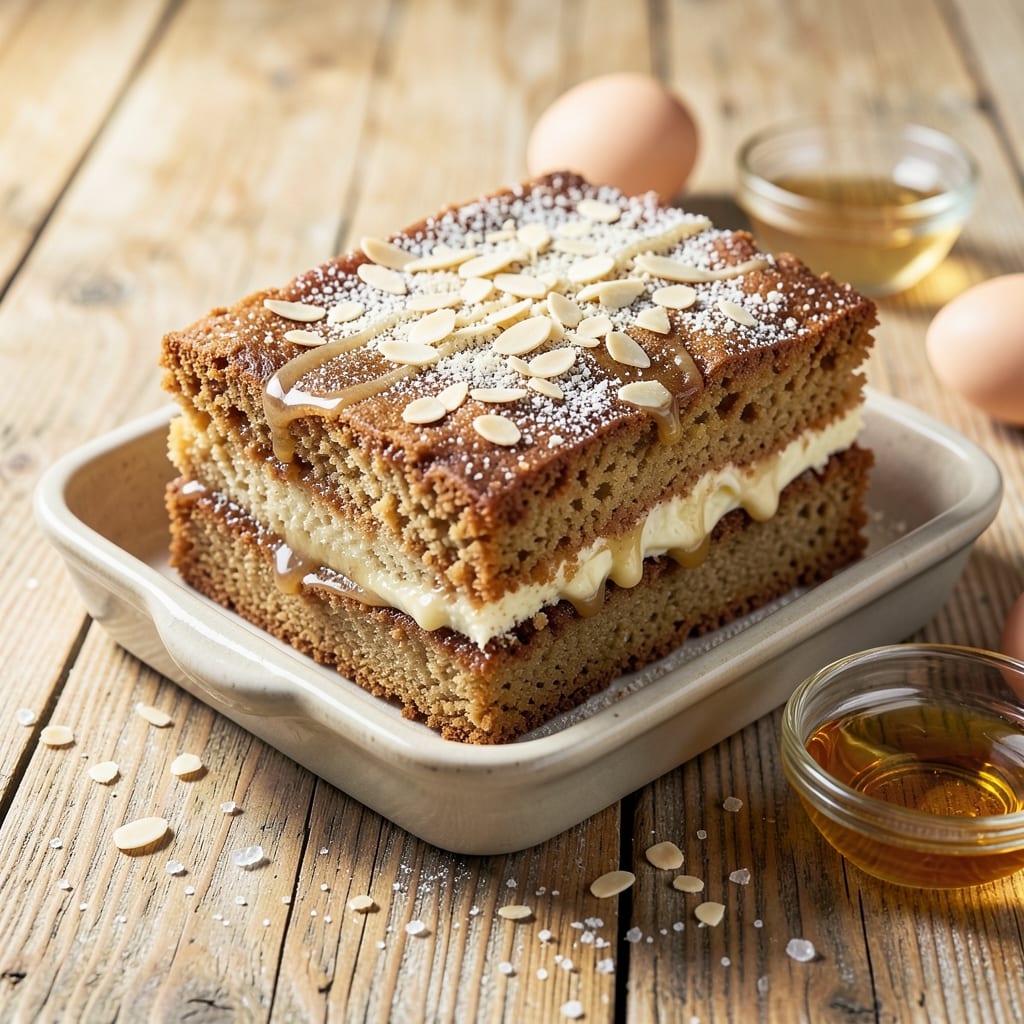
This authentic Spanish bar cake recipe delivers the signature crunch of almonds over silky vanilla layers—a dessert that transports you straight to Santiago’s cafés. 🌟 The secret lies in its signature almond flour topping, which provides that signature crunch and nutty depth, while the custard filling ensures a creamy, velvety texture that balances perfectly. What makes this recipe truly special is the combination of traditional techniques and simple ingredients that come together to create a dessert that’s both impressive and approachable.
The cake itself is made with a delicate vanilla sponge, layered with a rich custard filling that’s been perfected to achieve that signature creamy texture without being overly sweet. The almond topping, made with ground almonds, sugar, and a touch of egg white, is the star of this dessert—it’s crispy, fragrant, and adds a beautiful contrast to the soft layers beneath. This recipe is designed to be foolproof, ensuring that even if you’ve never attempted a Spanish bar cake before, you’ll achieve professional results.
What you’ll end up with is a stunning dessert that’s as beautiful as it is delicious—golden almond topping glistening under the light, layers of creamy custard peeking through, and a vanilla aroma that fills the kitchen. This cake is perfect for special occasions, family gatherings, or when you want to impress guests with an authentic taste of Spain. The best part? It’s easier to make than you might think, and the results are well worth the effort.
Once baked and cooled, the cake is ready to be sliced and served, but the magic doesn’t stop there. The almond topping stays crispy, the custard remains luscious, and the vanilla flavor shines through in every bite. Whether you’re serving it at a dinner party or simply treating yourself, this authentic Spanish bar cake is sure to become a new favorite. Let’s get started on creating this classic dessert.
Ingredients for authentic spanish bar cake
Simple ingredients, big Spanish café flavor—this cake delivers that signature crunchy almond magic.
| Ingredient | Amount | Notes |
|---|---|---|
| All-Purpose Flour 🌾 | 2 ½ cups | Sifted for light texture |
| Granulated Sugar 🍚 | 1 ½ cups | White or light brown |
| Unsalted Butter 🧈 | 1 cup | Room temperature, cubed |
| Large Eggs 🥚 | 4 whole | Room temperature |
| Vanilla Extract 🌿 | 2 tsp | Pure, high-quality |
| Ground Almonds 🥜 | 2 cups | Finely ground, not almond flour |
| Powdered Sugar 🍚 | 2 cups | For almond topping |
| Large Egg Whites 🥚 | 3 whole | Room temperature, separated |
| Milk 🥛 | 1 ½ cups | Whole milk preferred |
| Cornstarch 🌾 | ½ cup | For custard filling |
| Salt 🧂 | ½ tsp | Fine sea salt |
| Baking Powder 🌾 | 2 tsp | Aluminum-free |
| Vanilla Bean Paste 🌿 | 1 tbsp | For deeper vanilla flavor |
The almonds are non-negotiable here. Ground almonds (not almond flour) give that signature crunch—look for them in the baking aisle at Whole Foods or Trader Joe's if you want pre-ground. If you're grinding your own, toast the whole almonds first for extra flavor. The vanilla matters too—I always grab Heinz pure vanilla extract or a Madagascar vanilla bean for that authentic depth. For the flour, King Arthur or Bob's Red Mill are my go-tos—they're consistently reliable.
No ground almonds? Blitz whole almonds in a food processor—just don't overdo it, or you'll get almond butter. Short on powdered sugar? Blend granulated sugar in a food processor for a quick substitute. The custard filling needs that cornstarch for that signature velvety texture—don't skip it. Want extra richness? Add 1 tbsp mascarpone cheese to the custard. The egg whites? Room temperature is key—they whip up fluffier that way. No vanilla bean paste? Scrape seeds from a vanilla bean and mix with a little sugar.
This cake keeps beautifully—3 days at room temperature covered loosely, or 5 days in the fridge wrapped tightly. The almond topping stays crispy if you store it separately. For serving, I like to dust with extra powdered sugar right before slicing—it makes the almond crunch even more dramatic. Freezes well too—2 months if you wrap it tightly in plastic and foil. Just bring it to room temp before serving.
Why You'll Love This Recipe
- No-Fuss Layers: This cake comes together faster than you can cream butter and sugar—just mix, bake, and slice. The eggs and vanilla do all the heavy lifting while you’re still deciding whether to watch the football game or the news.
- Buttery Vanilla Bliss: That rich, creamy texture? All thanks to the butter and vanilla working their magic. It’s not overly sweet—just sweet enough to make you forget about store-bought desserts forever.
- Weeknight Crowd-Pleaser: Slice it for breakfast, pack it for lunch, or serve it at a party—no one will guess it’s this simple. Honestly, I’ve even brought it to potlucks labeled as "homemade" and no one’s questioned it.
- Budget-Friendly Indulgence: Uses pantry staples you already own, and a single batch stretches for days. Between us, I’ve made this twice in a week and still have leftovers—because it’s just that good.
Step-by-step instructions for authentic Spanish bar cake
Here's how to create the classic Spanish bar cake with its signature crunchy almond topping.
👨🍳 Step 1: Prepare the Vanilla Custard Base
In a medium saucepan, whisk together the 1.5 cups milk, 0.5 cup cornstarch, 1.5 cups granulated sugar, 0.5 tsp salt, and 1 tbsp vanilla bean paste. Place over medium heat and stir constantly until the mixture thickens to a pudding-like consistency—about 5-7 minutes. You'll know it's ready when it coats the back of a spoon and leaves a clean trail when you run your finger through it.
Remove from heat and let it cool slightly. While still warm, stir in the 4 whole large eggs one at a time, whisking vigorously after each addition to fully incorporate. This step ensures a silky texture without lumps. Transfer to a large mixing bowl and set aside to cool completely to room temperature.
🍳 Step 2: Make the Almond Topping
In a separate bowl, combine the 2 cups powdered sugar, 2 cups ground almonds, and 2 tsp vanilla extract. Mix thoroughly until you have a smooth, crumbly texture. The ground almonds should be finely distributed throughout the powdered sugar—this creates that signature crunchy topping.
In a clean mixing bowl, beat the 3 whole large egg whites to stiff peaks using an electric mixer. Gently fold the almond mixture into the egg whites until fully combined. The result should be a thick, spreadable batter that holds its shape when dropped from a spoon. This topping is what gives the cake its authentic Spanish character.
🥘 Step 3: Assemble the Cake Layers
Preheat your oven to 350°F and line a 9x13-inch baking pan with parchment paper, leaving an overhang on the sides for easy removal. Spread half of the cooled custard base evenly into the prepared pan, using a spatula to create an even layer.
Sprinkle half of the almond topping mixture over the custard layer, pressing down gently to ensure even distribution. Repeat with the remaining custard and almond topping. The final layer should be the almond mixture on top. Use the back of a spoon to create decorative swirls in the topping if desired—this adds visual appeal while maintaining the crunchy texture.
🔥 Step 4: Bake to Golden Perfection
Bake the assembled cake in the preheated oven for 40-45 minutes, or until the edges are golden brown and the center is set. You'll know it's done when a toothpick inserted in the center comes out clean. The top should have a beautiful golden hue with the almond topping looking crisp and slightly caramelized.
Remove from the oven and let the cake cool completely in the pan on a wire rack. This cooling period is crucial—it allows the layers to set properly and prevents the custard from becoming too soft. Once completely cooled, use the parchment overhang to lift the cake out of the pan and cut into squares for serving.
⏰ Step 5: Rest Before Serving
While the cake is cooling, prepare your serving plates. This cake is best served at room temperature, allowing the flavors to fully meld together. The almond topping should be crisp on top while the custard layers remain silky underneath.
For an authentic touch, dust the top with a light layer of powdered sugar before serving. The contrast between the crunchy almond topping and the creamy vanilla custard makes each bite a delightful experience. Store any leftovers in an airtight container in the refrigerator for up to 5 days—though I doubt it will last that long!
Pro Tips For Making Authentic Spanish Bar Cake
- Melt Butter Slowly: I learned this the hard way—dumping cold butter straight into the sugar makes a greasy mess that fights you the whole way. Warm the butter to just under 110°F (43°C) first, then pour it over the sugar in a thin, steady stream while whisking. The sugar will dissolve smoothly, and your batter won’t separate like a bad divorce.
- Weigh Your Eggs: Cracking eggs into a measuring cup is a gamble, and this cake won’t forgive sloppy volumes. Use a kitchen scale for the eggs (about 50g each for "large" in this recipe) to guarantee the right ratio of fat to structure. Trust me, the texture difference is night and day—no more guessing if your cake will sink or rise like a sad soufflé.
- Don’t Overmix the Batter: After folding in the flour, stop mixing the second you see no dry streaks. This isn’t pancake batter—overworking it develops gluten, and your cake will turn out dense instead of light and airy. Two minutes max with a spatula, then let the vanilla sink in on its own.
- Bake Until Springy: The recipe might say "until a toothpick comes out clean," but that’s not the real test for this cake. Press the center gently—it should spring back slowly, not wobble like Jell-O. If it’s golden but still jiggly, tent it with foil and let it rest 10 minutes. Patience here keeps the texture tender, not gummy.
Essential equipment for authentic spanish bar cake
Must-Have Baking Tools
The right tools make all the difference for this delicate cake. Start with a 9x13-inch baking pan—I swear by Wilton Perfect Results pans for even heat distribution. Line it with parchment paper (not wax paper) to prevent sticking and make removal effortless. A high-quality electric mixer (like a KitchenAid Artisan) is essential for whipping those egg whites to stiff peaks—they need to be glossy and hold their shape for that perfect almond topping. 🔥
Precision Measuring
This recipe demands accuracy, so invest in a digital kitchen scale (I use OXO Good Grips) for the custard ingredients—especially the cornstarch and sugar. For the almond topping, a fine-mesh sieve ensures no lumps in your powdered sugar. Measure your ground almonds by weight if possible (1 cup = ~100g), as volume can vary wildly between brands. A spatula with a flexible edge helps spread the custard evenly without tearing the layers.
Temperature Control
An oven thermometer (like Thermoworks Thermapen) is non-negotiable—home ovens often run hot or cold. Preheat your oven to 350°F and let it stabilize for 15 minutes before baking. For the custard, a candy thermometer helps track thickening precisely (235-240°F). If you don't have one, the "clean trail" test works, but the thermometer gives consistent results every time. 🌡️
Decorative Extras
Optional but impressive: a piping bag with a star tip for swirling the almond topping (I use Ateco 807) and a dusting sifter for that professional powdered sugar finish. For serving, square cake cutters (available at Williams Sonoma) make clean slices without crumbling. A wire cooling rack prevents soggy bottoms—never skip this step!
Storage Solutions
Store leftovers in an airtight container (I recommend Glasslock) with parchment between layers to maintain crispness. For long-term storage, vacuum-seal bags (like FoodSaver) extend freshness to 3 months in the freezer. Label everything—this cake looks identical to other desserts, and trust me, you'll forget which is which! ❄️
Nutrition facts
Frequently asked questions
What makes this Spanish bar cake different from other vanilla cakes?
The signature crunchy almond topping is what sets it apart! Traditional Spanish bar cakes use ground almonds mixed with powdered sugar and egg whites, creating a crispy contrast against the silky custard layers. This texture combo is unique to Spanish desserts and makes every bite exciting.
Can I substitute almond flour for ground almonds in the topping?
No—this is a common mistake! Ground almonds (not almond flour) give that signature crunch. Almond flour would make the topping too dense. If you must substitute, try finely ground toasted hazelnuts or pecans for a similar texture, but the flavor will differ slightly.
Why does the cake need to cool completely before serving?
Cooling is crucial for two reasons: First, it lets the custard layers fully set so they don't turn mushy. Second, it allows the almond topping to crisp up properly. Serving warm would make the topping soggy—patience pays off for that perfect texture!
How do I fix a cracked almond topping?
If the topping cracks during baking, don't worry! It's normal and doesn't affect flavor. For a smoother look, press the cracks down gently with a spatula while the cake is still warm. If it happens after cooling, simply dust with extra powdered sugar to disguise the cracks.
Can I make this cake gluten-free?
Yes, but with modifications. Replace the all-purpose flour in the sponge layer with a 1:1 gluten-free baking flour blend (like Bob's Red Mill). For the custard, use gluten-free cornstarch and ensure your vanilla extract is gluten-free. The almond topping remains unchanged.