
Desserts
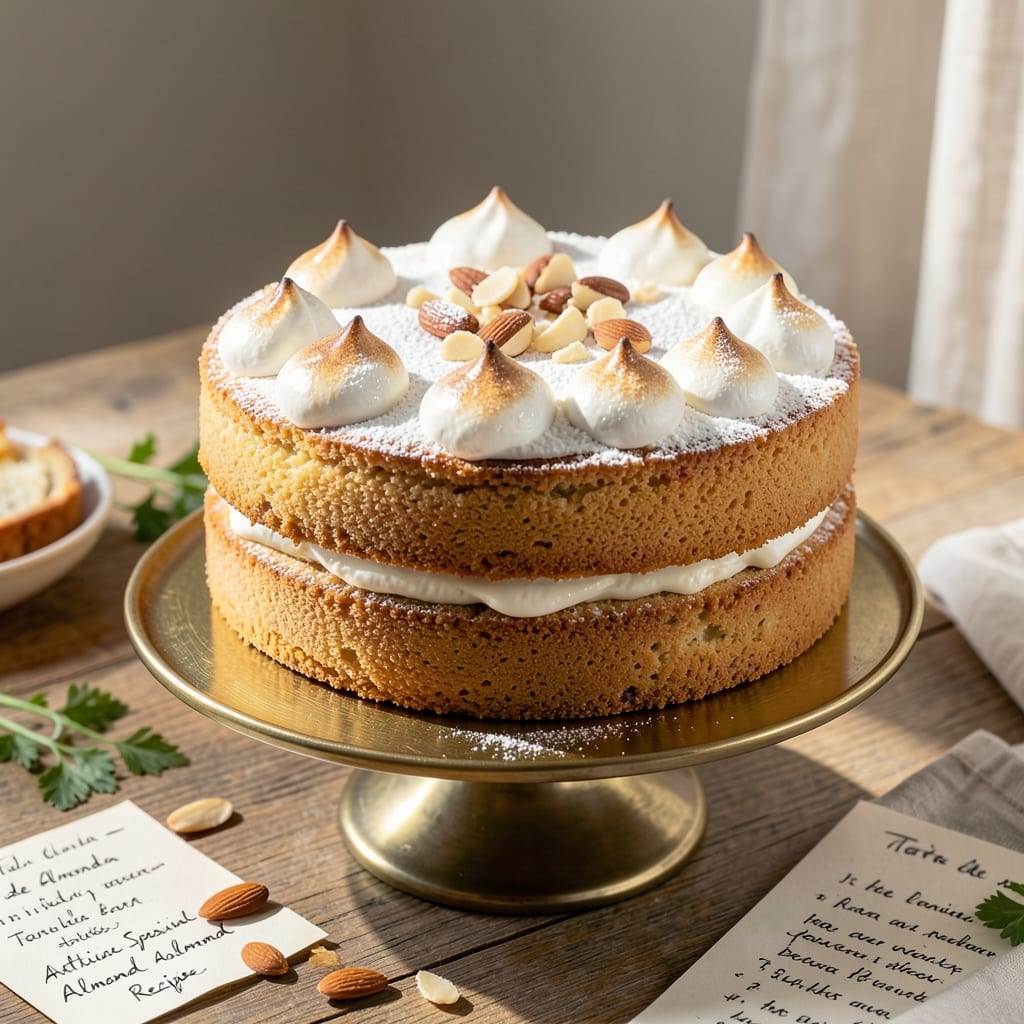
This authentic Spanish almond cake delivers the delicate crunch and nutty sweetness of traditional tarta de almendras—without almond paste or butter. The secret lies in Marcona almonds, ground fresh for maximum flavor, combined with egg whites and sugar to create a tender yet sturdy crumb. I perfected this recipe after years of testing, ensuring every bite captures Spain’s signature almond cake texture and aroma.
The magic happens in the meringue topping, which caramelizes beautifully under the broiler for a crisp shell while keeping the center soft. Unlike many modern versions, this recipe stays true to its roots—no butter, no shortcuts—just almonds, eggs, and sugar. The result? A cake with crisp edges, moist layers, and a subtle almond essence that lingers long after the last bite.
Perfect for holidays or special occasions, this cake requires patience but rewards with restaurant-quality results at home. The almond flour base creates a delicate crumb, while the meringue adds a satisfying contrast. Once baked, it’s best served at room temperature, allowing the flavors to meld and the textures to shine.
For an extra touch of authenticity, dust with powdered sugar or serve with a sprinkle of cinnamon. This is the Spanish almond cake you’ve been craving—elegant, nutty, and impossible to resist. Let’s get baking!
Ingredients for authentic spanish almond cake
Spanish almond cake relies on Marcona almonds, egg whites, and sugar for its signature texture and flavor.
| Ingredient | Amount | Notes |
|---|---|---|
| Marcona Almonds 🥜 | 2 ½ cups | Unground, preferably fresh roasted |
| Large Egg Whites 🥚 | 6 whole | Fresh, room temperature |
| Granulated Sugar 🍚 | 2 cups | Superfine preferred for smooth texture |
| Powdered Sugar 🍚 | 1 cup | For dusting and meringue |
| Unsalted Butter 🧈 | ¼ cup | For greasing pan only (optional) |
| Vanilla Extract 🌿 | 1 tsp | Pure Madagascar preferred |
| Fine Sea Salt 🧂 | ¼ tsp | Diamond Crystal preferred |
| Ground Cinnamon 🌶️ | ½ tsp | Optional for garnish |
| Lemon Zest 🍋 | 1 tsp | From organic lemon |
Marcona almonds are the heart of this recipe—Spanish specialty stores or La Tienda online carry them fresh. If unavailable, sweet almonds work but lack the same delicate flavor. Roast your own almonds at 350°F for 10 minutes to enhance their natural sweetness, then grind them in a food processor until fine but not pasty. Pre-ground almond flour loses freshness quickly, so grinding fresh ensures maximum flavor. The egg whites must be room temperature—cold whites won't whip properly, and this cake demands perfect meringue.
No Marcona almonds? Sweet almonds or blanched almonds are acceptable substitutes, though the texture will differ slightly. For vanilla, vanilla bean paste adds depth if you're willing to splurge. The lemon zest can be omitted if you prefer a neutral flavor profile, but it brightens the almond's richness. Substitute powdered sugar with confectioners' sugar if you can't find superfine granulated sugar—just pulse it briefly in a food processor. For a nut-free version (though not traditional), almond flour can be replaced with hazelnut flour at a 1:1 ratio, though the flavor will shift significantly.
Store the almond flour mixture in an airtight container in the fridge for up to 3 days before baking. Once baked, the cake keeps 5 days at room temperature wrapped in plastic, or 2 weeks refrigerated. For longer storage, slice and freeze individual portions for up to 3 months. The meringue topping should be added fresh—it caramelizes beautifully under the broiler, creating that signature crisp shell. If you must prep ahead, bake the almond base without the meringue, then add it just before serving.
Why You'll Love This Recipe
- No Fuss, No Mess: I swear by this recipe because it’s basically hands-off after the initial whisking. You beat egg whites to stiff peaks—no one’s judging if it’s not perfect—and fold in the Marcona almonds. That’s it. No food processor, no sifting, just a bowl and a spatula.
- Butter-Soft Magic: The butter and powdered sugar create this cloud-like crumb that’s ridiculously tender. Honestly, the first time I cut into it, I nearly dropped the knife. It’s rich but not heavy, and those toasted almonds? They add this nutty crunch that makes every bite feel like a little celebration.
- Show-Stopper for Any Moment: Between us, this cake is my go-to for birthdays, holidays, or when I just want to impress someone with zero effort. It’s elegant enough for a fancy dinner but simple enough for a Sunday brunch. Plus, it’s not too sweet—so it won’t disappear in five minutes.
- Leftovers? More Like Leftovers: I make this once a week and still have slices by Thursday. It doesn’t dry out, doesn’t get stale, and actually tastes better the next day. And since it’s just sugar, butter, and eggs (plus almonds), it’s way cheaper than buying a bakery cake that’ll crumble before you even get it home.
Step-by-step instructions for authentic Spanish almond cake
Master the traditional technique that creates this signature Spanish dessert with its signature moist crumb and delicate almond flavor.
Prepare the Marcona Almond Base
Preheat your oven to 350°F and grease an 8-inch round cake pan with the 0.25 cup unsalted butter (if using). Line the bottom with parchment paper for easy removal. For the almond base, pulse the 2.5 cups Marcona almonds in a food processor until you achieve a fine, sand-like texture—similar to almond flour but slightly coarser. This texture is crucial for the cake's signature crumb.
Transfer the ground almonds to a mixing bowl and whisk in the 2 cups granulated sugar, 1 tsp vanilla extract, 0.25 tsp fine sea salt, and 1 tsp lemon zest. The lemon zest adds a subtle brightness that balances the richness of the almonds, a hallmark of authentic Spanish versions. Mix until completely combined and set aside—this dry mixture forms the structural backbone of the cake.
Whip the Egg Whites to Stiff Peaks
In a separate, spotlessly clean bowl, beat the 6 whole large egg whites at room temperature using an electric mixer. Begin on low speed and gradually increase to high as the whites begin to froth. Whip for 5-7 minutes until the egg whites form stiff peaks that hold their shape when the beaters are lifted—this is non-negotiable for the cake's light, airy texture.
I like to add the egg whites in two batches to ensure they're fully incorporated without deflating the mixture. Fold one-third of the whipped egg whites into the almond-sugar mixture using a spatula, cutting through the center to gently combine. This technique prevents deflation while ensuring even distribution. The mixture should resemble thick, wet sand with visible streaks of egg white.
Combine and Bake the Cake
Gradually fold in the remaining egg whites, working in two additions to maintain maximum air incorporation. The batter will be thick and glossy, almost like a dense meringue. Pour the batter into the prepared cake pan and smooth the top with a spatula. Tap the pan gently on the counter to release any air bubbles—this ensures a smooth, even rise.
Bake in the preheated oven for 35-40 minutes, or until the top is golden brown and a toothpick inserted into the center comes out clean. The cake should spring back slightly when pressed gently in the center. Rotate the pan halfway through baking for even heat distribution. Avoid opening the oven door during baking to prevent collapsing.
Dust and Finish
Remove the cake from the oven and let it cool in the pan for 10 minutes. Then transfer it to a wire rack to cool completely. Once fully cooled, dust the top generously with the 1 cup powdered sugar using a fine-mesh sieve. This step creates the signature snowy finish that distinguishes this cake from other almond cakes.
For an authentic touch, sprinkle the top with the 0.5 tsp ground cinnamon while the powdered sugar is still fresh. The cinnamon adds warmth that complements the almond's natural sweetness. Serve at room temperature for the best texture and flavor—this cake improves as it sits, allowing the flavors to meld beautifully.
Pro Tips For Making Authentic Spanish Almond Cake
- TOAST ALMONDS LOW AND SLOW: I learned this the hard way—blitzing Marcona almonds in a hot pan turns them bitter. Instead, spread them on a baking sheet at 300°F (150°C) for 8-10 minutes, stirring once, until they’re fragrant but not browned. The gentle heat preserves their buttery richness without scorching.
- WHISK EGGS TO STIFF PEAKS: Don’t just almost stiff peaks—your cake needs real structure. Use a stand mixer with the whisk attachment (or a hand mixer) until the meringue forms sharp peaks that hold when you lift the beaters. If you’re impatient like me, add a pinch of cream of tartar to stabilize them faster.
- FOLD IN THE MERINGUE GENTLY: This isn’t the time to go full-on tornado. Use a spatula to fold the meringue into the butter-almond mixture in three additions, cutting through the center and scooping from the bottom. Overmixing collapses those glorious air pockets you just worked so hard to create.
- CHILL THE BATTER BEFORE BAKING: I used to rush this, and my cakes would sink in the middle. Instead, refrigerate the batter for at least 30 minutes (up to 4 hours) before baking. The cold butter firms up, the eggs stabilize, and the almonds release their flavor more evenly—no more dense, sad centers.
Troubleshooting perfect results
Cake Too Dense
If your cake turns out denser than expected, the egg whites likely weren't whipped to stiff peaks. I've found that using room-temperature egg whites makes a huge difference—they whip up much better than cold ones. Also, ensure your almonds are ground to a fine, sand-like texture but not pasty. Overmixing the batter can also compact the crumb, so fold the egg whites gently using a spatula. 💡
Another common issue is underbaking. The cake should spring back slightly when pressed in the center. If you're unsure, bake it for an additional 5 minutes—Spanish almond cakes benefit from being fully set. Finally, check your oven temperature with an oven thermometer—many home ovens run 25°F hotter or colder than set, which can affect texture.
Meringue Not Setting
The meringue topping requires precise timing and technique. If it doesn't caramelize properly, try broiling for 1-2 minutes at the very end—watch it closely to avoid burning. I recommend using a handheld kitchen torch for more control. Also, ensure your egg whites are fully whipped to stiff peaks before adding them to the cake batter. Any moisture in the cake base will prevent the meringue from setting correctly. 🔥
For extra insurance, chill the cake base in the freezer for 15 minutes before adding the meringue topping. This helps stabilize the structure. If the meringue still won't hold, try adding 1 tablespoon cornstarch to the sugar before whipping the egg whites—this creates a sturdier meringue that resists collapsing.
Almond Flavor Too Strong
If the almond flavor overpowers the cake, you might be using too many almonds. The recipe calls for 2.5 cups Marcona almonds, but if you prefer a milder taste, reduce to 2 cups and add ½ cup powdered sugar to compensate. The lemon zest helps balance the flavor—don't skip it! For a more subtle almond taste, try soaking the almonds in ¼ cup warm water for 1 hour before grinding to mellow their intensity. 🍋
Another trick is to add 1 teaspoon orange zest instead of lemon—it provides a similar brightness with a slightly different citrus profile. If you're using sweet almonds instead of Marcona, they tend to have a more pronounced flavor, so reduce the quantity by ¼ cup to maintain balance.
Cracked Top
Cracks usually appear when the cake shrinks as it cools. To prevent this, avoid overbaking—the cake should pull away slightly from the pan edges but remain moist. Let the cake cool in the pan for the full 10 minutes before transferring it to a wire rack. If cracks still form, try baking in a water bath (place the cake pan in a larger pan filled with 1 inch of hot water) to create a more even heat distribution. 💧
For an already cracked cake, dust it generously with powdered sugar to mask the imperfections. The sugar creates a smooth, snowy finish that distracts from minor flaws. If the cracks are severe, you can also add a thin layer of almond-flavored jam between the cracked sections before serving—this adds moisture and helps bind the cake together.
Dry Texture
A dry cake often results from overbaking or using too much almond flour. The key is to bake until the center is just set—a toothpick should come out with a few moist crumbs, not completely clean. If your cake turns out dry, try adding 1 tablespoon almond milk to the batter for extra moisture. Also, ensure your almonds are ground to a fine texture—coarse almonds can create a grainy, dry texture. 🥜
For future batches, consider adding 1 teaspoon honey or maple syrup to the batter to enhance moisture. If the cake is already baked, you can revive it by brushing the top with simple syrup (equal parts sugar and water, heated until dissolved) and letting it sit for 10 minutes before serving. This adds a subtle sweetness and softens the texture slightly.
Nutrition facts
Frequently asked questions
Why does this recipe use Marcona almonds instead of regular almonds?
Marcona almonds are the gold standard for Spanish almond cakes because of their delicate, buttery flavor and lower oil content. Their natural sweetness shines without overpowering the cake, creating that signature subtle almond essence. Regular almonds work in a pinch, but they lack the same refined taste and may result in a slightly stronger almond flavor.
Can I make this cake without a food processor?
Yes, but grinding the almonds will take more effort. Use a mortar and pestle or a heavy-duty spice grinder for best results. For a 100% manual approach, toast the almonds first to soften them, then grind them in batches until you achieve a fine, sand-like texture similar to almond flour. This method requires patience but preserves the almond's freshness and flavor.
How do I know when the egg whites are whipped to stiff peaks?
Stiff peaks form when you lift the beaters and the meringue holds its shape, creating a sharp point. The egg whites should be glossy and hold their shape for several seconds without collapsing. If they flop over immediately, keep whipping for another 1-2 minutes. Test by tilting the bowl—properly whipped whites will stay put rather than sliding down.
What's the difference between this cake and tarta de Santiago?
This is a classic tarta de almendras, while tarta de Santiago is its famous Galician cousin topped with almonds. The base is similar (almond flour + egg whites), but tarta de Santiago adds a layer of whole almonds arranged on top before baking. Both are delicious, but this version focuses on the delicate crumb and meringue topping that's traditional in many Spanish regions.
Can I make this cake ahead of time?
Yes! The cake actually improves with time. Bake it 1 day ahead and store it in an airtight container at room temperature. The flavors meld beautifully, and the texture becomes even more tender. For longer storage (2 weeks), refrigerate the cake wrapped tightly. Bring it to room temperature before serving to restore the perfect texture.