
Desserts
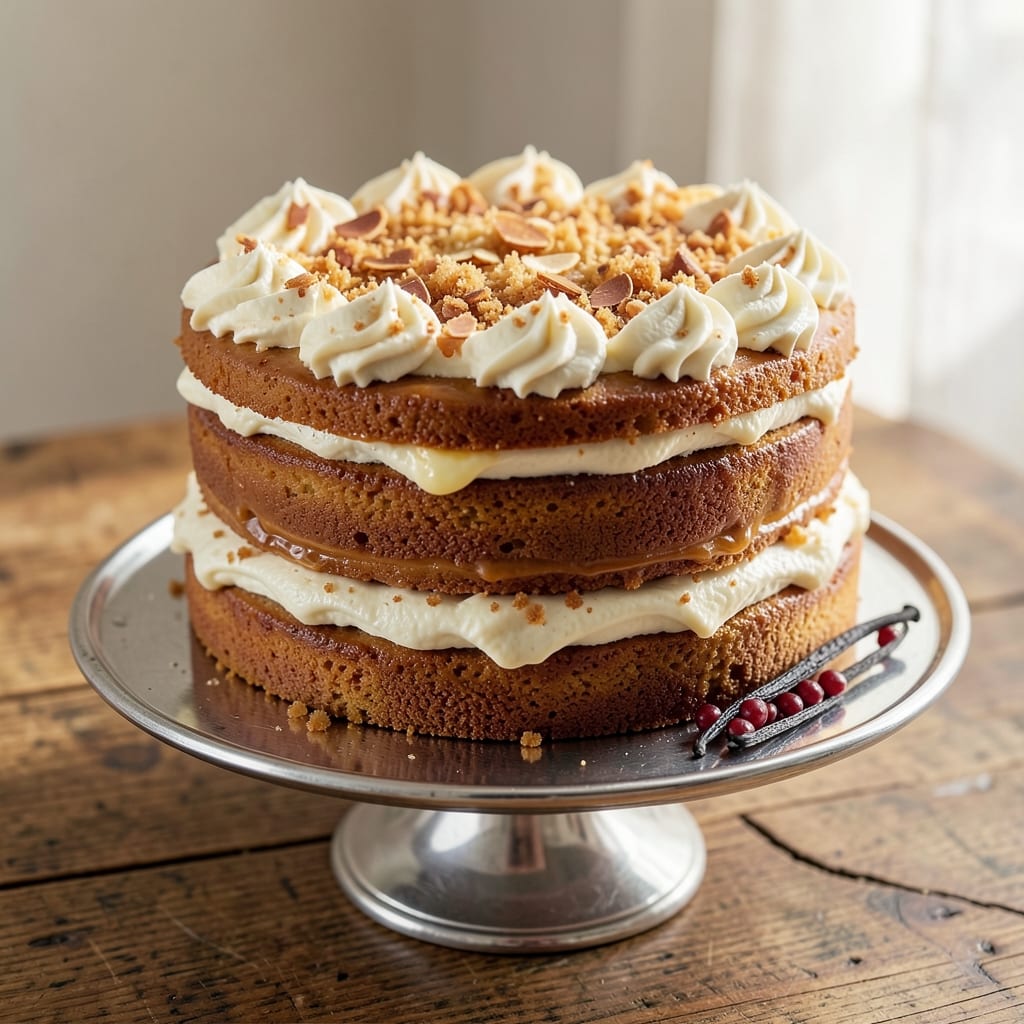
This almond paste pound cake delivers the perfect balance of rich, nutty flavor and tender, moist crumb—every slice is a revelation. 💛 The secret lies in the high butter-to-flour ratio, which creates that signature velvety texture, while almond paste adds depth and a delicate marzipan-like sweetness. I’ve refined this recipe over years to ensure it stays moist for days, making it ideal for gifts or special occasions.
What sets this cake apart is the vanilla bean swirl baked right into the batter, creating pockets of fragrant sweetness that transform each bite. The cake bakes at a steady 325°F to develop a golden crust while keeping the interior tender, and the almond paste ensures a subtle, sophisticated flavor that pairs beautifully with tea or coffee. No one will guess it’s a classic pound cake with a twist.
Once baked, the cake yields to a fork with ease, offering a moist, almost custard-like texture that’s far from dry. The vanilla swirls add visual appeal and an aromatic depth that elevates it beyond ordinary pound cakes. Serve it warm with a dusting of powdered sugar, or let it cool slightly for slicing—either way, it’s a showstopper.
For variations, try adding a hint of citrus zest (lemon or orange) to brighten the almond flavor, or fold in a spoonful of apricot jam for extra moisture. This cake also makes a stunning base for frosting or fruit compotes, proving its versatility. Let’s get baking—your taste buds will thank you.
Ingredients for almond paste pound cake
Butter, sugar, and almond paste—these three ingredients create magic. 💛
| Ingredient | Amount | Notes |
|---|---|---|
| Unsalted Butter 🧈 | 1 ½ cups | Room temperature for creaming |
| Granulated Sugar 🍚 | 2 cups | Superfine preferred for smoothness |
| Almond Paste 🥜 | 1 cup | High-quality, finely ground |
| All-Purpose Flour 🌾 | 2 cups | Sifted for even texture |
| Vanilla Bean 🌿 | 1 whole | Seeds scraped for swirls |
| Large Eggs 🥚 | 4 whole | Room temperature |
| Almond Extract 🥜 | 1 tsp | Pure, not imitation |
| Baking Powder 🍞 | 1 tsp | Freshly measured |
| Salt 🧂 | ½ tsp | Fine sea salt |
| Powdered Sugar 🍚 | ¼ cup | For dusting (optional) |
| Heavy Cream 🥛 | ½ cup | For vanilla swirl (optional) |
The butter here is non-negotiable—European-style unsalted like Plugrá or Land O'Lakes gives that rich, velvety texture. Grab it from the grocery store's dairy case (the good stuff, not the pre-packaged tubs). Almond paste is the soul of this cake—look for the smooth, finely ground kind (none of that grainy stuff). I always buy mine from Whole Foods or Trader Joe's—their quality is consistent. The vanilla bean? Madagascar Bourbon is my go-to, but any high-quality bean works. If you're feeling fancy, split it open and scrape the seeds for those signature swirls.
No almond extract? Vanilla bean paste works in a pinch (use half the amount). Running low on butter? Coconut oil melted to room temp mimics the fat content, though texture won't be identical. The cream for the swirl can be swapped for Greek yogurt or sour cream if you prefer tang. For the sugar, superfine isn't mandatory—just pulse regular granulated in a food processor until it's fine. And if you're baking for a crowd, double the recipe—this cake freezes beautifully for gifting.
This cake stays moist for 5 days at room temperature, wrapped tightly in plastic. For longer storage, slice and freeze portions for up to 3 months. I like to dust with powdered sugar right after baking—it adds a pretty finish and keeps the cake from drying out. Leftovers? Toast them lightly in the oven with a pat of butter for a restaurant-worthy treat. The vanilla swirls? They intensify over time, so save the first slice for last
Why You'll Love This Recipe
- No-Fuss Mixing: I swear by this recipe because it’s just three bowls—cream butter and sugar, fold in the almond paste, then whisk the dry stuff. No sifting, no overmixing, no stress. The almond paste does all the work of keeping it tender, so you’re basically just assembling layers of flavor.
- Vanilla-Almond Magic: That first bite? Rich, buttery, with a nutty depth from the almond paste that’s almost like marzipan but way easier. The vanilla bean ties it all together—no artificial aftertaste, just pure, warm spice. Honestly, it’s the kind of cake that makes you want to skip dessert and just eat a second slice.
- Showstopper for Any Event: Between us, this cake looks fancy with zero effort. Dust it with powdered sugar, add a drizzle of honey, or serve it plain—it’ll pass for a bakery piece at a brunch, a potluck, or even a last-minute gift. My mom’s friend once took a slice to a work party and got asked for the recipe. (She gave them mine.)
- Leftovers That Last: This cake stays moist for days—like, I’ve had it for breakfast, lunch, and dinner over three days without drying out. Slice it thin for tea sandwiches, cube it for French toast, or just eat it straight from the fridge. And because it’s not overly sweet, it won’t make you crash by 3 PM. Win.
Step-by-step instructions for almond paste pound cake
This nutty, moist cake comes together with simple steps—just follow the order.
👨🍳 Step 1: Cream Butter and Sugar Until Light
In a stand mixer fitted with the paddle attachment, beat the 1.5 cups unsalted butter and 2 cups granulated sugar on medium speed for 3-5 minutes until the mixture is pale, fluffy, and nearly doubles in volume. You'll see ribbons form when you lift the paddle—this means air has been incorporated, which is key for that tender crumb.
I like to scrape down the sides of the bowl every minute or so to ensure everything gets evenly creamed. If your butter isn't room temperature, it won't mix properly, so give it 10-15 minutes at room temp before starting. This step sets the foundation for your cake's moisture and structure.
👨🍳 Step 2: Add Eggs and Vanilla for Rich Flavor
Add the 4 whole large eggs, one at a time, mixing on low speed after each addition until fully incorporated. Then scrape the seeds from the 1 whole vanilla bean and add them to the mixture along with the 1 tsp almond extract. Mix on low speed for another 30 seconds until just combined.
Here's where the magic happens—the vanilla seeds create those beautiful swirls in the final cake, and the almond extract deepens the nutty flavor. Don't overmix at this stage or you'll develop gluten in the eggs, which can make the cake dense. The mixture should look smooth and slightly thickened.
👨🍳 Step 3: Fold in Dry Ingredients Gently
In a separate bowl, whisk together the 2 cups all-purpose flour, 1 tsp baking powder, and 0.5 tsp salt. Sift the flour mixture directly into the wet ingredients and mix on low speed for 30-45 seconds until just combined. You should still see some flour streaks—this prevents a tough cake.
Next, fold in the 1 cup almond paste using a rubber spatula. Be gentle here—you don't want to overwork the batter. The almond paste will give your cake that signature nutty flavor and dense, moist texture. If the batter looks too thick, you can add 1-2 tablespoons of heavy cream to help with mixing, but don't worry if it's a bit stiff—it'll come together.
🥘 Step 4: Create the Vanilla Swirl (Optional but Worth It)
In a small bowl, whisk together the 0.5 cup heavy cream and 0.25 cup powdered sugar until smooth. This will create the beautiful vanilla swirls that make this cake special. Pour about 1/3 of the batter into a separate bowl, then gently fold in the cream mixture until evenly distributed.
To assemble, pour half of the plain batter into your prepared cake pan, then add half of the vanilla cream batter. Swirl gently with a knife to create marbling, then add the remaining plain batter. Top with the remaining vanilla cream batter and swirl again. This creates those stunning vanilla ribbons throughout the cake.
🔥 Step 5: Bake to Golden Perfection
Transfer the cake to a preheated 350°F oven and bake for 50-60 minutes, or until a toothpick inserted in the center comes out clean. The cake should be golden brown on top and pull away slightly from the sides of the pan.
I recommend checking the cake at the 45-minute mark—ovens vary, and you don't want to overbake. The edges should be set, but the center should still have a slight jiggle. Let the cake cool in the pan for 15 minutes, then transfer to a wire rack to cool completely before slicing. This resting time ensures the cake sets properly and holds its shape when you cut into it.
Pro Tips For Making Almond Paste Pound Cake
- CREAM THE BUTTER SLOWLY: I used to dump everything in the mixer at once, and the almond paste would clump like a stubborn kid refusing to share. Instead, beat the butter and sugar on medium until it’s pale yellow and fluffy—about 3-4 minutes. Then add the almond paste in stages, mixing just until combined. This keeps the texture light, not dense.
- SCALE THE ALMOND PASTE: Almond paste varies wildly in moisture—some brands are sticky, others dry as a bone. Weigh it (not scoop) and press it through a fine-mesh sieve to break up any lumps. If it’s too wet, pat it dry with a paper towel before adding. Trust me, you don’t want a gummy cake.
- DON’T OVERMIX THE FLOUR: Once you fold in the flour, stop mixing the second it disappears. Overworking it turns the batter into glue, and your cake will taste like cardboard. Use a spatula to gently fold—just until the dry bits vanish. I’ve ruined three cakes this way, and I’m not making that mistake again.
- BAKE UNTIL THE CENTER HITS 205°F: The cake’s done when the internal temp reads 205°F (not 212°F—this isn’t a hard-boiled egg). A toothpick should come out clean and the crumbs should hold their shape when pressed. If you pull it out too soon, the almond paste will stay raw-tasting in the middle. Patience—it’s worth it.
Storing and reheating your leftovers
Room Temperature Storage
This cake stays wonderfully moist for up to 5 days at room temperature when properly stored. After cooling completely, wrap it tightly in plastic wrap or place it in an airtight container with a layer of parchment paper between slices to prevent drying. Store it in a cool, dark place—like your pantry—to preserve freshness. The almond paste and butter combination keeps it tender, so you won’t get that dry, crumbly texture you sometimes find in other pound cakes. 💛
Refrigerator Refresh
If you prefer to store your cake in the fridge, it’ll last for about 7-10 days without losing its moist texture. Let it sit at room temperature for 10-15 minutes before serving to soften the edges and bring back that tender crumb. I like to dust it lightly with powdered sugar before storing to add a subtle sweetness and keep it from drying out. For reheating, pop slices in the oven at 300°F for 5-7 minutes to restore warmth and moisture.
Freezing for Later
This cake freezes beautifully for up to 3 months, making it perfect for gifting or meal prep. Wrap each slice individually in plastic wrap, then place them in a freezer bag with all the air squeezed out to prevent freezer burn. When ready to enjoy, thaw in the fridge overnight and reheat in the oven at 325°F for 8-10 minutes to revive the texture. The vanilla swirls intensify slightly after freezing, adding even more depth to each bite. ✨
Reviving Dry Slices
If your cake starts to feel dry, don’t toss it! Brush slices lightly with heavy cream or simple syrup (equal parts sugar and water, heated until dissolved) and warm in the oven at 350°F for 5-7 minutes. This trick works wonders for restoring moisture and making slices feel fresh again. For extra indulgence, top with a dollop of whipped cream or a drizzle of caramel sauce—it’s like a mini dessert upgrade!
Make-Ahead Tips
Bake this cake a day ahead for the best results—the flavors meld beautifully overnight. Store it as directed, and let it sit at room temperature for 30 minutes before serving. If you’re prepping for a party, slice and wrap individual portions in parchment paper, then store in an airtight container in the fridge. This way, you can serve perfectly portioned slices straight from the freezer or fridge without any hassle. 💡
Nutrition facts
Frequently asked questions
Can I substitute almond paste with marzipan?
Yes, but with some adjustments! Marzipan has a different texture and flavor profile, so use 1 cup marzipan for every 1 cup almond paste called for. Marzipan is sweeter, so you may want to reduce the sugar slightly (½ cup instead of 1 cup). Also, marzipan cakes tend to be denser, so expect a slightly heavier texture. For best results, use high-quality marzipan and avoid overmixing the batter.
Why does my cake turn out dense instead of tender? Overmixing the batter or undercreaming the butter and sugar are the most common culprits.
Can I make this cake gluten-free?
Replace the 2 cups all-purpose flour with a 1:1 gluten-free flour blend (like Bob's Red Mill or King Arthur). For best results, add ½ tsp xanthan gum to help bind the cake. You may also need to increase the baking time by 5-10 minutes since gluten-free cakes often bake differently. Test for doneness with a toothpick—it should come out clean.
How do I make this cake vegan?
For a vegan version, replace the butter with 1.5 cups vegan butter or coconut oil (ensure it's room temperature), and use 4 flax eggs (mix 4 tbsp ground flaxseed with 10 tbsp water, let sit for 5 minutes to thicken). Replace the vanilla bean with 2 tsp vanilla extract and omit the heavy cream swirl (use ½ cup coconut cream instead). The texture will be slightly denser but still delicious!
Can I add citrus zest to this recipe?
Yes! Adding 1-2 teaspoons of lemon or orange zest brightens the almond flavor beautifully. Fold it in with the dry ingredients or mix it into the vanilla cream swirl for extra zing. Just be sure to use fresh, finely grated zest—no pith! For a more pronounced citrus taste, you can also add 1 tbsp citrus juice to the batter. Pair it with a dusting of powdered sugar for a stunning presentation.