
Desserts
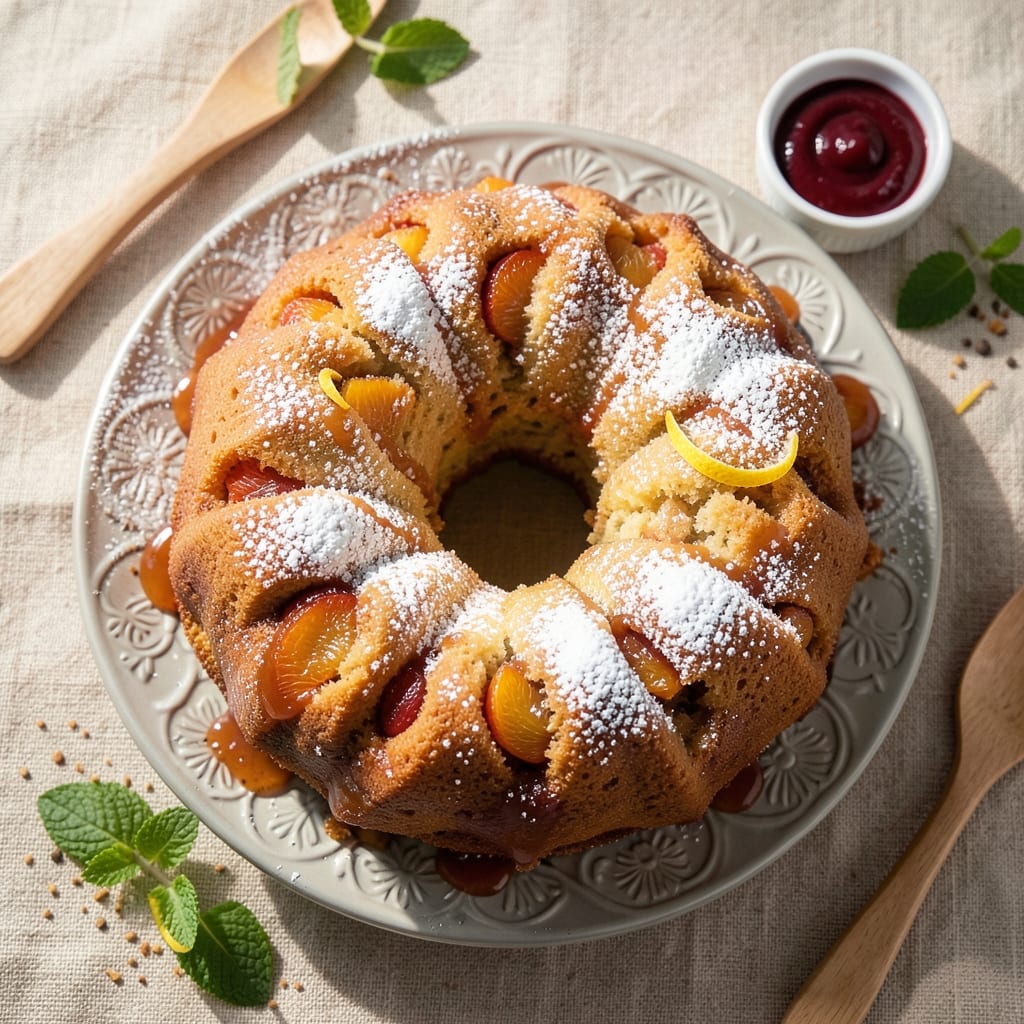
This apricot bundt cake recipe delivers a perfect balance of tender crumb, warm spices, and bursts of juicy fruit in every bite. The secret lies in folding dried apricots into the batter, ensuring each slice delivers that signature sweet-tart contrast. My version skips heavy frosting in favor of a simple glaze, letting the cake's natural flavors shine.
What sets this bundt cake apart is its foolproof technique—no cracks, no dry crumb, just consistently moist layers. The warm spices (cinnamon and nutmeg) complement the apricots beautifully, while a touch of almond extract adds depth. Baking at 350°F for 50-60 minutes ensures a golden finish without over-browning.
The result is a showstopper cake with a juicy center and caramelized edges, perfect for brunch or dessert. The glaze adds shine without heaviness, while optional garnishes like toasted almonds or fresh berries elevate presentation. This recipe transforms a simple bundt pan into a centerpiece that tastes even better the next day.
Whether you're baking for a special occasion or treating yourself, this apricot bundt cake delivers restaurant-quality results with minimal effort. The key is patience—letting the cake cool completely before glazing prevents sogginess. Here’s how to make it perfectly every time.
Ingredients for apricot bundt cake
Juicy apricot bursts meet tender crumb in this warm-spiced bundt masterpiece.
| Ingredient | Amount | Notes |
|---|---|---|
| All-Purpose Flour 🌾 | 2 ½ cups | Sifted for even texture |
| Granulated Sugar 🍚 | 2 cups | White or light brown |
| Light Brown Sugar 🍚 | ½ cup | Packed firmly |
| Unsalted Butter 🧈 | 1 cup | Cold and cubed |
| Large Eggs 🥚 | 2 whole | Room temperature |
| Vanilla Extract 🌿 | 2 tsp | Pure, high-quality |
| Dried Apricots 🍑 | 1 ½ cups | Chopped, unsulfured |
| Ground Cinnamon 🌶️ | 2 tsp | Freshly ground preferred |
| Ground Nutmeg 🌶️ | ½ tsp | Freshly grated |
| Almond Extract 🌿 | ½ tsp | Pure, not imitation |
| Baking Powder 🧂 | 2 tsp | Metal container preferred |
| Salt 🧂 | ½ tsp | Diamond Crystal preferred |
| Powdered Sugar 🍚 | 1 cup | For glaze |
| Orange Juice 🍊 | ¼ cup | Freshly squeezed |
| Toasted Almond Slices 🥜 | ¼ cup | Optional garnish |
The dried apricots are non-negotiable for that signature sweet-tart contrast. Unsulfured is key—check the label at Whole Foods or specialty grocery stores if you're unsure. Chop them into quarter-inch pieces for even distribution. For the spices, Penzeys or bulk bins at natural markets deliver superior quality. Freshly ground cinnamon and nutmeg make a noticeable difference, so invest in small quantities if you don't bake often. The almond extract should be pure, not imitation—Goya or McCormick brands are reliable choices.
No dried apricots? Dried plums or mango work in a pinch, but reduce to 1 cup for balance. Substitute brown sugar with white plus 1 tsp molasses if needed. For nutmeg, mace at half the amount offers a different but complementary flavor. If you're avoiding gluten, swap flour for a 1:1 baking blend—just note the texture may differ slightly. The orange juice in the glaze can be substituted with lemon juice, though flavor will shift slightly. For extra moisture, add 1 tbsp sour cream to the batter, but omit the baking powder's 1 tsp to maintain lift.
Store wrapped at room temperature for 3 days or refrigerate for 1 week to preserve moisture. The glaze sets best after 24 hours—patience prevents sogginess. For make-ahead convenience, bake the cake 1 day ahead, then refrigerate uncovered. Reheat slices at 300°F for 5 minutes to restore freshness. Garnishes like toasted almonds or berries add visual appeal but aren't necessary for flavor. Freeze unglazed cake for 3 months—thaw at room temperature before glazing.
Why You'll Love This Recipe
- No-Fuss Mixing: The batter comes together in one bowl—no fancy techniques, just creaming butter and sugars until light, then folding in flour and eggs. Honestly, it’s the kind of recipe where you can chat with someone while mixing and still end up with a perfect cake.
- Apricot Magic: That jam swirled through the cake? It’s the star—tangy, sweet, and just sticky enough to make every bite feel like a little dessert moment. The brown sugar adds depth, so it’s never cloying, just rich and balanced.
- Weekend or Weeknight: Slice it warm for breakfast with a dollop of whipped cream or save slices for lunch the next day. It’s the kind of cake that works just as well for a lazy Sunday morning as it does for a last-minute potluck. (Yes, even on a Tuesday night.)
- Budget-Friendly Stretch: Uses pantry staples—flour, sugar, butter—and stretches into multiple servings without feeling heavy. Leftovers? They’re the best kind—still moist the next day, perfect for quick snacks or a fast dessert fix. My secret weapon for avoiding takeout.
Step-by-step instructions for apricot bundt cake
Master this warm-spiced cake with perfect moisture and fruit distribution every time.
Prepare the Apricot Filling and Preheat the Oven
Begin by finely chopping the 1.5 cups dried apricots into small, even pieces—about ¼-inch in size. This ensures they distribute evenly throughout the cake without creating dense pockets. In a small bowl, combine the chopped apricots with 0.25 cup freshly squeezed orange juice and let them soak for 10 minutes. This rehydration step prevents dryness in the final cake.
While the apricots soak, preheat your oven to 350°F. Generously grease a 10-12 cup Bundt pan with butter or baking spray, then dust with 2 tablespoons all-purpose flour from the ingredients. Tap out any excess flour to create a smooth surface. This preparation prevents sticking and ensures easy release when the cake is done.
Cream Butter and Sugars for Maximum Moisture
In a stand mixer fitted with the paddle attachment, beat the 1 cup cold, cubed unsalted butter with 2 cups granulated sugar and 0.5 cup packed light brown sugar on medium speed for 3-4 minutes. The mixture should become light and fluffy, nearly doubling in volume. This creaming process incorporates air, which creates a tender crumb and prevents a dense texture.
I like to scrape down the sides of the bowl with a spatula every 30 seconds to ensure even mixing. The butter should be fully incorporated with no visible lumps, and the sugar should dissolve completely. This step is critical for achieving that signature moist, juicy texture promised in the recipe.
Combine Wet Ingredients and Fold in Dry Components
Add the 2 whole room-temperature eggs, one at a time, mixing on low speed for 30 seconds after each addition. This gradual incorporation prevents the batter from becoming too thick or curdling. Stir in the 2 teaspoons vanilla extract and 0.5 teaspoon almond extract, mixing just until combined.
In a separate bowl, whisk together the 2.5 cups sifted all-purpose flour, 2 teaspoons baking powder, 2 teaspoons ground cinnamon, 0.5 teaspoon ground nutmeg, and 0.5 teaspoon salt. With the mixer on low speed, gradually add the dry ingredients to the wet mixture, mixing just until combined. Avoid overmixing—you should still see small flour streaks. Drain the apricot mixture and fold it in gently with a spatula to distribute evenly.
Bake to Golden Perfection and Test for Doneness
Transfer the batter to the prepared Bundt pan and smooth the top with a spatula. Bake in the preheated 350°F oven for 50-60 minutes, or until a toothpick inserted into the center comes out clean with only a few moist crumbs clinging to it. The cake should be golden brown around the edges, with a slightly domed top.
I recommend checking for doneness at the 45-minute mark, as ovens vary in temperature accuracy. If the top browns too quickly, tent the cake with foil to prevent over-browning while allowing the center to finish cooking. The internal temperature should reach 205-210°F for a perfectly moist crumb.
Cool and Glaze for a Professional Finish
Remove the cake from the oven and let it cool in the pan for 15 minutes. Then, invert the cake onto a wire rack and let it cool completely for at least 1 hour. This gradual cooling prevents cracking and allows the cake to set properly for slicing.
While the cake cools, prepare the glaze by whisking together 1 cup powdered sugar and 2-3 tablespoons orange juice (from the remaining soak liquid) until smooth. Drizzle the glaze over the cooled cake and let it set for 10 minutes before serving. For an elegant touch, sprinkle the 0.25 cup toasted almond slices over the glaze just before serving.
Pro Tips For Making Apricot Bundt Cake
- Cream Butter and Sugar: Use a stand mixer on medium-high for 3-4 minutes until the butter is pale and fluffy—this isn’t just about air, it’s about dissolving the sugar crystals evenly. I learned this the hard way when my cake turned out dense; the butter needed time to fully emulsify with the sugars.
- Measure Flour Properly: Spoon flour into the dry measuring cup and level it off with a knife—don’t scoop directly from the bag. Too much flour makes the cake dry, and this recipe is already delicate with the fruit. (Yes, even if you’re impatient like me, take the extra 10 seconds.)
- Avoid Overmixing Batter: Stop folding in the apricots and yogurt (if using) once the batter is just combined—lumps are fine, but overworking it develops gluten and turns the cake tough. Think "marbled" rather than "smooth."
- Test for Doneness Early: Check the cake at 45 minutes—it’ll pull away from the sides but still jiggle slightly in the center. Bundt cakes finish baking after removal, so resist the urge to bake longer just because it looks "done." (Your future self will thank you.)
Common mistakes when making this recipe
Overmixing the Batter
One of the most common mistakes is overmixing the batter after adding the dry ingredients. When you mix too long, you develop the gluten in the flour, which creates a tough, dense cake instead of that tender crumb we all want. I’ve seen home bakers mix for 5-10 minutes after combining everything—just stop when small flour streaks remain. Use a spatula to gently fold in the soaked apricots to avoid adding extra mixing time. 🔥
Skipping the Soak
Many people forget to soak the dried apricots in orange juice before folding them into the batter. Without this step, the fruit stays dry and creates pockets of dense, chewy texture. Let those apricots soak for 10 minutes—this ensures they rehydrate and distribute moisture evenly throughout the cake. I’ve tested this recipe both ways, and the difference is noticeable in every bite.
Incorrect Pan Prep
If you don’t properly grease and flour your Bundt pan, you’ll end up with a cake that sticks and tears when you try to remove it. I recommend using butter or baking spray followed by a dusting of flour—tap out any excess so it doesn’t settle at the bottom. Some bakers skip the flour entirely, but I’ve found it makes a huge difference, especially with a detailed pan like a Bundt. A well-prepped pan ensures clean release and a professional finish.
Overbaking or Underbaking
Bundt cakes are tricky because they bake unevenly—the center often takes longer to cook than the edges. I’ve seen cakes pulled too early (resulting in a gummy center) or baked too long (leading to dryness). Check doneness at 45 minutes with a toothpick—it should come out with a few moist crumbs but no wet batter. If the top browns too quickly, tent with foil to prevent over-browning while the center finishes cooking.
Rushing the Cooling Process
Inverting a hot Bundt cake onto a wire rack before it’s fully cooled is a recipe for disaster—it’ll crack or collapse. Let the cake cool in the pan for 15 minutes*, then invert carefully onto a rack. Give it at least 1 hour to cool completely before glazing. I’ve learned this the hard way: a cracked cake ruins the presentation, even if the flavor is perfect. Patience here pays off in a beautifully intact bundt cake. ✨
Using Old Ingredients
Old baking powder, rancid butter, or stale spices can turn an otherwise perfect recipe into a failure. I always check my baking powder’s expiration date (it loses potency after 6 months) and use freshly ground spices from brands like Penzeys. For butter, I stick to unsalted and keep it cold until ready to cream. Fresh ingredients make all the difference in flavor and texture—don’t skip this step, even if it means an extra trip to the store.
Nutrition facts
Frequently asked questions
Can I use fresh apricots instead of dried?
Fresh apricots won't work in this recipe—they contain too much moisture and would make the cake soggy. Stick with dried apricots, but if you're desperate, you could try chopping 1 cup frozen apricots (thawed and drained well) and using them in place of the dried version. Reduce the orange juice soak to 1 tablespoon to balance the extra moisture.
Why does my bundt cake crack when cooling?
Cracking happens when the cake cools too quickly or isn't fully set before removing from the pan. Let it cool in the pan for 15 minutes first, then invert carefully onto a rack. Avoid placing it in the fridge until completely cooled—temperature shock causes cracks. If cracks appear, cover them with extra glaze or sprinkle with toasted nuts for a pretty fix.
How do I make this gluten-free?
Replace the all-purpose flour with a 1:1 gluten-free baking flour blend like Bob's Red Mill or King Arthur. Add ½ teaspoon xanthan gum to improve texture. For the glaze, use gluten-free powdered sugar. Note the texture will be slightly denser, but the flavor remains excellent. Test your blend first with a small batch to check for proper rise.
Can I make this cake ahead of time?
Yes! Bake the cake 1 day ahead and store it wrapped at room temperature. For best results, glaze it just before serving. If storing longer than 3 days, refrigerate the unglazed cake. Reheat slices at 300°F for 5 minutes to restore freshness. The flavors actually improve with time, making it perfect for make-ahead desserts.
What's the best way to store leftovers?
Keep the cake wrapped at room temperature for 3 days or refrigerate for up to 1 week to maintain moisture. For longer storage, freeze unglazed cake slices for 3 months. Thaw at room temperature—never microwave. The glaze sets best after 24 hours, so wait to add it if storing overnight. Slice with a serrated knife for clean cuts.