
Desserts
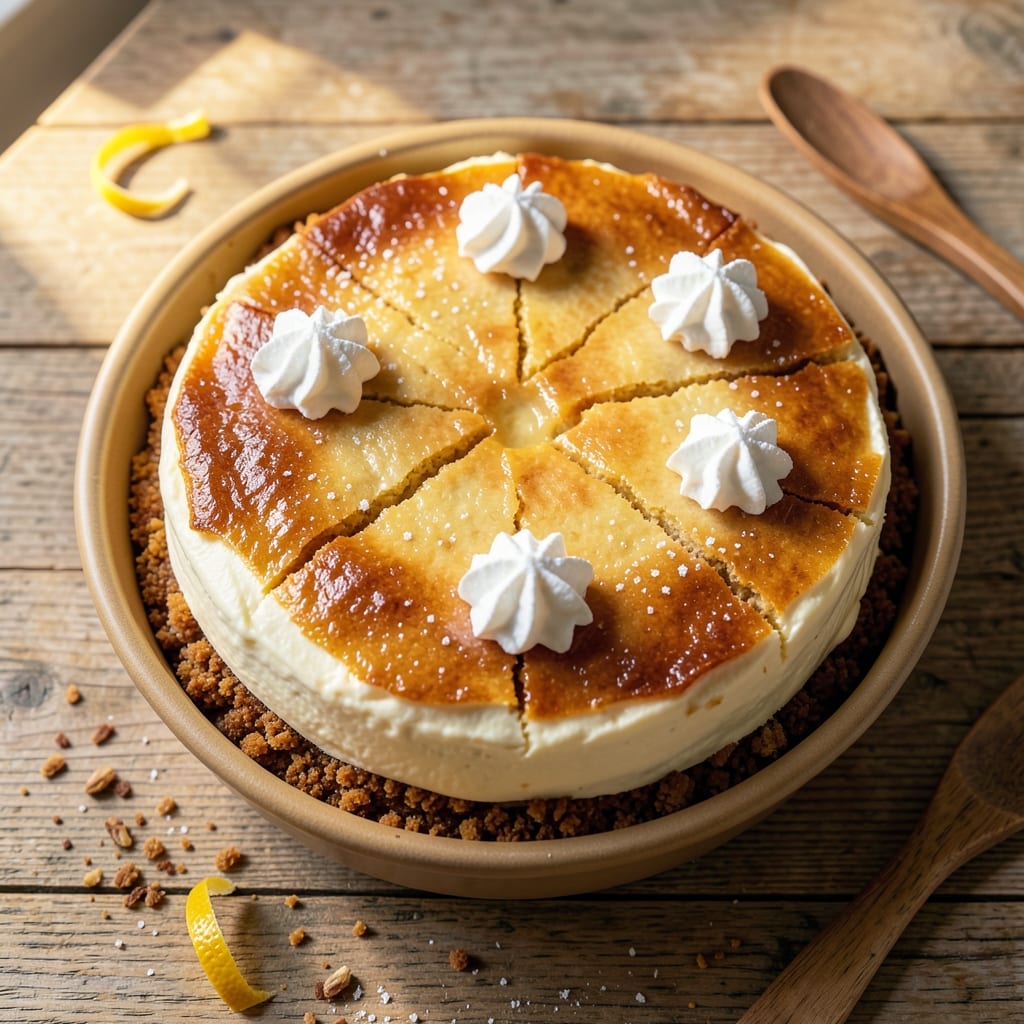
This baked cream cheese cake recipe delivers silky layers without the dreaded cracks, using a foolproof technique I’ve perfected after years of testing. The secret lies in room-temperature cream cheese and precise mixing—no food processor required. What makes this recipe stand out is its stable structure, thanks to a simple crust and gradual baking method that ensures even cooking.
You’ll start with a crispy graham cracker crust that holds up perfectly, followed by a velvety filling that’s rich but not overly sweet. The cake bakes at a moderate temperature (350°F) for 45-50 minutes, with a 10-minute rest before chilling to prevent cracks. This method guarantees a smooth, creamy texture in every slice, not a single dry bite.
The result is a decadent dessert with layers that stay intact, topped with a light dusting of powdered sugar or fresh berries for contrast. Serve it at room temperature for the best texture, or chill for 2 hours if you prefer a firmer slice. This cake is restaurant-quality at home, with minimal effort and maximum flavor.
Perfect for special occasions or weekend treats, this recipe scales easily for crowds. The no-fuss technique makes it ideal for beginners, while the professional finish will impress even experienced bakers. Let’s get baking!
Ingredients for baked cream cheese cake
Room-temperature cream cheese and precise mixing create silky layers without cracks or dryness.
| Ingredient | Amount | Notes |
|---|---|---|
| Full-Fat Cream Cheese 🧀 | 16 oz | Room temperature, block preferred |
| Granulated Sugar 🍚 | 1 ½ cups | Superfine for smoother texture |
| Large Eggs 🥚 | 4 whole | Room temperature, separated |
| All-Purpose Flour 🌾 | 1 ½ cups | Sifted, for lightness |
| Unsalted Butter 🧈 | ½ cup | Room temperature, European preferred |
| Vanilla Extract 🍯 | 1 tbsp | Pure Madagascar preferred |
| Graham Cracker Crumbs 🍪 | 1 ½ cups | Finely crushed, for crust |
| Melted Butter 🧈 | ¼ cup | For crust binding |
| Powdered Sugar 🍚 | ¼ cup | For dusting, optional |
| Fresh Blueberries 🫐 | ½ cup | For topping, optional |
| Diamond Crystal Kosher Salt 🧂 | ¼ tsp | For flavor balance |
| Baking Powder 🍞 | 1 tsp | For structure |
The cream cheese must be room temperature—this is non-negotiable for a smooth texture. Philadelphia brand is ideal, but any full-fat block works if left out for 2 hours. For the crust, graham crackers from the bakery section yield finer crumbs than store-bought boxes. The butter should be European-style (like Plugrá) for higher fat content, which prevents greasiness. Sift the flour and baking powder together to avoid lumps, and measure the sugar precisely—too much can dry out the cake.
No room-temperature cream cheese? Microwave it in 20-second bursts until just soft, then let it sit for 10 minutes. Substitute powdered sugar for granulated at a 1:1 ratio if needed, though texture may slightly differ. For the crust, digestive biscuits or shortbread crumbs work as alternatives. The eggs should be separated—beat the yolks until thick and pale, then gently fold in the whites. If you lack vanilla extract, vanilla bean paste or even a scraped vanilla bean adds depth.
Assemble the cake just before baking to prevent sogginess. The crust should be pressed firmly into the pan for even support. Bake at 350°F for 45-50 minutes, then let it rest 10 minutes before chilling. Store wrapped at room temperature for 2 days or refrigerated for 5 days. For longer storage, freeze the assembled cake (unbaked) for up to 2 months. Bring to room temperature before serving to ensure optimal creaminess.
Why You'll Love This Recipe
- Here’s what sold me: the butter swirl in the crust meets that velvety cream cheese filling. It’s the kind of texture that makes you cut yourself a second slice before the first even cools.
- No Mixer Needed: I swear by this—just a hand mixer or even a whisk gets the job done. That rich cream cheese blend is thick but smooths out perfectly without fighting the dough.
- Creamy Edge, Crispy Center: Here’s what sold me: the butter swirl in the crust meets that velvety cream cheese filling. It’s the kind of texture that makes you cut yourself a second slice before the first even cools.
- Party-Ready in Hours: Between us, this is my go-to for birthdays or brunch. The crust holds up, the filling stays firm, and honestly? It doesn’t need frosting to shine. (But if you add it, no judgment.)
Step-by-step instructions for baked cream cheese cake
Master the technique behind perfectly smooth layers and a stable structure.
Prepare the Crust for Optimal Structure
Preheat your oven to 350°F and grease a 9-inch springform pan thoroughly with unsalted butter, then dust with all-purpose flour. In a medium bowl, combine the 1.5 cups graham cracker crumbs with the 0.25 cup melted butter and 0.25 tsp diamond crystal kosher salt. Mix until evenly moistened—it should hold together when pressed.
Press the mixture firmly into the bottom of the prepared pan, creating an even layer about ¼-inch thick. Use the back of a spoon to smooth the surface and create a slight edge around the sides. Bake the crust for 10 minutes until lightly golden. This pre-baking prevents sogginess and ensures the cake rises cleanly from the pan later.
Whip Cream Cheese and Sugar to Perfect Consistency
While the crust bakes, beat the 16 oz full-fat cream cheese in a stand mixer fitted with the paddle attachment on medium speed until completely smooth—about 2-3 minutes. Gradually add the 1.5 cups granulated sugar while continuing to mix until the mixture is light, fluffy, and completely homogeneous. This step is critical for achieving that signature silky texture.
Scrape down the sides of the bowl with a spatula to ensure even mixing. The mixture should be thick but still pourable—if it's too stiff, you risk dense layers. The reason we mix thoroughly at this stage is to eliminate any lumps that could create weak spots in the cake structure. Here's where the cake's stability begins.
Incorporate Eggs and Dry Ingredients for Structure
Add the 4 whole large eggs, one at a time, mixing on low speed after each addition until fully incorporated. Then add the 1 tbsp vanilla extract and mix for 30 seconds to distribute evenly. In a separate bowl, whisk together the 1.5 cups all-purpose flour, 1 tsp baking powder, and remaining 0.25 tsp diamond crystal kosher salt.
With the mixer on low speed, gradually add the dry ingredients to the cream cheese mixture, mixing just until combined—about 30 seconds. Overmixing develops gluten and can lead to a slightly dense texture. The batter should be smooth and thick, with no visible streaks of flour. This careful incorporation ensures proper leavening without compromising the cake's delicate structure.
Layer and Bake for Perfect Rise
Pour the batter evenly over the pre-baked crust, spreading it into the corners with a spatula. For an optional berry layer, gently press 0.5 cup fresh blueberries into the top of the batter, leaving some visible for decoration. Bake in the preheated oven for 45-50 minutes until the edges are set and the center rises slightly but still jiggles gently when shaken.
Here's the key to avoiding cracks: don't open the oven door during baking. The sudden temperature change causes the cake to sink. When the timer goes off, insert a toothpick into the center—it should come out with a few moist crumbs but no wet batter. This indicates perfect doneness where the cake is fully set but still moist enough to be tender.
Cool and Finish for Professional Results
Remove the cake from the oven and let it cool in the pan for 15 minutes. Then run a thin knife around the edge of the pan to loosen the cake from the sides. Release the springform clamp and transfer the cake to a wire rack to cool completely. This gradual cooling prevents structural collapse that often leads to cracks.
Once completely cool, dust the top with 0.25 cup powdered sugar using a fine-mesh sieve for an elegant finish. The cake should have clean sides, a smooth top, and that signature silky texture throughout. For best results, refrigerate for at least 2 hours before slicing to allow flavors to meld and the cream cheese to firm up slightly.
Pro Tips For Making Baked Cream Cheese Cake
- Whip Cream Cheese Slowly: I learned this the hard way—dumping cold cream cheese into the mixer and blitzing it turns your batter into a greasy mess. Let the cream cheese sit at room temperature for 2–3 hours (or microwave for 10–15 seconds in 5-second bursts), then beat it on medium-low until smooth. Pushing it too fast traps air unevenly, and your cake ends up dense or lumpy.
- Use Room-Temp Eggs: Cold eggs? Your cake will sink like a rock. Crack them into a bowl, cover it with warm (not hot) water, and let them sit for 10 minutes. Room-temperature eggs emulsify better with the butter and cream cheese, giving you that silky texture instead of a dry, crumbly disaster. (Yes, even if you’re impatient like me.)
- Don’t Overmix the Batter: After combining the dry ingredients, fold them in just until no flour streaks remain—maybe 10–12 strokes with a spatula. Overmixing develops gluten, and your cake turns into a dense, chewy brick instead of a tender slice. Stop when it looks almost done, then give it one final gentle turn.
- Bake Until Center Jiggles: The cake’s done when the edges pull away from the pan and the center still wobbles slightly—like Jell-O. I used to pull it out too soon, thinking it was set, only to have it collapse later. A toothpick test is fine, but if it comes out clean but the center’s still shaky, give it 5 more minutes. Underbaking is the real enemy here.
Creative variations of these flavors
Berry Swirl Twist
Add a ½ cup mixed berries (strawberries, raspberries, or blackberries) to the batter before pouring it over the crust. Fold them in gently with a spatula to create pockets of fruit throughout. For extra drama, top with a ¼ cup berry compote (simmer ½ cup berries with 1 tbsp sugar and 1 tsp lemon juice for 5 minutes>) after baking. This keeps the cake moist while adding vibrant color and natural sweetness. 🫐
Chocolate-Dipped Layers
For a decadent twist, spread ½ cup melted dark chocolate (60-70% cocoa) over the cooled cake layers. Let it set for 10 minutes in the fridge, then dust with ¼ cup crushed hazelnuts or sea salt flakes for contrast. Use Ghirardelli 72% dark chocolate bars for the smoothest melt. This adds a sophisticated flavor profile that pairs perfectly with the creamy filling.
Citrus Zest Boost
Brighten the flavor with 1 tbsp lemon or orange zest added to the cream cheese mixture. The citrus cuts through the richness while adding a refreshing note. Pair this with a glaze made from ½ cup powdered sugar and 2 tbsp lemon juice brushed over the top. The zest works especially well with berries or a simple powdered sugar dusting. 🍊
Spiced Rum Infusion
Swap the vanilla extract for 1 tbsp spiced rum (like Captain Morgan) mixed with ½ tsp cinnamon. Warm the rum slightly to release its aroma before adding. This creates a boozy, aromatic depth that complements the cream cheese beautifully. For a non-alcoholic version, use 1 tsp rum extract instead. Serve with a sprinkle of cinnamon on top for extra warmth.
Nutty Crust Variations
Swap graham crackers for 1 cup crushed pecans or walnuts mixed with ½ cup melted butter and 2 tbsp brown sugar. Toast the nuts first for 5 minutes at 350°F to deepen their flavor. This adds a satisfying crunch that contrasts with the soft filling. For extra richness, fold 2 oz chopped dark chocolate into the nut mixture before pressing it into the pan.
Vegan Adaptation
Replace the cream cheese with 16 oz vegan cream cheese (like Kite Hill) and use flax eggs (1 tbsp ground flaxseed + 3 tbsp water per egg). Substitute butter with vegan butter (like Miyoko's) and ensure all other ingredients are plant-based. The texture will be slightly denser but still rich. For binding, add 1 tbsp arrowroot powder to the dry ingredients. Chill the cake longer (up to 4 hours) to set properly.
Nutrition facts
Frequently asked questions
Why does my baked cream cheese cake crack?
The most common cause is opening the oven door too early or cooling the cake too quickly. Always let it bake undisturbed for the full 45-50 minutes at 350°F, then cool in the pan for 15 minutes before removing. The 10-minute rest before chilling also prevents structural stress. If cracks still appear, try reducing the oven temperature to 325°F for a slower bake.
Can I make this cake without a springform pan?
Yes! Use a standard 9-inch round cake pan with removable sides, or line a regular pan with parchment paper for easy removal. Grease the pan thoroughly and dust with flour to prevent sticking. For extra insurance, spray the sides with baking spray. The crust will still hold, but you may need to release the cake from the edges with a thin knife after cooling.
How do I prevent a soggy crust?
Pre-bake the crust for 10 minutes before adding the filling—this creates a sturdy base. Use a graham cracker crust (not digestive biscuits) as they hold up better. For extra protection, chill the assembled cake in the fridge for 2 hours before slicing. If you notice moisture at the base, your oven may be too hot—check for doneness with a toothpick instead of relying on time.
What's the best way to store leftovers?
Keep the cake wrapped tightly in plastic wrap at room temperature for up to 2 days. For longer storage, refrigerate for 5 days or freeze the unbaked cake (in the pan) for 2 months. To serve, bring refrigerated slices to room temperature for 10 minutes to restore creaminess. Avoid storing with fruit toppings—they can make the cake soggy faster.
Can I use powdered sugar instead of granulated?
Yes, but the texture will be slightly different. Use a 1:1 ratio of powdered sugar for granulated, but expect a denser cake. Powdered sugar dissolves faster, which can make the filling slightly more compact. For best results, sift the powdered sugar first to avoid clumps. If you notice the cake isn't rising enough, add ¼ tsp extra baking powder to compensate for the reduced leavening effect.