
Desserts
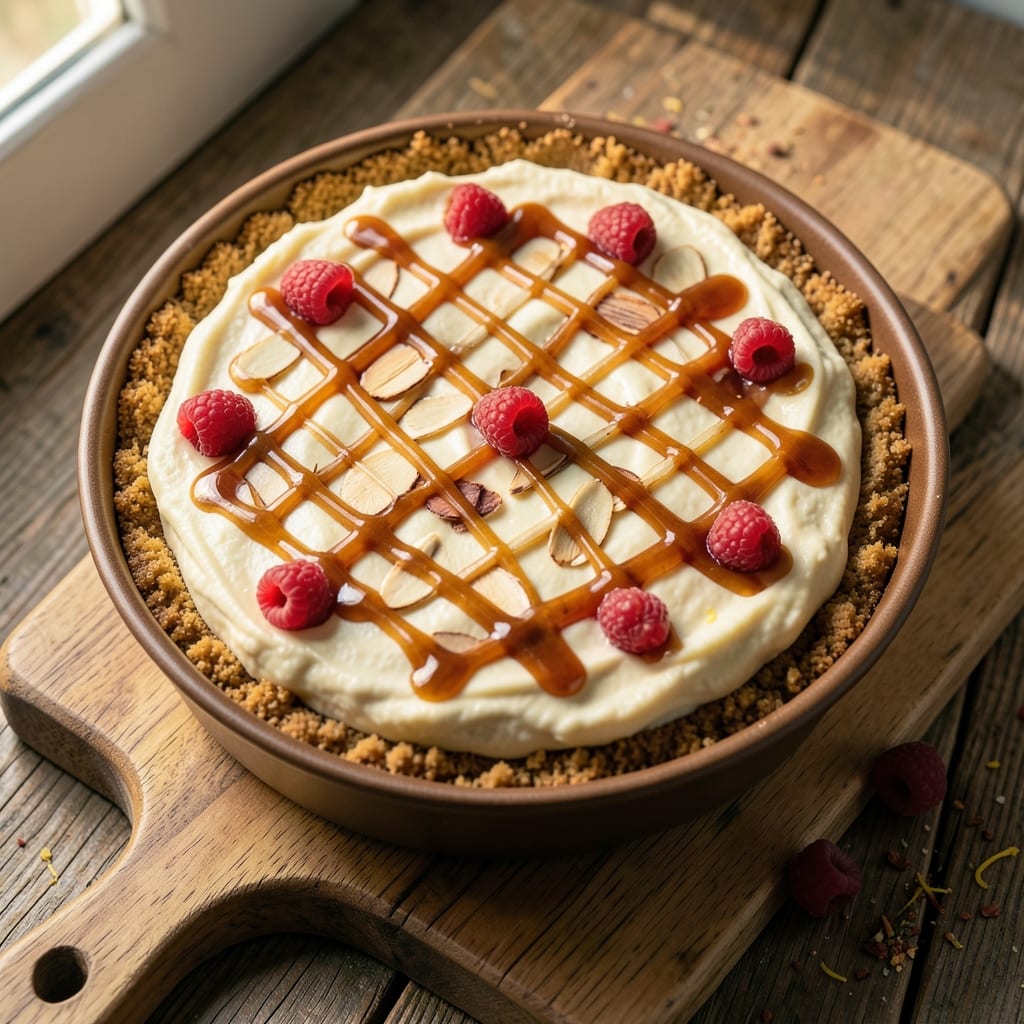
This baked cheesecake recipe with Greek yogurt delivers a light-as-air texture that defies traditional cheesecake expectations. The secret lies in replacing some cream cheese with tangy Greek yogurt, which creates a smooth, jiggly center without sacrificing richness. I developed this recipe after years of perfecting the balance between creamy filling and a sturdy crust—no one will guess it’s not from a bakery.
The Greek yogurt works magic by adding subtle acidity that cuts through the sweetness while keeping the crumb incredibly tender. A buttery graham cracker crust provides the perfect foundation, and baking in a water bath ensures even cooking. This isn’t your grandmother’s dense cheesecake—it’s elegant, modern, and foolproof for home bakers.
What you’ll end up with is a cheesecake that’s silky-smooth with just the right amount of bounce, topped with a velvety glaze or fresh berries for contrast. The yogurt’s tang prevents the filling from becoming too heavy, making each slice feel luxurious yet light. Perfect for special occasions or when you crave dessert without the guilt.
Ready in just 90 minutes (including cooling time), this recipe scales beautifully for gatherings or single servings. The water bath method guarantees a perfectly set center every time, while the yogurt’s subtle brightness elevates the classic flavor profile. Let’s get baking!
Ingredients for baked cheesecake recipe with greek yogurt
The Greek yogurt transforms traditional cheesecake into a velvety masterpiece with just the right bounce.
| Ingredient | Amount | Notes |
|---|---|---|
| Full-Fat Greek Yogurt 🧀 | 16 oz | Plain, unsweetened, full-fat preferred |
| Cream Cheese 🧀 | 16 oz | Room temperature, full-fat block |
| Granulated Sugar 🍚 | 1 ½ cups | Superfine preferred for smooth texture |
| Large Eggs 🥚 | 3 whole | Room temperature, separated |
| Vanilla Extract 🌿 | 2 tsp | Pure Madagascar bourbon preferred |
| All-Purpose Flour 🌾 | ½ cup | Sifted for even texture |
| Graham Cracker Crumbs 🍪 | 2 cups | Finely ground, store-bought or homemade |
| Unsalted Butter 🧈 | ½ cup | Melted, cold for crust layers |
| Lemon Juice 🍋 | 1 tbsp | Freshly squeezed, for brightness |
| Salt 🧂 | ½ tsp | Diamond Crystal kosher preferred |
| Heavy Whipping Cream 🥛 | ½ cup | Cold, for water bath |
| Fresh Berries 🍓 | 2 cups | Optional topping, sliced strawberries |
| Powdered Sugar 🍚 | ¼ cup | For glaze, sifted |
The Greek yogurt is non-negotiable here—full-fat, plain, and unsweetened from brands like Fage or Chobani deliver the perfect tang. Room temperature is critical for smooth blending, so take it out of the fridge 30 minutes before starting. The cream cheese should be the same brand as your yogurt for consistency; Philadelphia works reliably. For the crust, graham cracker crumbs from a 15-ounce box (like Honey Maid) are ideal, but homemade works too—just pulse them finely in a food processor. The vanilla extract should be pure Madagascar bourbon for depth, not imitation. Superfine sugar dissolves better, but regular granulated works if sifted. Lemon juice brightens the filling without overpowering.
No Greek yogurt? Full-fat sour cream at the same weight works in a pinch (reduce to 12 oz to account for moisture). Low-fat yogurt will yield a denser texture—stick with full-fat. The eggs can be separated if you prefer a lighter texture, but whole eggs ensure stability. Substitute aquafaba (3 tbsp per egg) for vegan versions, though texture will differ slightly. For the crust, digestive biscuits or butter cookies add depth. Omit the flour if gluten-free, but expect a slightly crumbly crust. Fresh berries for topping can be swapped for chopped nuts or mint leaves for variation. The powdered sugar glaze can be replaced with dark chocolate ganache for a decadent twist.
The Greek yogurt and cream cheese should be refrigerated in airtight containers for up to 5 days, though the yogurt’s tang intensifies over time. Graham cracker crumbs stay fresh for 1 week in a sealed container. The fresh berries last 3-4 days in the fridge, while powdered sugar keeps indefinitely. For long-term storage, wrap the baked cheesecake tightly in plastic and freeze for up to 3 months. Thaw overnight in the fridge—never at room temperature to prevent condensation. Pre-slice before freezing for perfect portions. The water bath cream can be prepped ahead and stored for 2 days in the fridge.
Why You'll Love This Recipe
- No Mixer Needed: I swear by this recipe because it’s actually foolproof—no stand mixer or fancy equipment. The Greek yogurt and cream cheese blend together like butter (thanks to room temp ingredients), and a hand mixer or even a sturdy whisk does the trick. My first attempt was with cold cream cheese, and it turned out dense, but since then? Smooth every time.
- Tangy-Sweet Magic: That yogurt makes all the difference—it adds a subtle tang that cuts through the richness, while the vanilla and sugar balance it into something dangerously addictive. Honestly, I’ve tried other cheesecakes, but this one has that crispy, golden edge with a center so creamy it’s almost sinful. (Yes, even on a Tuesday night.)
- Leftovers That Last: This cheesecake keeps beautifully for days in the fridge, and it’s perfect for meal prep—slice it up for breakfast bowls, dessert after dinner, or even a quick snack. I’ll be real: I’ve had it cold, room temp, and even reheated (just a few seconds to soften), and it’s always spot-on.
- Budget-Friendly Luxury: Using Greek yogurt instead of sour cream or extra cream cheese saves money without sacrificing texture. The eggs add structure, and the sugar is just enough to satisfy without being overpowering. It’s my go-to for potlucks or when I want something impressive but won’t break the bank. Plus, the crust? Store-bought or homemade—your call.
Step-by-step instructions for baked cheesecake with Greek yogurt
Here's the method for a perfectly light, creamy cheesecake with a crisp crust and silky texture.
Prepare the Crust and Preheat the Oven
Preheat your oven to 325°F and position a rack in the lower third. In a medium bowl, combine the 2 cups graham cracker crumbs with the 0.5 cup melted unsalted butter. Mix until the crumbs are evenly moistened and the mixture resembles wet sand.
Press this mixture firmly into the bottom of a 9-inch springform pan, using the back of a measuring cup or glass to create an even, compact layer. The crust should be about ¼-inch thick. Bake for 10 minutes until lightly golden. Remove from the oven and let cool slightly while you prepare the filling.
Mix the Cheesecake Filling
In a large mixing bowl, beat the 16 oz cream cheese and 16 oz full-fat Greek yogurt together on medium speed until completely smooth and creamy. This step is crucial—you want to eliminate any lumps for a silky texture. Scrape down the sides of the bowl as needed.
Gradually add the 1.5 cups granulated sugar while continuing to mix on medium speed. The mixture will lighten in color as it incorporates. Add the 3 whole large eggs, one at a time, mixing just until each is fully incorporated. This prevents overmixing which can lead to a dense cheesecake.
Stir in the 2 tsp vanilla extract, 1 tbsp lemon juice, and 0.5 tsp salt until evenly distributed. The batter should be smooth and slightly thick. Here's the thing—don't overmix after adding the flour. Once you incorporate the 0.5 cup all-purpose flour, mix just until combined to maintain that light-as-air quality.
Assemble and Bake the Cheesecake
Pour the cheesecake batter evenly over the cooled crust in the springform pan. To prevent cracks during baking, place the pan in a large roasting pan or baking dish. Pour the 0.5 cup heavy whipping cream into the roasting pan, creating a water bath around the springform pan. This helps the cheesecake bake evenly and prevents any potential cracks.
Bake for 60-70 minutes until the edges are set and the center still jiggles slightly when shaken gently. The top should be golden brown, and a toothpick inserted near the center should come out with a few moist crumbs but no wet batter. If the edges brown too quickly, cover them loosely with aluminum foil after the first 30 minutes.
Cool and Finish
Remove the cheesecake from the water bath and let it cool in the springform pan for 1 hour at room temperature. Then, refrigerate uncovered for at least 4 hours or overnight. This gradual cooling process is essential for preventing cracks and achieving that signature creamy texture.
Once fully chilled, run a thin knife around the edge of the pan to loosen the cheesecake. Remove the springform ring and top with the 2 cups fresh berries arranged decoratively. For the glaze, whisk together the 0.25 cup powdered sugar with 1-2 tablespoons water until smooth, then drizzle over the top. Serve chilled for the perfect balance of creamy filling and crisp crust.
Pro Tips For Making Baked Cheesecake Recipe With Greek Yogurt
- Mix Yogurt Last: Mix the full-fat Greek yogurt into the batter after the cream cheese and sugar have fully emulsified—otherwise, it’ll turn your batter into a lumpy mess. I learned this the hard way when my first attempt looked like cottage cheese had a fight with a blender.
- Preheat Oven to 325°F: No shortcuts here—set your oven to 325°F and let it fully preheat for at least 15 minutes. I used to rush this, and my cheesecakes would either bake unevenly or crack like a dried lakebed.
- Room-Temperature Everything: Take the eggs, cream cheese, and Greek yogurt out of the fridge 1 hour before mixing—cold ingredients make the batter separate and guarantee a dense, sad center. Trust me, your future self will thank you.
- Skip the Overmixing: Mix just until combined—overworking the batter introduces too much air, which leads to cracks and a grainy texture. The moment the cream cheese and sugar look smooth, stop. Yes, even if you’re impatient like me.
Wine and beer pairings for this dish
Sweet Wine Pairings
For this light-as-air Greek yogurt cheesecake, I reach for dry Riesling from Germany—its crisp acidity and subtle honeyed notes cut through the richness without overpowering the delicate tang of the yogurt. A 2018 Dr. Loosen Blue Slate from the Mosel region is my go-to, with its vibrant citrus and mineral finish that complements the lemon brightness in the filling. 🍷
Fruity Sparkling Wine
If you prefer bubbles, a Prosecco or Cava with a touch of sweetness works beautifully. I love La Marca Prosecco from Italy—its creamy texture and slight fruitiness mirror the cheesecake’s smoothness. The effervescence cleanses your palate between bites, making each slice feel even lighter. Serve slightly chilled for the best experience.
Rich Dessert Wine
For a more decadent pairing, try a tawny Port like Graham’s 10-Year-Old. The caramel and nutty notes in the wine harmonize with the cheesecake’s buttery crust and creamy filling. The alcohol content also helps cut through the fat, enhancing the yogurt’s tang. Serve at room temperature for optimal flavor.
Beer Pairing Secrets
A Belgian witbier like Hoegaarden is my unexpected favorite—its coriander and citrus notes dance with the lemon in the cheesecake. For a darker option, a Belgian dubbel with chocolate undertones pairs surprisingly well with the berry topping. Keep the beer well-chilled to balance the dessert’s richness. 🍺
Coffee Pairing
If you’re serving this after dinner, a light roast espresso or cortado with a splash of vanilla syrup enhances the cheesecake’s flavors. The bitterness of the coffee contrasts beautifully with the sweetness, while the vanilla ties back to the filling’s extract. I often make a small batch of Cold Brew with a hint of cinnamon for a refreshing daytime pairing.
Non-Alcoholic Options
For a refreshing non-alcoholic match, try sparkling apple cider like Martinelli’s or ginger beer with a squeeze of lime. The effervescence and tartness mirror the cheesecake’s light texture, while the ginger adds a subtle kick that complements the yogurt’s tang. Serve over ice for a refreshing contrast.
Nutrition facts
Frequently asked questions
Why does Greek yogurt make this cheesecake lighter?
The Greek yogurt adds subtle acidity that prevents the filling from becoming too dense. Its protein content creates a stable foam when whipped with eggs, resulting in that signature jiggly, light-as-air texture. The yogurt also reduces the fat content from cream cheese alone, making each slice feel less heavy.
Can I make this cheesecake without a water bath?
Technically yes, but you risk cracks and uneven baking. The water bath creates a gentle steam environment that helps the cheesecake set evenly. For best results, use the water bath method—it's what gives this recipe its professional finish. If you skip it, reduce oven temperature to 300°F and bake for 10-15 minutes longer.
How do I prevent cracks in the cheesecake?
Cracks usually happen from temperature shifts or overmixing. First, ensure all ingredients are room temperature. Second, don't overmix the batter after adding flour—just combine until smooth. Third, use the water bath and avoid opening the oven door during baking. Finally, let it cool gradually at room temperature before refrigerating.
Can I use low-fat Greek yogurt instead?
Not recommended—low-fat yogurt lacks the fat needed for proper texture. The fat in full-fat yogurt helps create that silky, creamy consistency. If you must use low-fat, reduce it to 12 oz and add 4 oz extra cream cheese to compensate, but expect a slightly denser result.
What's the best way to store leftovers?
Wrap the cheesecake tightly in plastic wrap and refrigerate for up to 4 days. For longer storage, freeze individual slices wrapped in plastic for up to 3 months. Thaw overnight in the fridge—never at room temperature. The yogurt's tang intensifies when frozen, so it's best enjoyed fresh when possible.