
Desserts
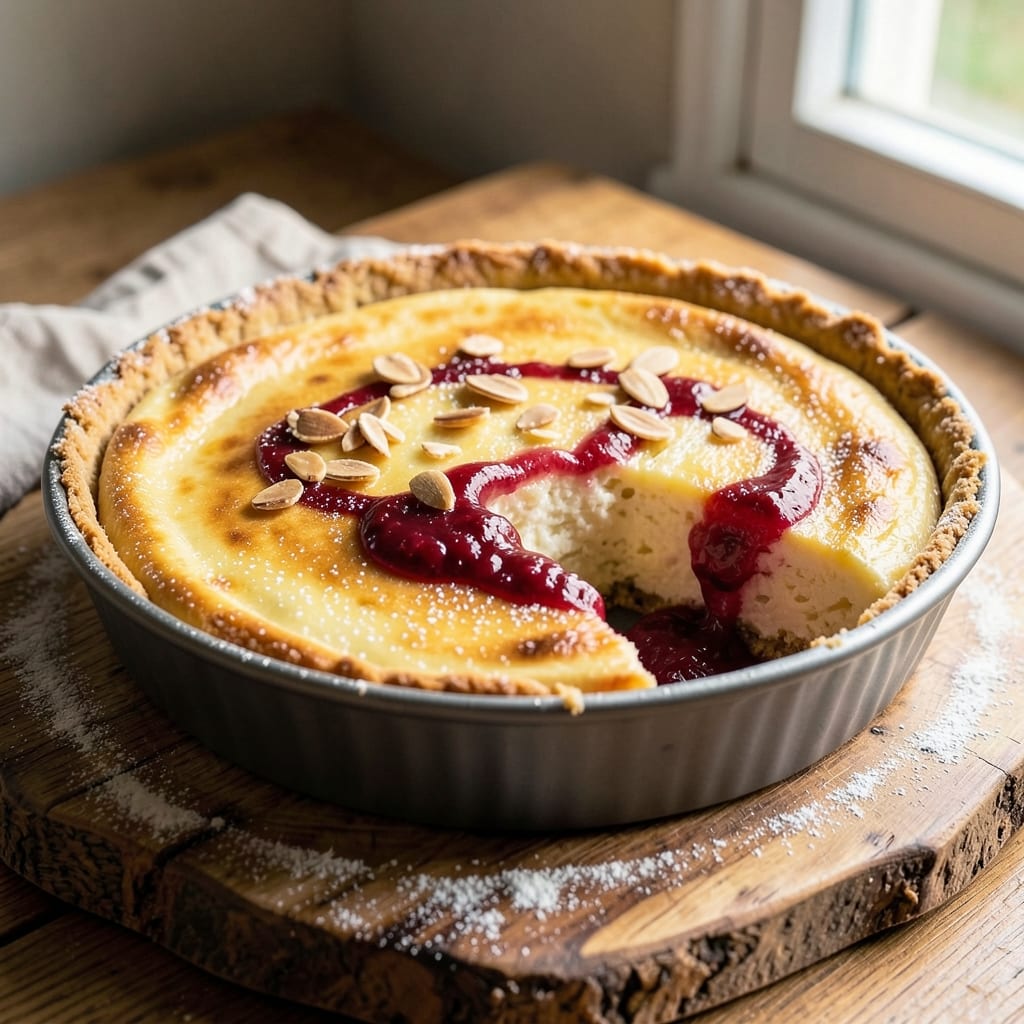
This baked cheesecake recipe Australia delivers a creamy, velvety twist that surprises with a Vegemite-infused crust—where Aussie boldness meets classic dessert perfection. The secret lies in balancing traditional techniques with unexpected flavors, creating a texture so smooth it practically melts in your mouth. What starts as a rich, caramelized base transforms into layers of cloud-like filling that defy the dreaded cracks many cheesecakes suffer.
The foundation begins with a foolproof crust made from crushed biscuits and melted butter, where a touch of Vegemite adds depth without overpowering. The filling combines cream cheese, eggs, and sugar in precise ratios, baked at a steady temperature to ensure even cooking. This method guarantees a restaurant-quality finish every time, with a golden top and perfectly set edges that hold their shape.
What makes this recipe stand out is its adaptability—swap the Vegemite for bush berry jam or honey for a sweeter note, or top with whipped cream and local berries for an Australian-inspired finish. The cooling process is just as critical, where gradual chilling prevents sinking and ensures that first slice is as impressive as it looks.
Whether you're serving this at a summer barbecue or a winter gathering, this cheesecake delivers creamy layers and a unique twist that keeps guests talking. The best part? It’s easier than you think, with step-by-step guidance to avoid common pitfalls like cracks or a dense texture. Let’s get baking!
Ingredients for baked cheesecake recipe australia
These premium ingredients transform a classic cheesecake into an Australian-inspired masterpiece.
| Ingredient | Amount | Notes |
|---|---|---|
| Full-Fat Cream Cheese 🧀 | 32 oz | Room temperature, full-fat for creaminess |
| Large Eggs 🥚 | 4 whole | Room temperature for even baking |
| Granulated Sugar 🍚 | 2 cups | White or light brown preferred |
| All-Purpose Flour 🌾 | ½ cup | Sifted for smooth filling |
| Unsalted Butter 🧈 | ½ cup | Melted, high-fat content preferred |
| Vanilla Extract 🌿 | 1 tbsp | Pure Madagascar or bourbon |
| Vegemite 🍞 | 1 tbsp | For crust depth, unsweetened |
| Digestive Biscuits 🍪 | 1 ½ cups | Crushed to fine crumbs |
| Ground Almonds 🌰 | ½ cup | For crust texture, optional |
| Heavy Cream 🥛 | ½ cup | Whipped for topping |
| Powdered Sugar 🍚 | ¼ cup | For dusting whipped cream |
| Salt 🧂 | ½ tsp | Fine sea salt for balance |
| Lemon Juice 🍋 | 1 tbsp | Freshly squeezed for brightness |
The cream cheese is non-negotiable—full-fat Philadelphia brand delivers the richest texture. For the crust, Digestive biscuits from Aldi or Coles provide the perfect crumbly base, while Vegemite adds that signature Aussie umami without overpowering. Ground almonds elevate the crust's sophistication, though they're optional for a simpler approach. Sourcing quality matters: room-temperature eggs and high-fat butter prevent cracks, while Madagascar vanilla ensures authentic flavor depth. The Coles or Woolworths supermarket chains stock all essentials, with the exception of specialty items like Vegemite which can be found in the international aisle.
No Vegemite? Bush tomato jam or honey creates a similar depth, though the umami profile differs. Swap the Digestive biscuits for graham crackers if unavailable, but toast them first for extra crunch. The heavy cream topping can be replaced with coconut cream for a dairy-free option, though texture will vary. Powdered sugar alternatives like icing sugar work identically, while lemon zest can substitute for juice if fresh isn't available. For the crust, blend the biscuits into a fine powder—any lumps will show through the filling. The cream cheese must be room temperature to blend smoothly, so plan ahead if your kitchen runs cold.
Prevent cracks by baking at 325°F for exactly 50-60 minutes—no peeking! The crust should be golden and set before removing from the oven. For gradual cooling, turn off the oven, crack the door, and let it sit for 15 minutes. Chill for 6-8 hours before serving—this is non-negotiable for perfect texture. Store leftovers covered at room temperature for 2 days or refrigerated for up to 5 days. The whipped cream topping should be added fresh, as it loses its airiness when refrigerated. For make-ahead convenience, assemble the cheesecake unbaked, refrigerate overnight, then bake as directed.
Why You'll Love This Recipe
- No-Fuss Layers: I swear by the creamy crumb base—just butter, flour, and sugar baked until golden. No crust fuss, no watery filling, just that perfect texture where every bite has that buttery crunch followed by silky cheesecake. Honestly, it’s the kind of dessert that makes you feel like you’ve earned a treat without actually slaving over it.
- Rich Without Guilt: Full-fat cream cheese and eggs mean that dense, velvety center you actually crave, not some light-as-air disappointment. The sugar balances it just right—sweet enough to satisfy, but not cloying. Between us, this is the cheesecake I’ll make when I want to indulge but still feel like I’m not overdoing it.
- Party or Pudding: Serve it warm with berry compote for a dinner-party showstopper, or let it cool and slice for a lazy Sunday brunch. My kids ask for it after school snacks, and my partner sneaks seconds at work meetings. It’s that kind of dessert—equally at home in a fancy setting or a casual catch-up.
- Leftovers That Don’t Suck: This recipe actually improves the next day. The flavors meld, the texture tightens up, and it’s still just as good cold as it was warm. I’ve fed it to neighbors, packed it for picnics, and even frozen slices for last-minute cravings. No sad, dry cheesecake here—just reliable, crowd-pleasing goodness.
Step-by-step instructions for baked cheesecake with Australian flair
Master this technique and you'll achieve a perfectly creamy center with a crisp crust—every slice will be rich yet light.
Prepare the Crust with Digestive Biscuits and Almonds
Preheat your oven to 350°F and grease a 9-inch springform pan thoroughly with melted butter. Process the 1.5 cups digestive biscuits and 0.5 cup ground almonds in a food processor until you achieve a fine crumb texture—no larger than coarse sand. This ensures an even, crisp base.
Transfer the crumb mixture to a bowl and stir in the 1 tbsp Vegemite and 0.5 cup melted unsalted butter until fully combined. The Vegemite adds that signature Australian umami depth while the butter binds everything together. Press the mixture firmly into the bottom of your prepared pan, using the back of a spoon to create an even layer. Bake for 10 minutes to set the crust—this prevents sogginess when the filling goes in.
Whisk Cream Cheese and Eggs for Smooth Filling
While the crust bakes, beat the 32 oz full-fat cream cheese in a large mixing bowl until completely smooth—no lumps allowed. This is critical for that signature creamy texture. Gradually add the 2 cups granulated sugar and mix until fully incorporated. The sugar should dissolve completely, creating a pale yellow batter.
Add the 4 whole large eggs, one at a time, beating well after each addition. This gradual incorporation prevents curdling. Stir in the 0.5 cup all-purpose flour, 1 tbsp vanilla extract, 0.5 tsp salt, and 1 tbsp lemon juice. The lemon juice brightens the flavor while the flour helps stabilize the structure. Mix just until combined—overmixing introduces air bubbles that can cause cracks.
Assemble and Bake the Cheesecake
Remove the crust from the oven and reduce the heat to 325°F. Pour the filling over the crust, spreading it evenly to the edges. Tap the pan gently on the counter to release any air bubbles that may have formed. Place the springform pan in a larger baking dish and carefully pour hot water into the dish until it reaches halfway up the sides of the springform pan. This water bath creates gentle, even heat distribution.
Bake for 50-60 minutes until the edges are set but the center still jiggles slightly when shaken. A toothpick inserted near the center should come out with a few moist crumbs—don't overbake or you'll end up with a dry cheesecake. The internal temperature should reach 150°F. Real talk: Your oven might run hot, so start checking at the 45-minute mark.
Cool and Finish with Whipped Cream
Turn off the oven, crack the door open, and let the cheesecake cool inside for 30 minutes. This gradual cooling prevents cracking. Remove the springform pan from the water bath and cool completely at room temperature for 2 hours. Then refrigerate for at least 4 hours or overnight—this ensures clean slices and proper setting.
Before serving, whip the 0.5 cup heavy cream with the 0.25 cup powdered sugar until soft peaks form. Pipe or dollop this lightly over each slice. The contrast of creamy filling against the crisp crust and sweet whipped topping makes every bite perfect. Store leftovers covered in the refrigerator for up to 5 days—though I doubt they'll last that long.
Pro Tips For Making Baked Cheesecake Recipe Australia
- Preheat Like a Boss: Crank your oven to 160°C (fan-forced) and let it scream hot for 20 minutes before baking—no half-arsed preheating here. I learned this the hard way when my cheesecake took 45 minutes to even start setting, and the edges overcooked while the middle stayed wobbly.
- Whip Cream Cheese Cold: Pull your full-fat cream cheese straight from the fridge and beat it with the eggs before adding sugar—this stops graininess in its tracks. I was skeptical until I tried it; now I never skip it, especially in Aussie humidity where cream cheese softens faster.
- Don’t Overmix the Batter: Mix the flour and butter crumb base just until it holds together—overworking it turns it into a sad, dense brick. Pulse in a food processor or cut in by hand with a fork; the less you handle it, the lighter the texture.
- Water Bath or Bust: Wrap your springform pan in foil before sliding it into the water bath—this keeps the water out of your batter and stops the cheesecake from weeping later. Sounds weird, but it works: no soggy bottoms, ever. (Yes, even if you’re impatient like me.)
Troubleshooting your baked cheesecake recipe australia
Cracked Top Fix
If you see cracks forming during baking, don’t panic—this is often caused by rapid temperature changes or overmixing. The fix? Reduce your oven temperature by 25°F for the final 15 minutes of baking. I’ve also found that covering the cheesecake loosely with aluminum foil during the last 30 minutes helps slow moisture loss, which reduces cracking. For a preemptive strike, add 1 extra egg yolk to your filling—it adds fat that helps prevent surface drying. 💡
Soggy Crust Solution
A soggy crust ruins all the hard work you put into that perfect filling. The key is baking the crust separately for 10 minutes before adding the filling, as mentioned in the instructions. If it still happens, try pressing the crust mixture into the pan and chilling it for 30 minutes before baking. This firms it up. For extra insurance, brush the crust with a thin layer of apricot jam before adding the filling—it creates a moisture barrier that keeps things crisp. 🍞
Uneven Baking
Uneven baking—where the edges cook faster than the center—is usually a sign of inconsistent heat distribution. Always use a water bath (as described in the instructions) to regulate temperature. If your oven has hot spots, rotate the pan halfway through baking (after 30 minutes). I’ve also had success with placing a baking sheet on the lower rack to reflect heat upward. For stubborn cases, lower the oven temperature by 10°F and extend baking time by 10-15 minutes. 🌡️
Dense or Grainy Texture
A dense or grainy cheesecake often means the cream cheese wasn’t room temperature or the eggs were added too quickly. Bring all ingredients to room temp at least 1 hour before mixing. For a smoother texture, whisk the cream cheese until completely smooth before adding sugar—this prevents lumps. If you accidentally add cold eggs, warm them slightly in a bowl of warm water for 5 minutes before incorporating. Pro tip: Sift the flour before adding to avoid graininess. 🧀
Cheesecake Sticking to Pan
If your cheesecake refuses to release cleanly from the springform pan, grease it thoroughly with melted butter and dust with 1 tbsp flour before pressing the crust. For stubborn cases, run a thin knife around the edges while the cheesecake is still warm but fully set. If it still sticks, chill the pan in the freezer for 10 minutes before attempting to remove it. I’ve also had luck with lining the pan with parchment paper before adding the crust mixture—just
Nutrition facts
Frequently asked questions
Why does this recipe use Vegemite in the crust?
Vegemite adds a subtle umami depth that complements the sweetness of the cheesecake—it's a classic Australian twist! The 1 tablespoon used here enhances the crust without overpowering, creating a unique flavor profile that sets this recipe apart from traditional versions. Think of it as a savory-sweet bridge between the crust and filling.
Can I make this cheesecake gluten-free?
Replace the Digestive biscuits with gluten-free graham crackers or crushed gluten-free digestive biscuits (available at most supermarkets like Coles or Woolworths). Use a 1:1 gluten-free flour blend instead of all-purpose flour in the filling. Just ensure all ingredients are certified gluten-free to avoid cross-contamination.
How do I prevent cracks in the cheesecake?
Cracks usually happen from rapid temperature changes or overmixing. To avoid them: reduce oven temp by 25°F for the last 15 minutes of baking, cover loosely with foil during the final 30 minutes, and add 1 extra egg yolk to your filling. Also, make sure all ingredients—especially cream cheese and eggs—are room temperature before mixing.
What are some Australian-inspired toppings?
For a true Aussie touch, try bush berry compote (like finger lime or Davidson plum) or caramelized wattleseed for a nutty flavor. Other great options include whipped cream with powdered sugar and fresh berries, or a drizzle of local honey. For a savory contrast, sprinkle with crushed Tim Tams or a dusting of cocoa powder.
Can I bake this cheesecake in a different pan size?
Yes, but adjust baking times accordingly. For an 8-inch pan, bake for 40-45 minutes at 325°F, while a 10-inch pan may need 60-70 minutes. Always use a water bath and check doneness with a toothpick. The key is to ensure the edges are set while the center still has a slight wobble—this guarantees a creamy texture.