
Desserts
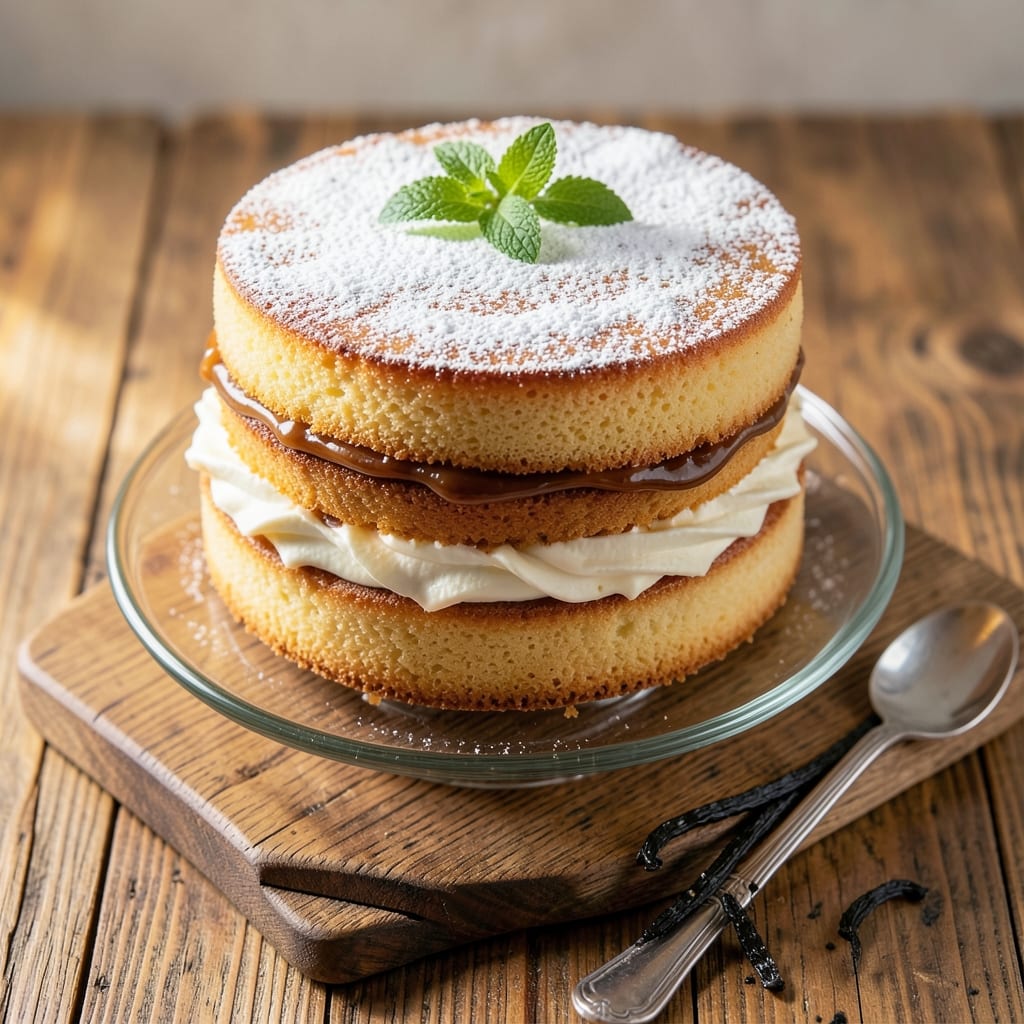
This Australian vanilla cake recipe delivers the signature golden crust and rich vanilla bean swirls that make it legendary. The secret lies in high-quality vanilla bean paste and a precise baking technique that creates layers of tender crumb and moist texture—perfect for special occasions or weekend treats. I've perfected this version to stay true to traditional flavors while making it approachable for home bakers.
The cake's magic begins with a simple yet effective batter that combines butter, sugar, and eggs to create a light, airy texture. A generous swirl of vanilla bean paste infuses every bite with authentic Australian vanilla flavor, while the golden crust develops from careful baking at the right temperature. This recipe maintains the classic elements that make Australian vanilla cake so beloved—without requiring professional equipment.
What you'll end up with is a beautifully layered cake with a tender crumb, subtle vanilla aroma, and that signature golden crust. The vanilla bean swirls create elegant visual appeal, while the moist layers ensure every slice is delicious. This cake is versatile enough for celebrations or everyday indulgence, and the recipe includes tips to achieve perfect results every time.
For those who love variations, you can enhance the flavor with citrus zest or add chocolate swirls for a modern twist. The recipe also works well with local Australian ingredients, making it a true taste of home. Let's get started on creating this timeless dessert masterpiece.
Ingredients for australian vanilla cake
The secret to that iconic golden crust and rich vanilla flavor starts with these quality ingredients.
| Ingredient | Amount | Notes |
|---|---|---|
| Unsalted Butter 🧈 | 1 cup | Room temperature for creaming |
| Granulated Sugar 🍚 | 2 cups | White or light brown |
| Large Eggs 🥚 | 4 whole | Room temperature |
| All-Purpose Flour 🌾 | 2 ½ cups | Sifted, spooned and leveled |
| Baking Powder 🍞 | 2 tsp | Diamond Crystal preferred |
| Vanilla Bean Paste 🌿 | 2 tbsp | High-quality, pure vanilla |
| Milk 🥛 | 1 cup | Whole milk preferred |
| Vanilla Extract 🍯 | 1 tsp | Pure vanilla extract |
| Salt 🧂 | ½ tsp | Fine sea salt |
| Lemon Zest 🍋 | 1 tbsp | Fresh lemon zest |
| Powdered Sugar 🍚 | ½ cup | For dusting |
The vanilla bean paste is non-negotiable for authentic Australian flavor. Look for pure vanilla bean paste at specialty baking stores or online retailers like Williams Sonoma—it's worth the investment. The butter should be unsalted and at room temperature when measuring (press a finger in it; if it leaves a slight indent, it's ready). For the flour, King Arthur or Gold Medal brands are reliable choices, and always sift it to avoid dense layers. If you're in Australia, Pams or AP Flour work perfectly for that classic texture. The baking powder matters too—Diamond Crystal has a lighter rise than other brands, which is key for this delicate crumb.
No vanilla bean paste? Double the vanilla extract and add a pinch of ground vanilla bean seeds if you have them. Running low on whole milk? Evaporated milk or even heavy cream will work in a pinch, though the texture may vary slightly. For the lemon zest, use only the outer layer—avoid the bitter white pith. If you don't have fresh lemon, lemon juice powder (like Not Your Mother's) can substitute, though the flavor won't be identical. The powdered sugar for dusting can be swapped for confectioners' sugar from any grocery store brand, but make sure it's sifted first to prevent lumps. For a modern twist, add 1/4 cup cocoa powder to the dry ingredients for a chocolate-infused version.
Store the cake in an airtight container at room temperature for up to 3 days—it actually improves as the flavors meld. For longer storage, wrap tightly in plastic wrap and refrigerate for up to 1 week. The golden crust stays crisp for about 24 hours before softening, so enjoy it fresh if possible. If you've made extra batter, it keeps in the fridge for 2 days or can be frozen for up to 3 months. To reheat slices, warm in the microwave for 10-15 seconds to restore the crust's crispness.
Why You'll Love This Recipe
- Five-Ingredient Magic: The pantry staples you already own—just butter, sugar, eggs, flour, and baking powder—come together with zero fuss. No fancy techniques, no last-minute ingredient hunts. Honestly, I’ve made this while chatting on the phone because it’s that simple.
- Vanilla Bomb: That rich, warm vanilla flavor isn’t just a whisper—it’s the star. The butter and sugar create this luscious, moist crumb that makes every slice feel like a hug. (Yes, even on a Tuesday night.)
- Birthday to Brunch: Slice it for a celebration or pack it for a picnic—this cake handles any occasion without breaking a sweat. I’ve served it at morning breakfasts, afternoon tea, and even as a quick dessert after a barbecue.
- Budget-Friendly Staple: A single batch costs next to nothing, and leftovers? They disappear faster than you can say “second cup of tea.” Between us, this is the cake I reach for when I’m broke but still want to feel special.
Step-by-step instructions for Australian vanilla cake
Here's the method that delivers that signature golden crust and rich vanilla swirl Australians love.
Cream Butter and Sugar to Light and Fluffy
In a stand mixer fitted with the paddle attachment, beat the 1 cup unsalted butter and 2 cups granulated sugar on medium speed for 5-6 minutes. You're looking for a pale, thick mixture that nearly doubles in volume and leaves ribbons when the beaters are lifted. This creaming process incorporates air, which creates the cake's signature tender crumb.
I press the paddle against the mixture halfway through to ensure everything is fully incorporated. The butter should be completely smooth with no visible lumps. If it looks too thick, that's perfect—it will lighten as you add the eggs. Don't rush this step; proper creaming is what gives this cake its signature texture.
Add Eggs and Vanilla for Rich Flavor
Add the 4 whole large eggs, one at a time, mixing on low speed after each addition until fully incorporated. Then add the 2 tbsp vanilla bean paste and 1 tsp vanilla extract, mixing on low speed for 30 seconds to combine. The vanilla bean paste adds depth that regular extract can't match—it's what makes this an authentic Australian vanilla cake.
Here's the thing—don't overmix once the eggs are added. You want a smooth batter, but any extra mixing after this point develops gluten and makes the cake tough. The mixture should be thick but pourable. If it looks curdled, don't worry; it will smooth out when you add the dry ingredients.
Combine Dry Ingredients and Milk
In a separate bowl, whisk together the 2.5 cups all-purpose flour, 2 tsp baking powder, 0.5 tsp salt, and 1 tbsp lemon zest. The lemon zest adds a subtle brightness that complements the vanilla beautifully. Sift the dry ingredients if you haven't already—this prevents lumps and ensures even baking.
With the mixer on low speed, gradually add the dry ingredients to the wet mixture, alternating with the 1 cup milk. Start and end with the dry ingredients. Mix just until combined—you should still see some flour streaks. Overmixing develops gluten, which makes the cake dense. The batter should be smooth and thick, like heavy pudding.
Prepare the Vanilla Swirl and Bake
Divide the batter evenly between two 8-inch round cake pans lined with parchment paper. For the signature swirl, spread about ⅓ of the batter in each pan, then add 1 tbsp vanilla bean paste (divided) and swirl it gently with a knife. Top with the remaining batter and smooth the surface with a spatula.
Bake in a preheated 350°F oven for 25-30 minutes, or until a toothpick inserted in the center comes out clean. The edges should be golden brown, but the tops should remain slightly domed. If the tops brown too quickly, tent the pans with foil. Don't open the oven during baking—this causes the cakes to sink.
Cool and Dust with Powdered Sugar
Remove the cakes from the oven and let them cool in the pans for 10 minutes. Then transfer to a wire rack to cool completely. This gradual cooling prevents cracking. Once fully cooled, dust the tops generously with the 0.5 cup powdered sugar using a fine-mesh sieve for that classic Australian vanilla cake finish.
The cake should be moist but not wet, with a tender crumb and that signature vanilla swirl visible in each slice. Serve at room temperature for the best texture. This cake keeps well for 3 days covered at room temperature or 1 week refrigerated, though it's best enjoyed fresh.
Pro Tips For Making Australian Vanilla Cake
- Cream Butter Properly: Use a hand mixer or stand mixer to beat the butter and sugar until it’s pale, fluffy, and almost ribbon-like—about 3-4 minutes. I learned this the hard way: under-creaming means dense cake, and over-whipping eggs later won’t fix it. Stop when the mix looks like it could hold its shape for a second.
- Measure Flour Right: Spoon the flour into the measuring cup, then level it off with a knife—don’t scoop directly from the bag. Australian vanilla cake relies on that light, airy texture, and packing the flour will make it tough. Trust me, your future self will notice the difference.
- Check Doneness Early: Start testing with a skewer at 45 minutes—if it comes out clean or with just a few crumbs, pull it out. Oven temps vary, and overbaking dries out the cake faster than you’d think. Let it cool in the pan for 10 minutes first, or it’ll sink like a sad pancake.
- Upgrade with Vanilla Bean: Skip the extract and split a vanilla bean, scraping the seeds into the butter-sugar mix. It’s extra work, but the flavor is richer and more complex—like the difference between a coffee and a flat white. If you’re lazy, at least use high-quality extract, not imitation.
Wine and beer pairings for this recipe
Australian Wine Pairings
For this classic vanilla cake, I reach for Australian Shiraz—particularly a Barossa Valley or McLaren Vale example. The bold fruit notes of blackberry and plum complement the cake's rich vanilla while the subtle spice echoes the lemon zest. A 2018 Penfolds Bin 28 or Henschke Hill of Grace (if you're feeling indulgent) creates a perfect balance. The wine's acidity cuts through the sweetness beautifully, making each bite feel fresh. 🍷
Crisp White Options
If you prefer white wine, Semillon from the Hunter Valley is my go-to. The citrus and honeyed notes in a well-aged Tyrell's Vat 47 or Leeuwin Estate Art Series Semillon enhance the cake's vanilla and lemon flavors without overpowering them. For something lighter, a chilled Australian Riesling—like Pewsey Vale—adds a bright, slightly floral contrast that cleanses the palate between slices.
Beer Pairings
A pale ale from Victoria or South Australia works surprisingly well with this cake. I love Little Creatures Pale Ale—its malty sweetness and citrusy hops mirror the cake's vanilla and lemon notes. For a stronger option, try a Belgian-style witbier like Brasserie d'Achouffe (available in the US), which adds a peppery-spice complexity that pairs wonderfully with the vanilla swirl. 🍺
Non-Alcoholic Options
For those skipping alcohol, sparkling apple cider like Martinelli's or Woodchuck Cider adds a festive touch while complementing the cake's flavors. The effervescence cuts through the richness, and the apple's natural sweetness enhances the vanilla. Alternatively, a vanilla chai latte with oat milk (steamed with a splash of vanilla extract) creates a cozy, dessert-worthy pairing that lets the cake's flavors shine.
Coffee Pairing
If you're serving this cake after dinner, a flat white with Australian single-origin coffee—like Allpress or Kona Java—is ideal. The creamy texture and nutty undertones in the coffee contrast beautifully with the cake's sweetness. For a stronger coffee option, a dark roast espresso with a splash of vanilla syrup intensifies the flavor connection. The bitterness in the coffee balances the cake's sweetness perfectly. ☕
Nutrition facts
Frequently asked questions
What makes this Australian vanilla cake different from American vanilla cake?
The key differences lie in the vanilla bean paste (not extract) and the golden crust technique. Australian versions use high-quality vanilla bean paste for deeper flavor, while the baking method creates that signature crisp top. The subtle lemon zest also adds brightness missing in many American recipes.
Can I make this cake without vanilla bean paste?
Yes! Use double the vanilla extract (so 4 tbsp) plus a pinch of ground vanilla bean seeds if available. For best results, look for pure Madagascar vanilla paste at specialty stores—it captures the authentic Australian flavor. The swirl technique will still work beautifully.
Why does my cake sink in the middle?
This usually happens from opening the oven too early or overmixing the batter. Let the cake bake undisturbed for the full 25-30 minutes at 350°F, and mix dry ingredients just until combined. For extra insurance, bake 2-3 minutes longer if the top looks set but the center isn't done.
How can I add chocolate to this recipe?
For a chocolate twist, replace ½ cup of the milk with melted dark chocolate (or ¼ cup cocoa powder with the dry ingredients). Swirl 2 tbsp melted chocolate into the vanilla paste layer before adding the top batter. The contrast of vanilla and chocolate makes each bite exciting!
Can I use this recipe for a 9-inch cake pan?
Yes, but reduce the oven temperature to 325°F and bake for 35-40 minutes. Divide the batter evenly between three 9-inch pans (about ⅓ cup per pan) and adjust the vanilla swirl proportionally. The larger surface area may need slightly longer baking to ensure even doneness.