
Desserts
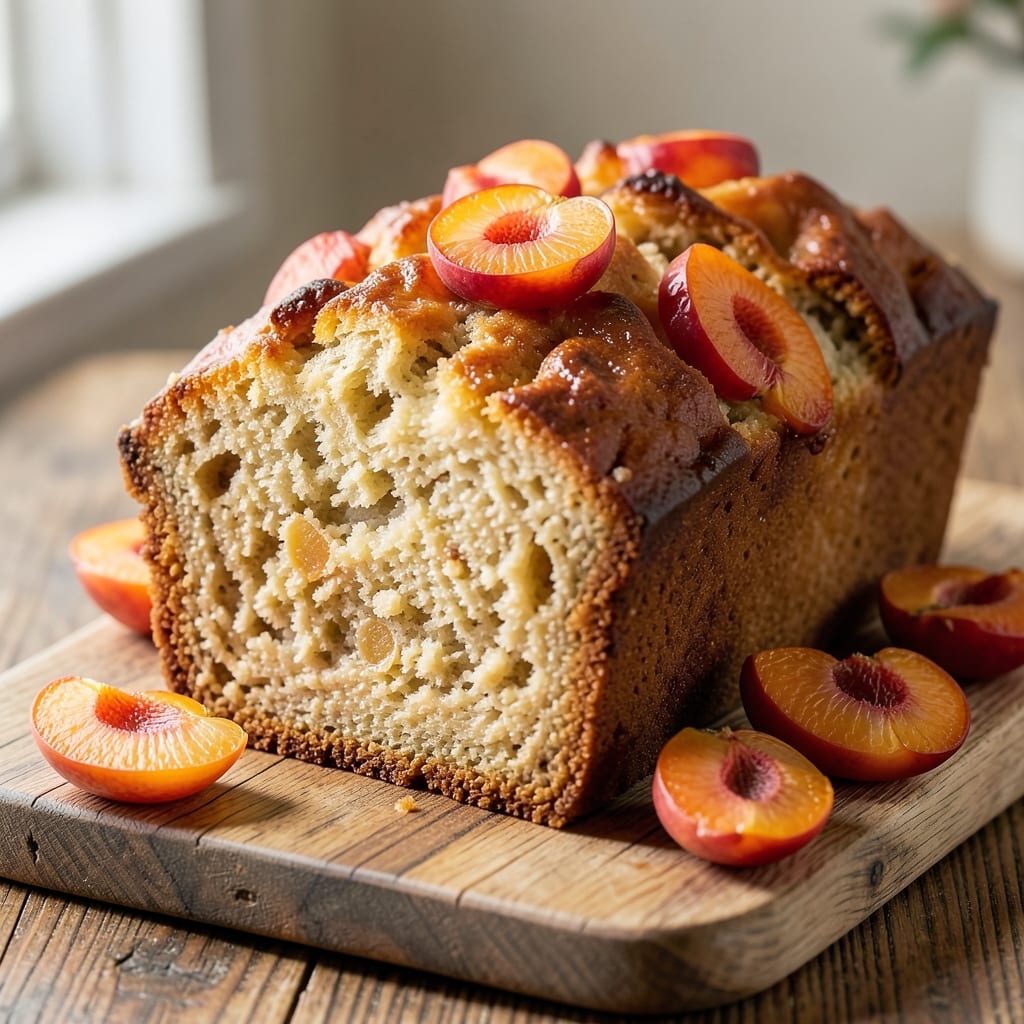
This apricot loaf cake recipe delivers the perfect balance of tender crumb, juicy fruit, and warm spices that make every slice irresistible. 💛 The secret lies in combining ripe apricots with a moist, buttery batter that bakes into a golden loaf with just the right texture—soft enough to melt in your mouth yet sturdy enough to hold its shape. I’ve perfected this recipe over years of baking, ensuring the fruit stays plump and the crust stays perfectly tender.
The cake begins with a simple yet foolproof batter—just eggs, butter, sugar, and flour—infused with cinnamon and nutmeg for that signature warm spice aroma. The apricots, halved and pitted, nestle into the center, releasing their juices as they bake, creating pockets of sweetness in every bite. Baking at 350°F for 50-55 minutes ensures a golden top and a lightly crisp exterior, while the inside remains moist and inviting.
Once out of the oven, the cake is best served with a light dusting of powdered sugar or a drizzle of honey glaze, adding a final touch of elegance. The aroma alone will fill your kitchen with warmth, making it an ideal dessert for gatherings or a comforting treat for yourself. Whether you’re a seasoned baker or just starting out, this recipe guarantees a showstopping loaf that tastes homemade—no shortcuts needed.
Optional garnishes like toasted almonds or a sprinkle of flaky sea salt can elevate the flavor even further, but the cake shines on its own. Let’s get baking—your taste buds will thank you.
Ingredients for apricot loaf cake
Warm spices, juicy apricots, and a tender crumb—this loaf needs just these basics.
| Ingredient | Amount | Notes |
|---|---|---|
| All-Purpose Flour 🌾 | 2 cups | Sifted for light texture |
| Granulated Sugar 🍚 | 1 ½ cups | Light brown preferred |
| Unsalted Butter 🧈 | 1 cup | Room temperature, full-fat |
| Large Eggs 🥚 | 2 whole | Room temperature for even baking |
| Ripe Apricots 🍑 | 1 ½ cups | Pitted, halved, fresh or frozen |
| Milk 🥛 | ½ cup | Whole milk for richness |
| Ground Cinnamon 🌿 | 1 ½ tsp | Freshly ground preferred |
| Ground Nutmeg 🌿 | ½ tsp | Freshly grated for warmth |
| Baking Powder 🍞 | 1 ½ tsp | Aluminum-free preferred |
| Salt 🧂 | ½ tsp | Fine sea salt |
| Vanilla Extract 🌸 | 1 tsp | Pure vanilla preferred |
| Powdered Sugar 🍚 | ¼ cup | For dusting, sifted |
The apricots are non-negotiable here. Local farmers markets often have the ripest ones—look for vibrant orange color and slight give when squeezed. If using frozen, thaw and pat dry to avoid excess moisture. The butter? Plugrá or Land O'Lakes work perfectly, but anything full-fat will do. Room temperature is key—just soften it on the counter for 30 minutes. For the flour, King Arthur or Gold Medal brands are my go-tos—they bake up lighter. Sift it first to avoid dense cake.
No brown sugar? White sugar plus 1 tsp molasses mimics the depth. Fresh apricots unavailable? Canned apricots in juice, drained work in a pinch (dry them first). Nutmeg too strong? Cut it to 1/4 tsp—it's potent stuff. The vanilla extract should say 'pure' on the bottle—imitation won't give that same rich aroma. For extra moisture, add 1 tbsp of apricot jam to the batter. And if you're feeling fancy, swap the powdered sugar dusting for a honey glaze—just mix 1/4 cup honey with 1 tbsp warm water.
This cake keeps beautifully—3 days at room temperature wrapped in foil, or 1 week in the fridge. For longer storage, slice and freeze portions between parchment paper for up to 3 months. The flavor actually improves overnight as the fruit juices soak in. I always bake an extra loaf—it disappears fast. Leftovers? Toasted almonds on top make a great breakfast treat the next morning.
Why You'll Love This Recipe
- No Chopping Chaos: The ripe apricots go in whole—peeled and pitted, but no dicing, no fuss. I’ve made this with store-bought jam in a pinch (same result), so it’s forgiving when fresh fruit isn’t cooperating.
- Butter-Soft Magic: That creamed butter and sugar combo? It’s the secret to a tender crumb, and the eggs bind it all together without needing extra moisture. Honestly, the first bite makes me wonder why I ever bought boxed cake mix.
- Weekday to Weekend: Slice it warm for breakfast with coffee or let it cool for a picnic dessert. The leftovers? Perfect for school lunches (my kids sneak extra slices) or a quick snack when I’m too tired to bake.
- Pantry-Friendly Payoff: Uses basics you already have—no specialty flours or weird ratios. The apricots add natural sweetness, so you can cut sugar if you like, and the cake keeps for days wrapped in foil. My go-to when I’m broke but need something impressive.
Step-by-step instructions for apricot loaf cake
Here's how to bake a moist, spiced apricot loaf with juicy fruit throughout—every slice will be perfect.
👨🍳 Step 1: Prep the Apricots and Mix Dry Ingredients
Start by pitting and halving the 1.5 cups ripe apricots. I like to leave the skins on for texture, but if they're tough, you can peel them first. Toss the halves in a bowl with 1.5 teaspoons ground cinnamon and 0.5 teaspoon ground nutmeg—this gives them a warm spice kick before they even hit the oven.
In a separate bowl, whisk together the 2 cups all-purpose flour, 1.5 teaspoons baking powder, and 0.5 teaspoon salt. Sift this mixture once to ensure no lumps remain—this prevents dense spots in your cake. Keep this dry mix ready for when we combine everything.
🍳 Step 2: Cream Butter and Sugar for Light Texture
In a stand mixer fitted with the paddle attachment, beat the 1 cup unsalted butter (room temperature) and 1.5 cups granulated sugar on medium speed for 3-4 minutes. You're looking for a light, fluffy texture that nearly doubles in volume—the color should be pale and airy. This creaming step is what makes your cake tender rather than dense.
Here's the thing—I always test the butter by pressing my finger into it. If it leaves a slight indent but holds its shape, it's perfect. If it's too soft, chill it for 15 minutes. Too firm? Let it sit at room temperature for another 10 minutes. Getting this right ensures your cake rises properly.
🍳 Step 3: Combine Wet Ingredients and Fold in Apricots
Add the 2 whole large eggs, one at a time, mixing on low speed for 30 seconds after each addition. Then stir in the 0.5 cup milk and 1 teaspoon vanilla extract. The mixture should be smooth and slightly thick—like a thick pancake batter.
Now gently fold in the spiced apricot halves using a silicone spatula. Be careful not to crush them—you want those juicy pockets to release flavor as they bake. Then add the dry ingredients and mix on low speed just until combined. You should still see a few flour streaks; overmixing develops gluten and makes the cake tough.
🔥 Step 4: Bake Until Golden and Springy
Pour the batter into a 9x5-inch loaf pan lined with parchment paper (this makes removal easy). Smooth the top with a spatula and bake at 350°F for 50-55 minutes, until a toothpick inserted in the center comes out clean with just a few moist crumbs. The cake should be golden brown on top and pull away slightly from the edges of the pan.
Don't open the oven door early to check—this causes the cake to sink. If you're worried, trust the toothpick test over time. The reason we bake at this temperature is that lower heat helps the fruit cook through without burning, while still giving us that perfect rise.
🍽️ Step 5: Cool and Dust with Powdered Sugar
Let the cake cool in the pan for 15 minutes, then transfer it to a wire rack to cool completely. This resting period allows the juices to redistribute, ensuring every slice stays moist. While it cools, make a quick dusting of 0.25 cup powdered sugar—just sift it over the top for a sweet, elegant finish.
Slice the cake into 8 equal pieces and serve warm for the best experience. The texture should be tender with juicy apricot bursts in every bite, and those warm spices will make your kitchen smell amazing. Store leftovers in an airtight container for up to 3 days or freeze for longer storage.
Pro Tips For Making Apricot Loaf Cake
- Use Room-Temperature Eggs: I learned this the hard way—cold eggs make the batter lumpy and uneven. Let them sit in warm water for 5 minutes before cracking, or just take them out of the fridge 30 minutes early. The batter will mix smoother, and the cake will rise better.
- Chop Apricots Small: No one wants a mouthful of whole apricot in their cake. Cut them into ¼-inch dice or smaller—they’ll distribute evenly and release their juices without making the cake soggy. If you’re lazy, pulse them quickly in a food processor, but don’t overdo it.
- Don’t Overmix the Batter: Stop mixing as soon as the flour disappears—overworking it develops gluten, and your cake will turn out dense instead of tender. Use a spatula to gently fold in the apricots after mixing, or you’ll end up with a tough, chewy loaf instead of a light one.
- Bake Until Golden, Not Just Set: The cake might look done at 325°F, but pull it out when the top springs back and has a deep golden color. If it’s pale, keep baking—it’ll stay pale inside too. A toothpick test is good, but don’t trust it alone; apricot cakes can fool you with juices that make the stick look moist when it’s actually cooked.
Essential equipment for great apricot loaf cake
Loaf Pan Essentials
A 9x5-inch loaf pan is non-negotiable for this recipe—it creates the perfect height-to-width ratio for even baking. I recommend Wilton's Non-Stick Loaf Pan for easy release, but any quality pan works. Lightly grease it with butter or baking spray before lining with parchment paper to prevent sticking. The parchment should extend slightly over the edges for easy removal. 🧁
Mixing Tools Matter
Use a stand mixer with a paddle attachment for creaming butter and sugar—this ensures maximum air incorporation for a light texture. For hand mixing, a hand mixer works, but I’ve found it takes 2-3 extra minutes to achieve the same fluffiness. A silicone spatula is perfect for gently folding in apricots without crushing them. Keep a separate bowl for dry ingredients to avoid cross-contamination.
Measuring Accuracy
Precision is key in baking, so invest in a digital kitchen scale for flour and sugar—this eliminates packing issues. For liquids, use a clear measuring cup with markings. I swear by OXO Good Grips for their precise, spill-proof design. For the apricots, a small paring knife makes pitting quick and easy. A fine-mesh sieve comes in handy for sifting powdered sugar onto the finished cake.
Oven Thermometer
Your oven’s temperature gauge can be off by 25°F or more—trust me, I’ve learned this the hard way! A Thermoworks Oven Thermometer gives real-time readings, ensuring your cake bakes at the perfect 350°F. Place it near the oven rack where your loaf pan will sit. Pro tip: Preheat your oven for 20 minutes before baking to ensure even heat distribution throughout.
Cooling Essentials
After baking, transfer the cake to a wire cooling rack to prevent sogginess. I love Nordic Ware’s Half-Sheet Pans for this purpose—they’re sturdy and elevate the cake for airflow. For dusting powdered sugar, a fine-mesh sifter creates an even, professional finish. If you’re feeling fancy, a pastry brush helps apply honey glaze smoothly. Keep these tools handy for a seamless baking process. ✨
Nutrition facts
Frequently asked questions
Can I substitute apricots with other fruit?
Yes! Peaches, plums, or even blueberries work beautifully. For stone fruits, use 1.5 cups halved and pitted—just adjust the spice mix to 1 tsp cinnamon and 0.25 tsp nutmeg. Blueberries? Toss them in 1 tbsp flour first to prevent sinking. The key is keeping the fruit juicy but not watery.
Why did my cake sink in the middle? This usually happens from overmixing the batter or opening the oven door too early.
How do I make this cake gluten-free?
Replace the all-purpose flour with a 1:1 gluten-free baking flour blend (like Bob's Red Mill) plus 1 tsp xanthan gum. Use 1/4 cup extra milk to compensate for reduced moisture, and reduce baking powder to 1 tsp. The texture will be slightly denser but still delicious.
Can I bake this in a different pan size?
For best results, stick to a 9x5-inch pan, but you can try an 8x4-inch pan with 50-55 minutes at 350°F. The cake will be taller and narrower. Avoid wider pans—they bake unevenly. If using a bundt pan, reduce baking time by 10-15 minutes and check early.
What's the best way to reheat slices?
Wrap slices in a damp paper towel and microwave for 10-15 seconds—just enough to restore warmth without drying. For a crispier texture, warm in a 300°F oven for 5 minutes. Never reheat in the air fryer—it makes the cake rubbery.