
Desserts
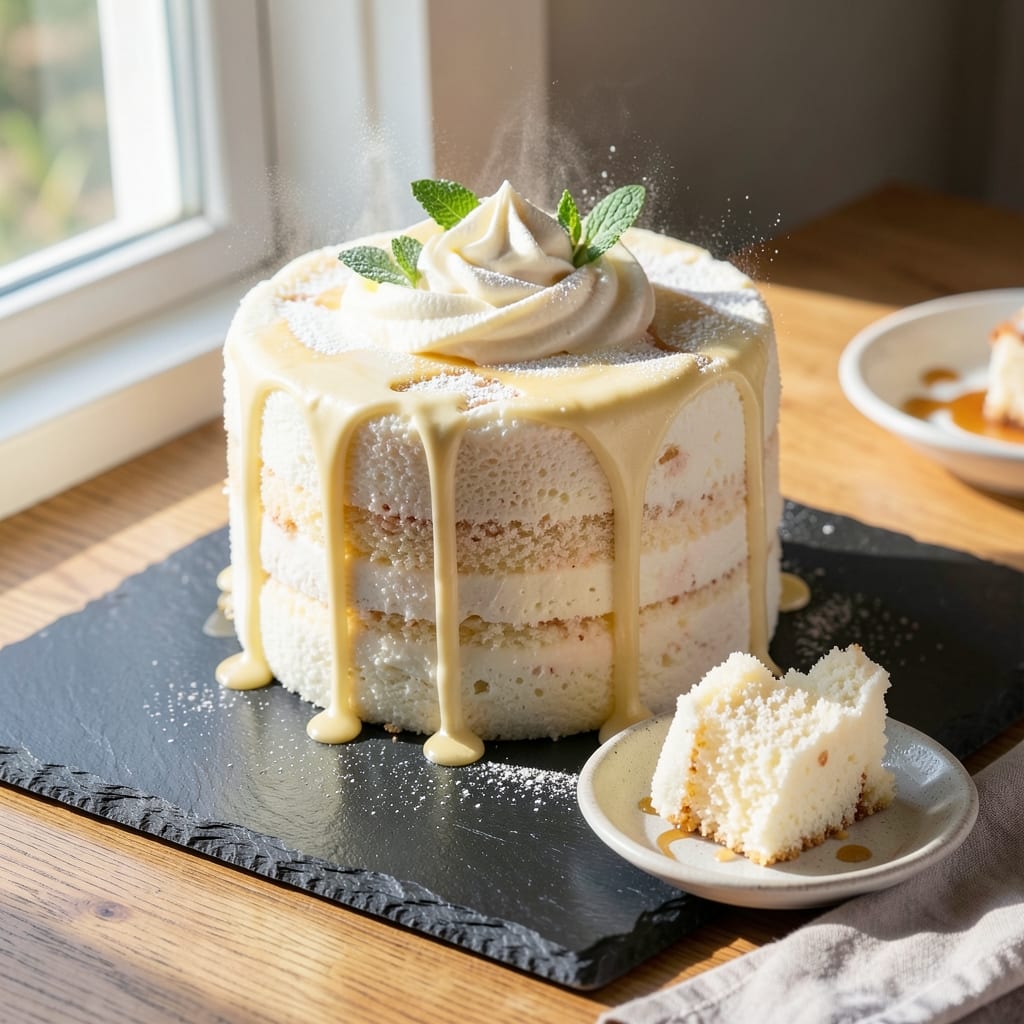
This angel food cake with cream cheese frosting recipe delivers the perfect balance of light-as-air cake and tangy-sweet swirls that make every bite unforgettable. The secret to achieving that signature fluffy texture lies in proper egg separation and gentle folding—no butter or oil needed. For the frosting, we'll create a smooth, stable cream cheese layer that pairs beautifully with the delicate cake.
What sets this recipe apart is the precision in technique: whipping egg whites to stiff peaks and folding them just enough to maintain that airy structure. The cream cheese frosting gets its smooth consistency from proper room temperature ingredients and careful mixing. Together, they create a dessert that's both elegant and approachable—ideal for special occasions or when you want to impress without stress.
By the time you're done, you'll have a towering cake with delicate crumb and no dense center, topped with creamy frosting that's neither too sweet nor too tangy. The contrast between the light cake and rich frosting makes each bite a revelation. This is the kind of dessert that feels like a restaurant-quality creation, even when made at home.
The best part? This recipe delivers consistent results every time, with tips to help you troubleshoot common baking challenges. Whether you're baking for a celebration or simply craving something sweet, this combination of textures and flavors is sure to satisfy.
Ingredients for angel food cake with cream cheese frosting
Twelve egg whites, a touch of cream cheese—just the right ingredients for that perfect cloud-and-swirl dessert.
| Ingredient | Amount | Notes |
|---|---|---|
| Large Egg Whites 🥚 | 12 whole | Room temperature, separated from yolks |
| Granulated Sugar 🍚 | 1 ½ cups | Superfine preferred for better dissolving |
| All-Purpose Flour 🌾 | 1 ½ cups | Sifted, for light texture |
| Cream of Tartar 🧂 | 1 ½ tsp | Stabilizes egg whites |
| Vanilla Extract 🍃 | 1 tsp | Pure vanilla preferred |
| Salt 🧂 | ½ tsp | Fine sea salt |
| Unsalted Butter 🧈 | ½ cup | For frosting, softened |
| Cream Cheese 🧀 | 8 oz | Room temperature, full-fat |
| Powdered Sugar 🍚 | 3 cups | Sifted for smooth frosting |
| Lemon Juice 🍋 | 1 tbsp | Freshly squeezed |
| Vanilla Bean Seeds 🍃 | 1 tsp | Scraped from 1 pod |
The egg whites are non-negotiable here. Grab a large carton from the dairy aisle—the bigger the better. Room temperature is key, so take them out 20 minutes before starting. For the cream cheese, Philadelphia is my go-to—it's the most reliable for frosting texture. The powdered sugar? Domino brand is my secret weapon—it's sifted and dissolves perfectly. Pro tip: if you can't find superfine sugar, pulse regular granulated in a food processor for 30 seconds to break it down.
No vanilla extract? Vanilla bean paste works too, or even a splash of vanilla syrup. Short on cream cheese? Substitute mascarpone at the same amount—it's richer but blends beautifully. The lemon juice is optional but adds a nice brightness to the frosting. If you're feeling fancy, use organic lemon juice from the produce section. For the cake, if you can't sift the flour, just whisk it vigorously in a bowl to break up clumps—it won't be perfect but it'll work in a pinch.
Egg whites hold their peaks best when used immediately, but you can prep the dry ingredients ahead. The frosting keeps for 3 days in the fridge, covered. For the cake, store it in an airtight container with parchment between layers—it stays fresh for 2 days. Freeze the cake (unfrosted) for up to 1 month if you're prepping ahead. Just let it thaw completely before adding the frosting.
Why You'll Love This Recipe
- No Mixer Needed: I swear by this trick—whipping egg whites with cream of tartar by hand (or a whisk) gives that signature fluffy texture without needing a stand mixer. The sugar folds in like butter, and honestly? The cake rises higher than anything I’ve bought at the store.
- Sweet-Tart Magic: That cream cheese frosting isn’t just sweet—it’s bright. The tang cuts through the cake’s delicate vanilla, and the egg whites keep the crumb light enough to let every bite shine. It’s the kind of flavor combo that makes people ask, “What’s in this?”
- Birthday or Breakfast: Serve it at a party, pack it for a picnic, or eat it straight from the fridge on a lazy morning. The frosting stays creamy even when sliced, and the cake’s neutral flavor lets it play nice with berries, citrus zest, or even a sprinkle of cinnamon. (Yes, even on a Tuesday night.)
- Budget-Friendly Luxury: Egg whites and sugar are cheap, but this tastes like a bakery special. No butter, no fancy shortcuts—just a few pantry staples and a little elbow grease. Leftovers? They disappear faster than you can say “second slice.” My wallet thanks me every time.
Step-by-step instructions for angel food cake with cream cheese frosting
Here's how to bake a perfectly light angel food cake paired with that dreamy tangy frosting.
Prepare the Cake Pan and Separate the Egg Whites
Preheat your oven to 350°F and grease a 10-inch tube pan thoroughly with nonstick spray or a thin layer of oil. Dust with flour and tap out any excess—this prevents sticking and ensures easy removal. While the oven heats, separate the 12 whole large egg whites from their yolks, placing them in a completely clean, grease-free bowl.
I can't stress this enough: any trace of fat will prevent your egg whites from whipping properly. Use a wire whisk or electric mixer to remove every last bit of yolk. The bowl should be spotless—no residue at all. This is your foundation for that signature cloud-like texture.
Whip the Egg Whites to Stiff Peaks
Add the 1.5 teaspoons cream of tartar and 0.5 teaspoon salt to the egg whites. Begin whipping on medium speed until soft peaks form—when you lift the whisk, the peaks should curl slightly but fall over. Gradually add the 1.5 cups granulated sugar, about 1 tablespoon at a time, whipping vigorously after each addition.
Here's where the magic happens: keep whipping until the meringue is glossy and holds stiff peaks that stand straight up when you lift the whisk. The bowl should feel cool to the touch, and the mixture should be thick enough to hold its shape. This usually takes about 8-10 minutes total. If you rush this step, your cake will be dense instead of light and airy.
Fold in the Flour and Vanilla
Gently fold in the 1.5 cups all-purpose flour using a spatula, being careful not to deflate the egg whites. Start by cutting through the center of the meringue and folding the flour in from the bottom. Add the 1 teaspoon vanilla extract during the last few folds to distribute it evenly. The batter should be thick and hold its shape when spooned.
Don't overmix—just until the flour disappears completely. If you see streaks of flour, give it a few more gentle folds. The batter should be smooth and uniform. Transfer it immediately to the prepared pan and spread it evenly, tapping the pan gently on the counter to remove any air bubbles.
Bake the Cake to Perfection
Bake for 35-40 minutes until the top springs back when touched lightly and the cake pulls away from the sides of the pan. The cake should be golden and set in the center. Here's the thing—don't open the oven door during baking. The sudden temperature change can cause the cake to collapse.
When done, remove from the oven and invert the cake onto a wire rack immediately. Let it cool completely upside down for at least 1 hour. This cooling process is crucial—it helps the cake set properly and prevents it from becoming gummy. While it cools, you can prepare the frosting.
Make the Cream Cheese Frosting
In a large bowl, beat the 8 ounces cream cheese and 0.5 cup unsalted butter together until smooth and creamy. Add the 3 cups powdered sugar, 1 tablespoon lemon juice, and 1 teaspoon vanilla bean seeds, and beat until light and fluffy. This should take about 3-4 minutes on medium speed.
The frosting should be thick enough to hold its shape but still spreadable. If it's too thick, add a splash of milk 1 teaspoon at a time until you reach the perfect consistency. Once the cake is completely cooled, spread the frosting evenly over the top and sides using a spatula. Serve immediately or refrigerate for up to 2 hours before serving.
Pro Tips For Making Angel Food Cake With Cream Cheese Frosting
- Use Room-Temp Egg Whites: I learned this the hard way—cold egg whites from the fridge won’t whip as stiff or as smoothly. Pop them in a bowl of warm water for 10 minutes before starting, and you’ll get that signature angel food cake lightness without fighting your mixer.
- Sift the Flour Twice: This isn’t the prettiest method, but it’s the tastiest. Sift the all-purpose flour before folding it into the egg whites, then sift it again after mixing—it prevents lumps and gives the cake that cloud-like texture. (Yes, even if you’re impatient like me.)
- Don’t Overbake the Cake: The second the top springs back when you press it, pull it out—no waiting. Angel food cake keeps baking off heat, and if you leave it in too long, it turns dry. A toothpick test works, but your fingers know better.
- Chill the Frosting Before Spreading: Skip the urge to frost the cake right after baking—let it cool completely, then refrigerate the cream cheese frosting for 20 minutes. Warm frosting melts into the cake, making it soggy, and cold frosting stays sharp and holds its shape. (Your future self will thank you.)
Pro cooking tips for this dish
Egg White Mastery
Room temperature egg whites whip up to 30% more volume than cold ones, so let them sit for 20 minutes before starting. I use a stand mixer with the whisk attachment on medium speed for consistent results—never high speed, or you'll overheat the proteins. A clean, grease-free bowl is non-negotiable; even a trace of oil can prevent stiff peaks. For extra insurance, I rinse the bowl with hot water and dry it completely before adding the whites. 🥚
Sugar Addition Technique
Add sugar gradually—about 1 tablespoon at a time—while whipping continuously. This gradual approach prevents sugar crystals from forming, which can weigh down your meringue. I like to use superfine sugar (like Wholesome Sweeteners) because it dissolves instantly, but if you don't have it, pulse regular granulated sugar in a food processor for 30 seconds to break it down. Stop whipping when the meringue holds stiff peaks that stand straight up—no wobbling! Over-whipping leads to a tough, dry cake.
Frosting Stability Secrets
For a smooth, pipeable frosting, ensure all ingredients—especially the cream cheese and butter—are at room temperature. I cut the 8 oz block of Philadelphia cream cheese into chunks and let it sit for 1 hour before mixing. Use a hand mixer on medium speed to avoid incorporating air, which can make the frosting grainy. If the frosting curdles, strain it through a fine-mesh sieve before using. A splash of milk (1 tsp at a time) can adjust consistency if needed.
Cake Cooling Hack
Inverting the cake to cool upside down for 1 hour prevents a dense, gummy center. I place a wire rack over a baking sheet to catch any drips. Pro tip: Run a skewer through the center before cooling—if it comes out clean, the cake is ready. If not, return it to the oven for 5-10 more minutes. Never stack layers until the cake is completely cool, or the frosting will melt and slide off. Patience here makes all the difference! ⏳
Frosting Application
Spread the frosting evenly using an offset spatula, starting from the center and working outward. For a clean finish, dip the spatula in warm water between layers to prevent sticking. If the frosting is too soft, chill it for 15 minutes before applying. To create a smooth cake board, I use a round cake turntable (like the Wilton 8-inch) to spin the cake while frosting. This ensures a professional-looking finish every time. 🎂
Nutrition facts
Frequently asked questions
Why does my angel food cake turn out dense instead of light?
Dense cake usually means one of three things: egg whites weren't whipped to stiff peaks, the batter was overmixed after folding in flour, or the cake wasn't cooled properly. Always whip egg whites until they hold stiff peaks that stand straight up—no wobbling! Fold the flour in gently with a spatula, just until combined, and let the cake cool completely upside down for at least 1 hour before frosting.
Can I make this cake ahead of time?
The cake itself keeps well for 2 days at room temperature in an airtight container with parchment between layers. For longer storage, freeze the unfrosted cake (wrapped tightly) for up to 1 month. Thaw completely before adding frosting. The frosting can be made 1 day ahead and stored in the fridge—just bring it to room temperature and rewhip before using.
What's the secret to smooth cream cheese frosting?
Room temperature ingredients are key! Let the cream cheese and butter sit for 1 hour before mixing. Use a hand mixer on medium speed to avoid incorporating air, which causes graininess. If your frosting curdles, strain it through a fine-mesh sieve. For extra stability, chill the frosting for 15 minutes before applying to the cake.
Is there a way to make this recipe gluten-free?
Yes, but with adjustments. Replace the all-purpose flour with a 1:1 gluten-free baking flour blend (like Bob's Red Mill) and add 1 teaspoon xanthan gum to improve structure. Note that gluten-free cakes tend to be denser—expect a slightly different texture. The frosting remains unchanged as it doesn't contain flour.
How do I prevent the cake from sticking to the pan?
Grease the tube pan thoroughly with nonstick spray, then dust with flour and tap out any excess. For extra insurance, use a 10-inch angel food cake pan (not a Bundt pan) and avoid overfilling—fill it only 2/3 full. After baking, run a thin knife around the edges while the cake is still warm to loosen it before inverting. Never use butter to grease the pan—it can cause sticking.