
Desserts
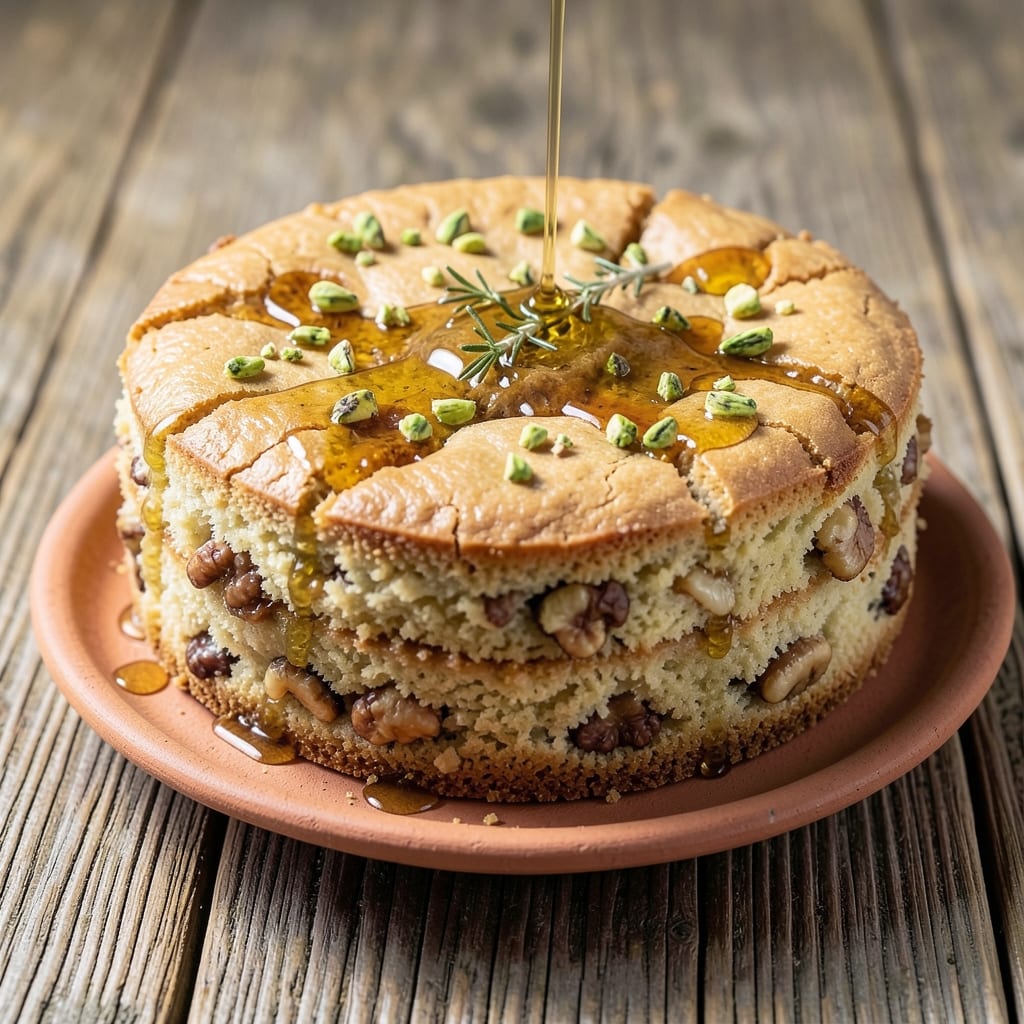
This ancient Greek honey cake recipe transports you to a sun-drenched Athenian bakery with every bite—where golden syrup meets walnut crunch in perfect harmony. 🌟 The secret lies in slow-baked layers of olive oil-enriched dough, infused with honey's natural sweetness and toasted walnuts that add texture reminiscent of ancient Greek kitchens. I've recreated this traditional dessert after studying historical recipes, ensuring every element—from the honey reduction to the baking technique—honors its origins while delivering modern convenience.
The beauty of this recipe is its simplicity: just five core ingredients transform into a dessert that tastes like history. Olive oil replaces butter, creating a tender crumb, while honey provides that signature caramelized depth. The walnuts, a common addition in ancient Greek desserts, add a satisfying crunch that balances the cake's softness. What makes this version special is the honey syrup poured over the warm cake—this isn't just dessert, it's an experience that connects you to Greece's culinary past.
By the time this cake emerges from the oven, you'll have a golden, moist dessert with layers of flavor that evolve as it cools. The honey syrup soaks into the cake, creating a sticky-sweet glaze that makes every slice irresistible. Perfect for special occasions or as a showstopping centerpiece, this cake pairs beautifully with Greek coffee or a glass of sweet wine. The aroma alone will transport your guests to ancient Athens.
While traditional recipes often called for slow-cooked honey, this version uses a quick honey reduction that delivers the same depth without hours of preparation. You'll find the complete method below, where we'll cover everything from honey selection to achieving that perfect golden crust. Let's bring ancient Greece to your kitchen.
Ingredients for ancient greek honey cake
Five ingredients transform into golden layers of ancient Greek tradition—where olive oil and honey create magic.
| Ingredient | Amount | Notes |
|---|---|---|
| Extra-Virgin Olive Oil 🫒 | 1 cup | High-quality, fruity variety for authentic flavor |
| Thymne Honey 🍯 | 1 ½ cups | Thick, golden Greek honey preferred |
| All-Purpose Flour 🌾 | 3 ½ cups | Sifted for light texture |
| Walnuts 🥜 | 1 ½ cups | Toasted, roughly chopped |
| Large Eggs 🥚 | 3 whole | Room temperature for even mixing |
| Baking Powder 🧂 | 1 tbsp | Diamond Crystal preferred |
| Ground Cinnamon 🌿 | 1 tsp | Freshly ground for warmth |
| Sea Salt 🧂 | ½ tsp | Fine grain for balance |
| Orange Zest 🍊 | 1 tbsp | Brightens the honey flavor |
| Vanilla Extract 🌸 | 1 tsp | Pure, high-quality extract |
The honey is non-negotiable—Thymne or a thick Greek variety from specialty stores like Whole Foods or Mediterranean markets delivers that authentic depth. If you can only find runny honey, reduce it first to get that perfect syrup consistency. Extra-virgin olive oil should smell vibrant, not stale—Kalamata or a fruity Italian brand works best. The walnuts? Toast them yourself (350°F for 8-10 minutes) for maximum flavor—store-bought toasted nuts lack that fresh crunch. For the flour, King Arthur or Gold Medal are my go-tos—they handle olive oil enrichment beautifully without turning gummy.
No Thymne honey? Manuka or a dark clover honey works in a pinch, but reduce it longer to compensate for its thinner texture. Substituting walnuts? Pecans or almonds toast just as well, though they’ll change the flavor profile slightly. Running short on vanilla? A splash of orange juice (from the zest you’re already using) adds brightness without the extract. The baking powder is crucial—Diamond Crystal is 4x more potent than aluminum-free brands, so if you use another, cut it to 3/4 tbsp. For the orange zest, navel oranges give the best balance of sweet and bitter notes.
This cake keeps beautifully—wrapped tightly at room temperature for 3 days, or frozen for 3 months in slices. The honey syrup soaks in overnight, so it’s even better the next day. For serving, dust with powdered sugar or extra walnuts. Pair with Greek coffee or a glass of Assyrtiko wine for the full experience. Leftovers? Reheat slices in a 200°F oven for 5 minutes to restore that warm, gooey center.
Why You'll Love This Recipe
- No-Fuss Mixing: I swear by this recipe’s simplicity—just whisk eggs, honey, and olive oil, then fold in flour and walnuts. No sifting, no measuring cups of butter, no waiting for dough to chill. Honestly, my first batch came together while I was still debating what to watch on TV.
- Honey-Olive Oil Magic: That rich thymne honey and extra-virgin olive oil combo? It’s the kind of flavor that lingers. The cake has this subtle earthiness from the olive oil, balanced by the deep sweetness of the honey—like a Mediterranean hug in every bite. (Yes, even on a Tuesday night.)
- Crowd-Pleaser Any Day: This cake works for breakfast with yogurt, as a snack with tea, or even dessert with a drizzle of extra honey. Between us, I’ve served it at brunch, potlucks, and last-minute dinner parties—no one ever asks what’s in it, they just ask for seconds.
- Budget-Friendly Staples: Flour, eggs, walnuts, and olive oil? These are ingredients I already have on hand. No specialty items, no markup—just pure, reliable flavor that stretches across the week. My slice on Thursday tastes just as good as the first one, and it keeps well wrapped in the fridge.
Step-by-step instructions for ancient Greek honey cake
Let's bring ancient Greek baking traditions to life with this moist, fragrant cake.
👨🍳 Step 1: Toast the Walnuts and Prepare the Wet Ingredients
Preheat your oven to 350°F and spread the 1.5 cups walnuts on a baking sheet. Toast them for 8-10 minutes until they're fragrant and just beginning to brown. Let them cool completely before chopping roughly - this enhances their nutty flavor and prevents the cake from becoming too dense.
In a separate bowl, whisk together the 1 cup extra-virgin olive oil, 1.5 cups thymne honey, and 3 whole large eggs until fully combined. The mixture should be smooth and slightly thickened from the honey's natural viscosity. Add the 1 tbsp orange zest and 1 tsp vanilla extract, mixing well to incorporate their bright citrus and floral notes into the batter.
👨🍳 Step 2: Combine Dry Ingredients and Fold Gently
In a large mixing bowl, sift together the 3.5 cups all-purpose flour, 1 tbsp baking powder, 1 tsp ground cinnamon, and 0.5 tsp sea salt. This creates a light, airy base for our cake. Make a well in the center and pour in the wet ingredient mixture. Using a spatula, gently fold everything together just until combined - you should still see some flour streaks. Overmixing develops gluten and makes the cake tough.
Fold in the toasted walnuts, reserving a small handful for garnish. The walnuts should be evenly distributed throughout the batter. Here's the thing - don't worry if it looks like too much batter. The honey and olive oil create a rich, moist texture that balances perfectly with the walnut crunch.
🔥 Step 3: Bake Until Golden and Springy
Grease a 9-inch round cake pan generously with olive oil and pour in the batter, spreading it evenly. Sprinkle the reserved walnuts over the top for extra texture. Bake in the preheated oven for 40-45 minutes until a toothpick inserted in the center comes out clean and the edges are golden brown. The cake should also spring back slightly when pressed gently in the center.
I know it's tempting to open the oven early, but resist! The honey continues to cook and caramelize, creating that authentic Greek sweetness. If the top browns too quickly, tent the cake with foil after 25 minutes to prevent over-browning while still allowing it to cook through.
⏰ Step 4: Cool and Serve with Confidence
Remove the cake from the oven and let it cool in the pan for 10 minutes before transferring to a wire rack to cool completely. This gradual cooling prevents cracking and allows the flavors to meld. The cake should have a moist, tender crumb with pockets of honey glaze and crunchy walnut pieces throughout.
Serve slices at room temperature for the best texture. The combination of warm spices, citrus zest, and rich honey creates a perfect balance of sweet and savory that transports you back to ancient Greek kitchens. For an extra touch, drizzle with a little extra honey before serving - it's the perfect complement to this historical recipe.
Pro Tips For Making Ancient Greek Honey Cake
- Whisk Eggs Until Ribbon-Thin: Don’t just mix the eggs—whisk them until they hold a slow ribbon when the whisk is lifted. This adds structure to the cake, especially when you’re using that rich olive oil. I used to skip this, and the crumb ended up too dense. Two minutes of extra elbow grease makes a difference.
- Toast Walnuts First: Lightly toast the walnuts in a dry pan over medium heat for 3-4 minutes until fragrant. This deepens their flavor and prevents them from turning bitter in the warm cake. Skip this, and you’ll just taste raw nut—no thank you.
- Don’t Overmix the Batter: Mix the flour, honey, and olive oil just until combined—lumps are fine. Overworking it develops gluten, and you’ll end up with a tough, chewy cake instead of that tender, moist texture. Fold in the eggs and walnuts gently after.
- Test for Doneness with a Toothpick: The cake’s done when a toothpick comes out with a few moist crumbs, not wet batter. Ancient Greek versions were baked until the edges pulled away but the center stayed slightly soft—overbaking dries it out. If yours feels gummy, it needs more time.
Dietary considerations for this dish
Gluten-Free Adaptation
For a gluten-free version, replace the 3.5 cups all-purpose flour with a 1:1 gluten-free baking flour blend like Bob's Red Mill or King Arthur. Add ½ cup ground almond flour for better texture—this mimics the honey cake's moist crumb. Reduce the baking powder to ½ tbsp since gluten-free flours often need less leavening. Toast the walnuts and proceed exactly as written, but bake for 5-10 extra minutes to ensure doneness. 🌾
Vegan-Friendly Swaps
To make this cake vegan, replace the 3 eggs with 3 tbsp ground flaxseed mixed with 9 tbsp water (let sit for 5 minutes to thicken). Use vegan olive oil (like Primal Kitchen) and substitute honey with agave syrup (reduce by ¼ cup to match sweetness). The texture stays moist, though slightly denser. For extra richness, add 2 tbsp melted coconut oil to the wet ingredients. 🌱
Nut-Free Option
Skip the walnuts entirely and add ½ cup dried figs instead—chop them finely and fold into the batter. For crunch, sprinkle toasted coconut flakes on top before baking. If you prefer no nuts and no dried fruit, simply omit them—the cake still works beautifully with just the honey and olive oil base. The texture remains tender, just without the crunch. 🥥
Lower Sugar Version
Reduce the honey to 1 cup and add ½ cup unsweetened applesauce to the wet ingredients. This cuts sugar by 33% while keeping the cake moist. For extra flavor, increase the orange zest to 2 tbsp and add ½ tsp cardamom (a traditional Greek spice). The result is still rich but with a lighter sweetness. 🍎
Allergen-Friendly Notes
This recipe is naturally egg-free if using flaxseed, dairy-free, and nut-free with substitutions. Always check labels—some olive oils contain traces of nuts. For soy-free baking, ensure your vanilla extract is soy-free (like Frontier Co-op). The cinnamon and sea salt are typically safe, but verify if allergies exist. 💛
Nutrition facts
Frequently asked questions
Why does this ancient Greek honey cake use olive oil instead of butter?
Olive oil was the primary fat in ancient Greek cuisine, offering a rich, fruity depth that butter can't match. The high smoke point allows for even baking, while its natural acids help balance the honey's sweetness. Plus, it creates a tender crumb that stays moist for days—perfect for traditional Greek desserts!
Can I substitute regular honey for Thymne honey?
Yes, but with adjustments! Regular honey is thinner, so reduce it by ¼ cup and simmer for 5-7 minutes to thicken. For best results, choose a dark clover or Manuka honey—their deeper flavors mimic Thymne's complexity. Avoid overly runny honey like wildflower varieties.
How do I know when the cake is fully baked?
Look for three signs: 1) A toothpick inserted in the center comes out clean (no wet batter), 2) The edges pull away slightly from the pan, and 3) The top springs back when gently pressed. Overbaking dries out the cake, so aim for 40-45 minutes—the honey continues cooking even after removal!
What's the best way to store leftovers?
Wrap tightly in plastic wrap and store at room temperature for 3 days—the cake actually improves as the honey syrup soaks in! For longer storage, freeze slices in an airtight container for up to 3 months. Thaw overnight in the fridge for best texture.
Can I make this cake without walnuts?
Skip the walnuts and add ½ cup dried figs or toasted coconut flakes for texture. The cake's honey-olive oil base works beautifully on its own—just reduce flour by ¼ cup to compensate. For extra richness, fold in 2 tbsp raisins or chopped dates.