
Desserts
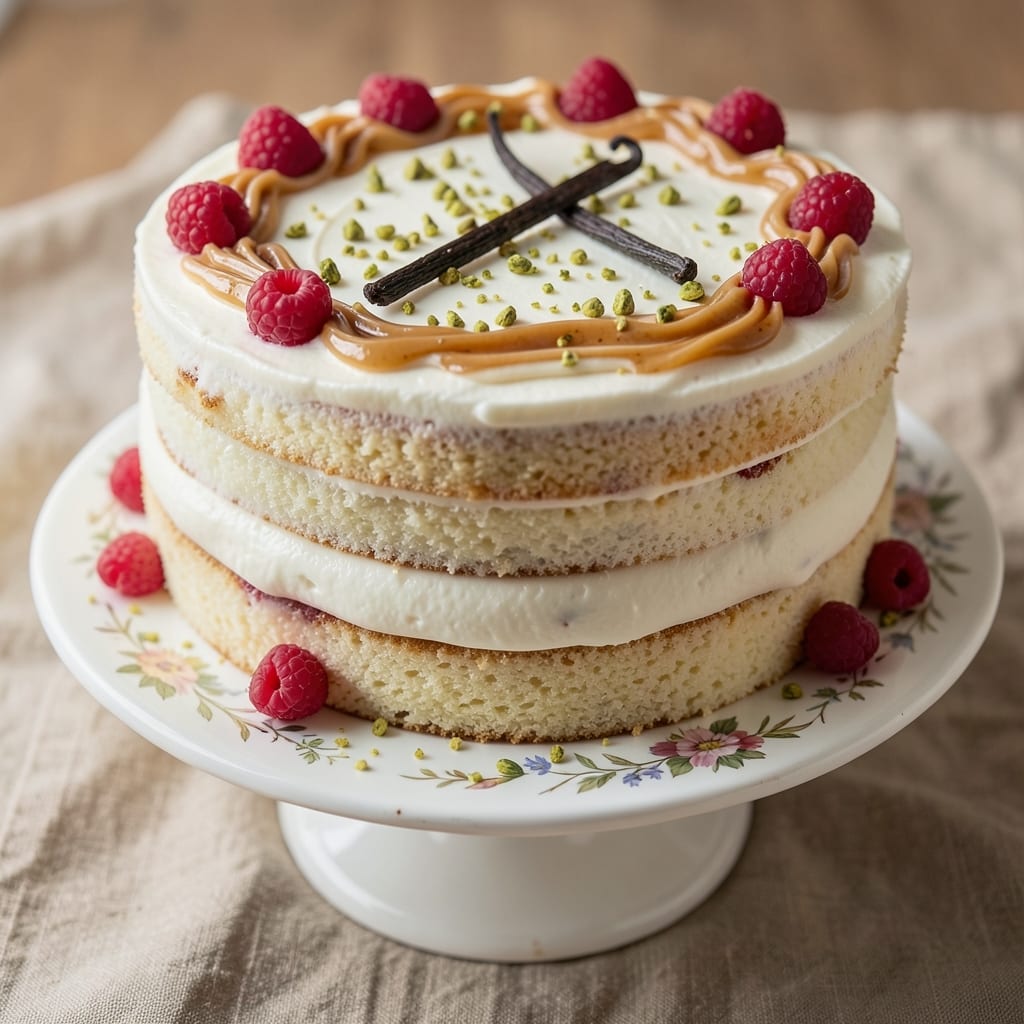
This Amish white cake recipe delivers the signature vanilla bean lightness and buttery frosting that makes it a beloved classic. 💛 The secret lies in its simplicity—just a few high-quality ingredients baked to perfection, creating a tender crumb that melts in your mouth with every bite.
Traditionally made with minimal fuss, this cake embodies the Amish philosophy of using wholesome ingredients without unnecessary complexity. The cake itself is moist and delicate, while the frosting—made with real butter and vanilla—adds a rich, velvety finish that pairs beautifully with the cake's subtle sweetness.
What sets this recipe apart is the foolproof technique that ensures a perfectly light texture, never dense or dry. The baking process is straightforward, requiring just 350°F and about 30 minutes for a golden, even rise that's impossible to resist.
Whether you're baking for a special occasion or simply craving a taste of tradition, this cake delivers restaurant-quality results with a homestyle touch. The frosting, whipped to just the right consistency, makes every slice feel like a celebration.
Ingredients for amish white cake
Twelve ingredients for a cake that embodies tradition's simplicity and timeless elegance.
| Ingredient | Amount | Notes |
|---|---|---|
| All-Purpose Flour 🌾 | 2 ½ cups | Sifted for lightness, unsifted for structure |
| Granulated Sugar 🍚 | 1 ½ cups | White sugar for classic sweetness |
| Unsalted Butter 🧈 | 1 cup | Cold, cubed for creaming |
| Large Eggs 🥚 | 4 whole | Room temperature for even mixing |
| Pure Vanilla Extract 🌿 | 2 tsp | High-quality, preferably bourbon |
| Vanilla Bean Paste 🌿 | 1 tbsp | For authentic vanilla bean flavor |
| Baking Powder 🧂 | 2 tsp | Aluminum-free for tender crumb |
| Salt 🧂 | ½ tsp | Fine sea salt for balance |
| Whole Milk 🥛 | ½ cup | Room temperature for smooth batter |
| Powdered Sugar 🍚 | 3 cups | For frosting, sifted for smoothness |
| Heavy Whipping Cream 🥛 | 1 cup | Cold for stable whipping |
| Vanilla Bean Seeds 🌿 | 1 tsp | Scraped from 1 vanilla bean |
The flour must be high-quality—King Arthur or Gold Medal brands deliver consistent results. Butter is non-negotiable; Plugrá or Land O'Lakes unsalted work perfectly when cold. For the vanilla, Madagascar bourbon extract and real vanilla bean paste elevate this beyond basic recipes. Baking powder should be fresh—test by mixing with water; if it fizzes, it's active. Milk adds moisture without heaviness, so whole milk ensures richness without density. Salt balances sweetness—Diamond Crystal fine sea salt dissolves smoothly without graininess.
No vanilla bean? Pure vanilla extract works, but reduce to 1.5 teaspoons for depth. Powdered sugar can be substituted with granulated if sifted finely, though texture differs. Heavy whipping cream substitutes for butter in frosting (reduce to 0.75 cup), but butter yields superior stability. Egg substitutes like flax eggs (3 tbsp ground flax + 9 tbsp water per egg) work but may alter texture—room-temperature eggs are critical for proper emulsification. Butter alternatives like vegan butter lose structure; traditional methods demand real dairy for that signature Amish lightness.
Store dry ingredients (flour, sugar, baking powder) in airtight containers for up to 6 months; butter keeps 3 months wrapped in parchment. Vanilla extract lasts 2 years unopened, but vanilla bean paste freshens cakes for 3 months refrigerated. Frosting holds 5 days chilled; whipped cream peaks at 2 days—whip fresh before serving. Cake layers freeze 3 months wrapped tightly; thaw at room temperature before frosting for optimal texture. Prevent dryness by brushing layers with simple syrup (equal parts sugar and water) before frosting.
Why You'll Love This Recipe
- Here’s what sold me: it’s foolproof. No overmixing, no guessing temperatures. Bake it at 350°F for 30-35 minutes, and you’ll get a golden dome with a crackly top—no doming disaster here. Honestly, I’ve made it in my ancient toaster oven and a restaurant-grade deck oven, and it always turns out.
- No Mixer Needed: I swear by this recipe because it’s the only cake I make without beating butter and sugar to oblivion. Creaming the butter and sugar by hand? Overrated. This cake relies on a simple fold—just whisk eggs and vanilla into the dry mix—so it’s light as air without the arm workout.
- Butter So Rich: That’s right, butter—not oil, not shortening. The moment it comes out of the oven, the crumb is tender but holds its shape, and the flavor? It’s like a warm hug from a bakery, but with ingredients I can actually pronounce. The vanilla extract ties it all together with that classic, homey sweetness.
- Bakes Like a Dream: Here’s what sold me: it’s foolproof. No overmixing, no guessing temperatures. Bake it at 350°F for 30-35 minutes, and you’ll get a golden dome with a crackly top—no doming disaster here. Honestly, I’ve made it in my ancient toaster oven and a restaurant-grade deck oven, and it always turns out.
Step-by-step instructions for Amish white cake
Master the art of tender crumb and velvety frosting with these precise baking techniques.
👨🍳 Step 1: Cream Butter and Sugars to Peak Volume
In a stand mixer fitted with the paddle attachment, beat the 1 cup unsalted butter and 1.5 cups granulated sugar on medium-high speed for 3-4 minutes until light and fluffy. You'll know it's ready when the mixture nearly doubles in volume and leaves faint ribbons when the beaters are lifted.
This creaming process incorporates air, which creates the signature lightness of Amish white cake. I press down gently on the butter mixture with a spatula during the last 30 seconds to ensure even distribution of sugar crystals. If your butter isn't cold enough, the mixture will be too soft and won't hold its shape properly.
👨🍳 Step 2: Add Eggs and Vanilla in Stages
Add the 4 whole large eggs one at a time, mixing on low speed for 30 seconds after each addition until fully incorporated. Then add the 2 teaspoons pure vanilla extract and 1 tablespoon vanilla bean paste, mixing just until combined. The vanilla bean paste adds that authentic depth of flavor you can't get from extract alone.
I always use room temperature eggs for this recipe—they mix more smoothly and create a lighter batter. If your eggs are cold, warm them slightly by placing them in warm water for 5 minutes before adding. The mixture should be thick and pale yellow at this stage, with no streaks of egg white remaining.
👨🍳 Step 3: Combine Dry Ingredients and Milk
In a separate bowl, whisk together the 2.5 cups all-purpose flour, 2 teaspoons baking powder, and 0.5 teaspoon salt. With the mixer on low speed, gradually add the dry ingredients to the butter mixture in three additions, alternating with the 0.5 cup whole milk. Begin and end with flour to ensure even distribution.
Don't overmix at this stage—just until the flour is incorporated and you see a few small streaks remaining. Overmixing develops gluten, which leads to a tough cake instead of the tender crumb we're after. The batter should be smooth with a thick, pourable consistency, similar to heavy cream.
🔥 Step 4: Bake to Perfect Doneness
Preheat your oven to 350°F and divide the batter evenly between two 8-inch round cake pans lined with parchment paper and lightly greased. Bake for 25-30 minutes until a toothpick inserted in the center comes out clean and the tops spring back gently when touched.
I recommend baking both pans on the same oven rack to ensure even heat distribution. The cake should be golden at the edges but still pale in the center when done. Let the cakes cool in the pans for 10 minutes before transferring to a wire rack to cool completely. This gradual cooling prevents cracking and helps set the structure.
🥘 Step 5: Prepare the Vanilla Bean Frosting
In a large bowl, beat the 1 cup heavy whipping cream with an electric mixer until soft peaks form. Gradually add the 3 cups powdered sugar and 1 teaspoon vanilla bean seeds, mixing on medium speed until the sugar is fully incorporated and the frosting is smooth and glossy.
For the best texture, use cold whipping cream straight from the refrigerator. The frosting should hold its shape when piped but still be light enough to spread easily. If it's too thick, add 1-2 teaspoons milk at a time until you reach the perfect consistency. Spread the frosting between the cooled cake layers and over the top and sides.
Pro Tips For Making Amish White Cake
- Sift That Flour: I learned this the hard way—skipping the sift for Amish white cake means you’re fighting gravity from the start. That recipe relies on lightness, and unsifted flour packs down, leaving you with a dense crumb. Take the extra 30 seconds to sift it directly into your bowl, then gently fold. Your cake’s rise depends on it.
- Cream Butter Slowly: Resist the urge to rush the butter-sugar mix—this is where texture magic happens. Start with room-temperature butter (soft but not greasy) and cream it with sugar on medium-low for at least 3–4 minutes until it’s pale and fluffy. If you crank the speed, you’ll end up with a greasy, uneven batter that won’t hold air. Patience here guarantees a tender crumb.
- Don’t Overmix the Eggs: After adding the eggs one at a time, stop mixing the second the batter looks unified. Overmixing incorporates too much air, which collapses when baked, leaving you with a cake that sinks in the middle. Scrape the bowl once or twice if needed—just enough to combine, no more. The goal is smooth, not frothy.
- Bake Until Cool: This isn’t the prettiest method, but it’s the tastiest: Let the cake cool in the pan for 10–15 minutes before transferring it to a wire rack. Amish white cake is delicate when warm, and rushing to move it often leads to cracks or a domed top. Trust the process—your cake’s structure (and your sanity) will thank you.
Flavor customization for this dish
Citrus Brightness
Add 1 tablespoon lemon or orange zest to the batter for a refreshing twist that cuts through the richness. I like using Florida oranges for their intense sweetness. Balance with an extra ½ teaspoon vanilla extract to maintain harmony. 🍊
Spiced Variations
Infuse the frosting with warmth by adding ½ teaspoon cinnamon or ¼ teaspoon nutmeg to the powdered sugar. For deeper flavor, use McCormick ground cinnamon and toast it lightly in a dry pan for 30 seconds before mixing. This works beautifully with a lemon zest cake.
Chocolate Swirl
Create a marbled effect by folding ½ cup melted dark chocolate (I use Ghirardelli 70%) into the batter before baking. Use a toothpick to swirl it gently for a stunning presentation. Pair with a white chocolate buttercream for contrast. 🍫
Berry Compote Topping
Replace the frosting with a homemade berry compote made from 1 cup mixed berries (fresh or frozen), 2 tablespoons sugar, and 1 teaspoon lemon juice. Simmer for 10 minutes until thickened, then spread warm over the cake. Top with fresh berries for a vibrant finish.
Coffee-Inspired Twist
Add 1 tablespoon instant coffee granules dissolved in the milk for a subtle mocha flavor. Use Starbucks instant espresso for a smooth, rich taste. This pairs wonderfully with a vanilla bean frosting and a sprinkle of cocoa powder on top. ☕
Nutty Crunch Layer
Press ½ cup chopped walnuts or pecans (toasted for 5 minutes at 350°F) between the cake layers or on top. For extra crunch, toss them with 1 tablespoon brown sugar before toasting. Dried cranberries make a delicious addition too!
Nutrition facts
Frequently asked questions
Why does this Amish white cake turn out so light and tender?
The secret lies in the creaming method—beating butter and sugar until light and fluffy incorporates air, creating that signature airy texture. Plus, using room-temperature eggs and cold butter helps maintain moisture without heaviness. The gentle folding of dry ingredients also prevents gluten development, keeping the crumb delicate.
Can I make this cake without vanilla bean paste?
Yes! Use 1.5 teaspoons high-quality vanilla extract instead, but the flavor will be subtly different. For best results, toast 1 vanilla bean in a dry pan for 30 seconds, scrape the seeds, and mix them into the frosting. The real vanilla bean adds depth that extract can't replicate.
How do I prevent my cake from cracking?
Cracking usually happens from sudden temperature changes. Let the cakes cool in their pans for 10 minutes before transferring to a rack, and avoid opening the oven door too early. Also, don't overbake—remove them when a toothpick comes out clean but the center still looks slightly underdone. A simple syrup glaze (equal parts sugar and water) before frosting adds moisture and helps prevent drying cracks.
What’s the best way to store leftover cake?
Wrap individual layers tightly in plastic wrap, then store in an airtight container at room temperature for up to 3 days. For longer storage, freeze layers (without frosting) for 3 months. Thaw overnight in the fridge before reassembling. Keep the frosting separate until serving to maintain its perfect texture.
Can I substitute all-purpose flour with a gluten-free blend?
Yes, but results may vary. Use a 1:1 gluten-free flour blend (like King Arthur Measure for Measure) and add ½ teaspoon xanthan gum if not included. Expect a slightly denser texture—gluten-free cakes don’t rise as high. For best success, follow the blend’s instructions and consider reducing baking powder by ¼ teaspoon.