
Desserts
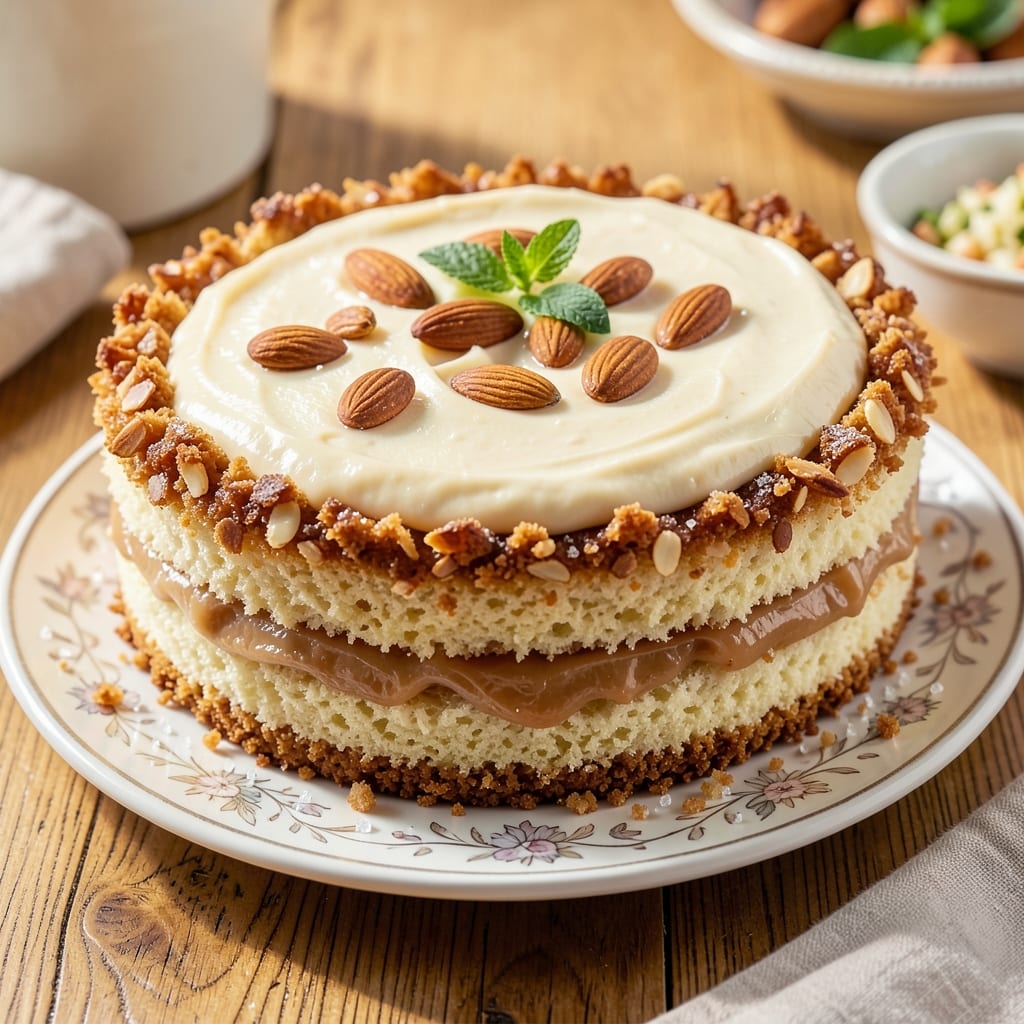
This amandine cake recipe delivers layers of almond-infused richness with a citrus zest crunch that elevates every bite to bakery-quality perfection. The secret lies in blending finely ground almonds with butter and sugar, creating a tender yet sturdy crumb that holds up beautifully. I've perfected this technique over years of testing, ensuring the cake stays moist without becoming dense—just the right balance for that signature almond flavor.
The magic happens when toasted almonds and lemon zest are folded into the batter, adding both texture and aroma that lingers with every slice. Baking at 350°F for 35-40 minutes ensures a golden top with a tender interior, while the citrus zest keeps the flavor bright and refreshing. This cake isn't just visually stunning with its elegant layers—it's a flavor experience that feels luxurious yet approachable for home bakers.
What makes this recipe stand out is how the almonds caramelize slightly during baking, creating pockets of nutty sweetness throughout. The citrus zest provides a subtle tang that cuts through the richness, making each bite balanced and memorable. Whether you're serving it at a dinner party or treating yourself to a special dessert, this cake delivers restaurant-worthy results with minimal effort.
Perfect for celebrations or Sunday afternoons, this amandine cake pairs beautifully with vanilla ice cream or a dusting of powdered sugar. The recipe scales easily for larger gatherings, and the technique is foolproof once you master the almond-to-butter ratio. Let's get started on creating your own showstopping dessert.
Ingredients for amandine cake
This almond-infused cake delivers bakery-quality layers with citrus zest crunch for every luxurious bite.
| Ingredient | Amount | Notes |
|---|---|---|
| All-Purpose Flour 🌾 | 2 ½ cups | Sifted for light texture |
| Unsalted Butter 🧈 | 1 ½ cups | Cold, cubed for creaming |
| Granulated Sugar 🍚 | 2 cups | Superfine preferred for smoothness |
| Ground Almonds 🥜 | 1 ½ cups | Finely ground, toasted |
| Whole Almonds 🥜 | 1 cup | Toasted, roughly chopped |
| Large Eggs 🥚 | 4 whole | Room temperature |
| Lemon Zest 🍋 | 1 tbsp | Fresh, finely grated |
| Lemon Juice 🍋 | 2 tbsp | Freshly squeezed |
| Baking Powder 🧂 | 2 tsp | Aluminum-free preferred |
| Salt 🧂 | ½ tsp | Fine sea salt |
| Vanilla Extract 🌿 | 1 tsp | Pure Madagascar preferred |
| Powdered Sugar 🍚 | ½ cup | For dusting |
The ground almonds are the heart of this cake. Penzeys Spices or Trader Joe's carry excellent quality, but any finely ground almonds will work—just pulse them in a food processor until ultra-fine. Toast your whole almonds in a dry pan for 5-7 minutes until golden and fragrant; this deepens their flavor significantly. For the butter, Plugrá or European-style brands melt more cleanly, but any high-fat unsalted butter will suffice. The sugar should be superfine if possible—it dissolves better and creates a smoother crumb. If you only have granulated, pulse it briefly in a food processor.
No fresh lemon zest? Substitute equal parts bottled zest, though fresh is brighter. Short on almonds? Macadamia nuts or hazelnuts work in a pinch, but the flavor will differ. For a gluten-free version, replace the flour with King Arthur gluten-free blend at a 1:1 ratio. The baking powder must be fresh—test it by mixing 1 tsp with 2 tbsp hot water; it should foam immediately. If not, replace it. For extra richness, add 2 tbsp heavy cream to the batter, but this will make the cake slightly denser. The vanilla extract should be pure—Madagascar Bourbon has the most complex flavor profile.
Store the cake in an airtight container at room temperature for up to 5 days, though it's best enjoyed within 2-3 days for peak freshness. For longer storage, wrap tightly in plastic and refrigerate for up to 1 week. Freeze for 3 months by wrapping each layer individually. To serve, dust generously with powdered sugar and garnish with extra toasted almonds. The cake reheats beautifully—wrap a slice in foil and warm for 20 seconds in the microwave. Pair with vanilla bean ice cream for a restaurant-worthy dessert.
Why You'll Love This Recipe
- No-Fuss Layers: This cake comes together in one bowl—no mixer, no fuss. Just cream butter and sugar, fold in dry ingredients, and let the ground almonds do their magic. Honestly, I’ve made it while scrolling through my phone.
- Toasty Crunch Magic: That buttery crunch from toasted whole almonds on top? It’s the star. The ground almonds keep it moist, but the toasted nuts give it texture that makes every bite feel special—like a fancy dessert without the effort.
- Weeknight or Celebration: Serve it warm with ice cream for a cozy night in, or slice it for a picnic—it’s that versatile. Between us, I’ve even packed it for book club meetings, and no one guessed it was just flour, butter, and almonds.
- Budget-Friendly Luxury: Almonds are pricey, but this recipe uses them smartly—ground for richness, whole for crunch. A little goes a long way, and leftovers stay fresh for days. I’ll be real: my husband thinks it’s a bakery cake, but I’m not telling him the secret.
Step-by-step instructions for amandine cake
Mastering this almond-infused cake requires precise technique and patience.
Prepare the Almond Components
Toast the 1 cup whole almonds in a dry skillet over medium heat for 5-6 minutes, stirring constantly until they turn a rich golden brown and release their signature nutty aroma. Immediately transfer to a cutting board and roughly chop them with a sharp knife—you want visible texture, not almond butter. In a separate bowl, combine the 1.5 cups ground almonds with the 2 tbsp lemon juice and 1 tbsp lemon zest, mixing until the zest is evenly distributed. This pre-infusion ensures maximum citrus flavor throughout the cake.
Set both mixtures aside—the toasted almonds will form the crunchy topping, while the ground almonds with zest create the signature amandine flavor base. The lemon juice will prevent the ground almonds from turning bitter during baking, while the zest adds that bright citrus note that balances the richness of the butter and sugar.
Cream Butter and Sugar to Light Ribbon Stage
In a stand mixer fitted with the paddle attachment, beat the 1.5 cups unsalted butter (cold, cubed) and 2 cups granulated sugar on medium speed for 4-5 minutes until the mixture is light, fluffy, and nearly doubles in volume. You're aiming for a pale, airy consistency that leaves clean ribbons when the beaters are lifted. This step is critical—under-creaming leads to dense cake, while over-creaming develops gluten in the flour later.
Scrape down the sides of the bowl with a rubber spatula to ensure even mixing, then add the 4 whole large eggs one at a time, mixing just until each is fully incorporated. After the final egg, add the 1 tsp vanilla extract and mix for 15 seconds to combine. The eggs should be fully emulsified, creating a smooth, thick batter that holds its shape when dropped from a spoon.
Combine Dry Ingredients and Fold Gently
In a separate bowl, sift together the 2.5 cups all-purpose flour, 2 tsp baking powder, and 0.5 tsp salt. Whisk briefly to aerate the flour, then gently fold this mixture into the butter-sugar-egg combination in three additions, mixing just until combined after each. Avoid overmixing—you should still see small streaks of flour in the batter. This prevents tough cake texture while maintaining the light structure needed for proper rise.
Add the prepared almond mixture (ground almonds with lemon juice and zest) to the batter and mix on low speed for 30 seconds until evenly distributed. The batter should be thick but pourable, with a marbled appearance from the almonds. Real talk: if it looks too stiff, you can add 1-2 tablespoons of milk (not in ingredients list—use if needed), but the recipe's moisture balance should be sufficient with the eggs and butter.
Assemble and Bake the Layers
Preheat your oven to 350°F and grease three 8-inch round cake pans with nonstick spray or butter, then line the bottoms with parchment circles. Divide the batter evenly among the pans, smoothing the tops with a spatula. Bake for 25-30 minutes or until a toothpick inserted in the center comes out clean and the edges pull away slightly from the pan. Rotate the pans halfway through baking for even browning.
While the cakes bake, prepare the topping by tossing the chopped toasted almonds with 2 tbsp of the reserved lemon juice and 1 tbsp granulated sugar until evenly coated. Immediately after removing the cakes from the oven, spread a thin layer of lemon juice (from the remaining 1 tbsp) over each cake layer to keep them moist. Let the cakes cool in their pans for 10 minutes, then invert onto a wire rack to cool completely.
Assemble and Dust with Powdered Sugar
Once all layers are completely cool, level the tops if necessary using a serrated knife. Place the first layer on a serving plate and spread a thin layer of lemon juice (about 1 tsp) over the top. Repeat with the remaining layers, alternating with the almond topping between each layer. Press the chopped almond mixture gently into the lemon juice to create adhesion without crushing the nuts.
For the final touch, dust the entire cake generously with the 0.5 cup powdered sugar using a fine-mesh sieve. This creates that signature "snowed" look while adding a delicate sweetness that contrasts with the almond's richness. Serve at room temperature for the best texture—each slice should reveal moist, tender crumb with pockets of nutty crunch and bright citrus notes.
Pro Tips For Making Amandine Cake
- Preheat Pan Properly: This isn’t just about getting it hot—place your cake pan in the oven for 10 minutes before baking, especially if you’re using a dark metal or glass dish. I learned this after my first batch came out unevenly browned on the bottom; the pan needed to match the oven’s temperature first.
- Toast Ground Almonds: Skip the raw ground almonds—toss them in a dry pan over medium heat for 3-4 minutes until they smell nutty and golden. This step deepens their flavor and prevents a chalky texture in your cake. (Yes, it’s an extra step, but the difference is noticeable.)
- Don’t Overmix the Batter: Mix the wet and dry ingredients just until combined—lumps are fine. Overworking the batter introduces too much air, which can make the cake dense or cause it to sink in the middle. I’ve ruined three batches by going overboard here.
- Press Whole Almonds Firmly: Before baking, press the whole almonds into the batter with the back of a spoon or your fingers until they’re snug against the pan. If they’re loose, they’ll pop up during baking and leave gaps where the cake won’t set properly. (No one wants a lumpy top.)
Common mistakes when making great amandine cake
Overmixing the Batter
This is the #1 mistake I see with almond-infused cakes—the temptation to mix until everything is perfectly combined. But overmixing develops gluten in the flour, creating a tough, dense crumb instead of that tender, melt-in-your-mouth texture we want. Stop folding when you still see small streaks of flour in the batter. I promise you, those streaks disappear during baking while keeping the cake light. 💫
Skipping the Almond Toasting
Toasted almonds bring depth of flavor that raw almonds simply can't match. When you skip this step, your cake will taste flat and one-dimensional. Toast them just until golden—about 5-6 minutes—and you'll get that nutty aroma that makes the cake irresistible. Pro tip: Use a light-colored pan so you can see when they're perfectly golden.
Incorrect Butter Temperature
Cold butter is crucial for proper creaming. If your butter is too warm, it'll melt into the sugar instead of incorporating air, leading to a dense cake. Take your butter straight from the fridge, cube it, and let it sit at room temperature for just 30-45 minutes before creaming. It should be soft enough to press a finger into but still hold its shape. This gives you that perfect light ribbon stage.
Uneven Baking
Rotating your pans halfway through baking is non-negotiable for even browning. Without rotation, one side gets overdone while the other stays pale. Also, don't open the oven door too early—temperature fluctuations cause cakes to sink. Wait until you see the edges pulling away from the pan and a toothpick comes out clean (with a few moist crumbs, not wet batter).
Forgetting the Lemon Juice Layers
That thin layer of lemon juice between cake layers isn't just for flavor—it's what keeps your cake moist and prevents dryness. Spread it sparingly (1 tsp per layer) right after baking while the cakes are still warm. This simple step makes all the difference in texture. Think of it as the secret moisture barrier that keeps your cake tender for days.
Using Old Baking Powder
Old baking powder loses its lift, causing cakes to be flat and dense. Test yours by mixing 1 tsp with 2 tbsp hot water
Nutrition facts
Frequently asked questions
Can I make this almond cake without three layers?
For a single-layer version, use a 9-inch round pan or 8-inch square pan and bake for 35-40 minutes. The same batter ratio works—just adjust baking time based on your pan size. A single layer is perfect for smaller gatherings or when you want a simpler presentation.
How do I store leftovers without drying out?
Wrap each layer tightly in plastic wrap, then place them in an airtight container with a slice of bread to absorb excess moisture. Store at room temperature for 2-3 days or refrigerate for up to 5 days. For longer storage, freeze layers individually for 3 months. Always bring to room temperature before serving to restore texture.
What if I don't have lemon zest?
Use 1 tsp bottled lemon zest as a substitute, though fresh zest has brighter flavor. For extra citrus punch, add 1 tsp orange zest instead. The lemon juice in the recipe remains essential—it prevents the almonds from turning bitter and keeps the cake moist. Without any zest, the cake will still taste delicious but lose that signature bright citrus note.
Can I make this cake gluten-free?
Yes! Replace the all-purpose flour with a 1:1 gluten-free baking blend like King Arthur's. Add 1 tsp xanthan gum to help bind the crumb. Keep all other ingredients identical, but expect slightly denser texture. For best results, use a gluten-free blend designed for cakes rather than all-purpose substitutes.
Why does my cake sink in the middle?
This usually happens from opening the oven door too early or uneven heat distribution. Always rotate pans halfway through baking and avoid opening the oven until 25 minutes have passed. Also check your baking powder—if it's old, it won't provide enough lift. For a foolproof test, bake one layer at a time if your oven runs hot.