
Desserts
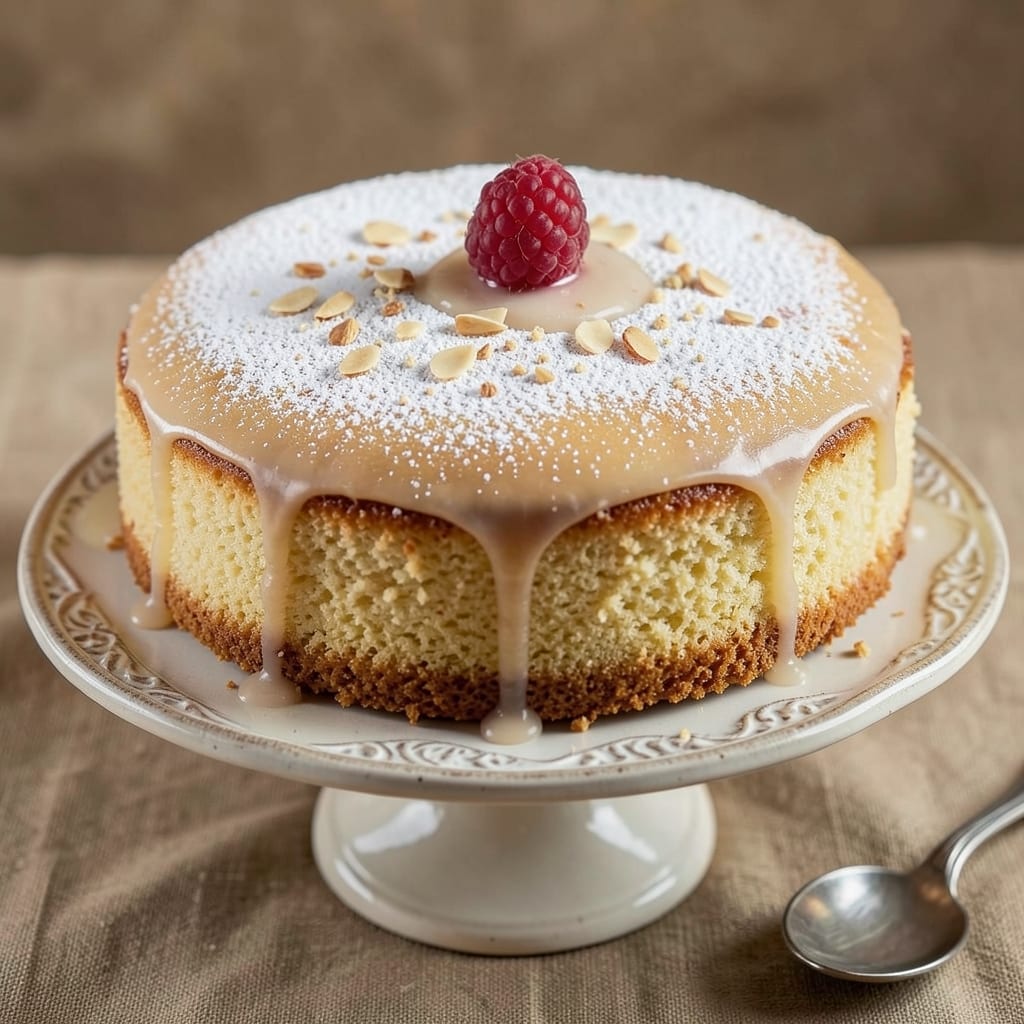
This almond semolina cake delivers a perfect balance of nutty crunch and moist, tender crumb—ideal for special occasions or satisfying dessert cravings. The combination of ground almonds and semolina creates a unique texture that stays fresh for days, making it a reliable crowd-pleaser. What sets this recipe apart is the careful ratio of ingredients that prevents dryness while enhancing the natural almond flavor.
The foundation of this cake relies on a simple yet effective method: creaming butter and sugar thoroughly before adding eggs, which ensures a light yet dense texture. Semolina absorbs moisture differently than flour, so we incorporate it gradually to maintain the right consistency. The result is a cake with a subtle crunch from the almonds and a delicate, silky crumb that melts in your mouth.
Baking at 350°F for 40-45 minutes guarantees even cooking without over-browning, while a quick glaze of powdered sugar and lemon juice adds a professional finish. This recipe is designed to be foolproof, with clear steps that yield consistent results every time. Whether served at room temperature or lightly warmed, the cake's rich flavor and satisfying texture make it a standout dessert.
Optional variations include adding orange zest for a citrusy twist or folding in dark chocolate chunks for extra indulgence. The cake pairs beautifully with whipped cream, fresh berries, or a dusting of cocoa powder. Let's create this elegant yet approachable dessert that's perfect for any occasion.
Ingredients for almond semolina cake
Twelve ingredients combine to create this sophisticated yet approachable almond semolina cake.
| Ingredient | Amount | Notes |
|---|---|---|
| Unsalted Butter 🧈 | 1 cup | Cold, cubed for proper creaming |
| Granulated Sugar 🍚 | 1 ½ cups | Superfine preferred for smooth texture |
| Ground Almonds 🥜 | 1 ½ cups | Finely ground for even distribution |
| Semolina Flour 🌾 | 1 ½ cups | Fine grind for delicate crumb |
| Large Eggs 🥚 | 4 whole | Room temperature for proper incorporation |
| Vanilla Extract 🌿 | 2 tsp | Pure Madagascar for authentic flavor |
| Baking Powder 🧂 | 1 tsp | Diamond Crystal preferred |
| Salt 🧂 | ½ tsp | Fine sea salt for balance |
| Powdered Sugar 🍚 | ¼ cup | For glaze, sifted for smooth finish |
| Fresh Lemon Juice 🍋 | 1 tbsp | Brightens flavor profile |
| Orange Zest 🍊 | 1 tbsp | Optional citrus variation |
| Dark Chocolate Chunks 🍫 | ½ cup | Optional indulgent addition |
The quality of your almonds and semolina makes all the difference. Marinated almonds from Trader Joe's provide superior texture, while Barilla semolina flour ensures the perfect crumb. For the butter, Plugrá or Land O'Lakes unsalted are excellent choices—never use salted. The semolina should be sifted before measuring to prevent clumping, and ground almonds should be finely pulverized for even distribution throughout the batter. If you're using pre-ground almonds, pulse them in a food processor for an extra 10 seconds to achieve maximum fineness.
No vanilla extract? Pure almond extract at half the amount works beautifully, though vanilla's floral notes are preferred. Substituting semolina for all-purpose flour will alter the texture—use half semolina and half flour if necessary, but expect a slightly denser result. The powdered sugar glaze can be made with confectioners' sugar from Domino, and if you're short on lemon juice, white vinegar at the same amount provides similar acidity. For the optional variations, zest from a Meyer lemon adds subtle sweetness, while 70% dark chocolate chunks provide the best balance of richness and crunch.
This cake stores exceptionally well. Wrap tightly in plastic wrap and refrigerate for up to 5 days, or freeze for 3 months for maximum freshness. Bring to room temperature before serving to appreciate the full texture contrast. The glaze sets best when applied to a lightly cooled cake—about 20 minutes out of the oven. For gifting, individual portions can be wrapped in parchment and tied with ribbon, making it an elegant dessert option for any occasion.
Why You'll Love This Recipe
- No-Fuss Mixing: I swear by this recipe because it’s just three bowls—no fancy techniques. Cream butter and sugar, fold in eggs and ground almonds, then stir in semolina until it’s just combined. No overmixing, no stress, and the texture comes out perfectly dense without being heavy.
- Nutty-Sweet Magic: That combo of ground almonds and semolina? It’s like a warm hug in cake form. The almonds add a buttery richness, while the semolina gives it a subtle graininess that keeps it interesting—not too sweet, not too dry, just exactly satisfying.
- Breakfast or Dessert: Honestly, I make this for both. Slice it cold with tea for a morning treat, or warm it up with a drizzle of honey for an after-dinner bite. It’s sturdy enough to handle leftovers (yes, it lasts days) and works just as well for a quick snack as it does for a fancy brunch spread.
- Pantry Staple Power: Between us, this recipe uses ingredients you’re already buying—no specialty items, no last-minute grocery runs. Butter, sugar, eggs, and flour? Check. Almonds? If you don’t have them, you’re probably not baking much anyway. And the portions? Big enough to feed a crowd, small enough to avoid waste.
Step-by-step instructions for almond semolina cake
Master this technique once, and you'll achieve a perfectly balanced cake with a tender crumb and nutty depth.
Cream Butter and Sugar to Lighten the Mixture
In a stand mixer fitted with the paddle attachment, beat the 1 cup unsalted butter and 1.5 cups granulated sugar on medium speed for 3-4 minutes. You're looking for a pale, fluffy texture that nearly doubles in volume—this incorporates air that will create a light, airy crumb. I like to scrape down the sides of the bowl with a spatula every minute to ensure even mixing.
Here's the thing—don't rush this step. The butter should be fully creamed until it's light and fluffy, not just softened. You'll know it's ready when you drag a spoon through the mixture and it leaves a clean trail that holds its shape for a few seconds. This proper creaming is what gives this cake its signature tender texture.
Incorporate Eggs and Aromatics for Depth of Flavor
Add the 4 whole large eggs, one at a time, mixing on low speed after each addition until fully incorporated. Then add the 2 teaspoons vanilla extract, 1 tablespoon fresh lemon juice, and 1 tablespoon orange zest. Mix on low speed just until combined—you don't want to develop gluten in the eggs.
The citrus and vanilla infuse beautifully with the butter and sugar mixture, creating a complex flavor base. I always use room temperature eggs for this recipe—they incorporate more smoothly and create a lighter batter. If your eggs are cold, warm them slightly by placing the carton in warm water for 5 minutes before using.
Combine Dry Ingredients for Structure and Texture
In a separate bowl, whisk together the 1.5 cups ground almonds, 1.5 cups semolina flour, 1 teaspoon baking powder, and 0.5 teaspoon salt. Sift the mixture once to aerate the semolina flour—this prevents dense pockets in the final cake. Gradually add this dry mixture to the wet ingredients, mixing on low speed just until combined.
Don't overmix at this stage. You should still see small streaks of flour in the batter—this indicates proper mixing without developing gluten. The semolina flour gives this cake its distinctive texture, while the ground almonds provide that nutty crunch. Fold in the 0.5 cup dark chocolate chunks at the very end using a silicone spatula to distribute them evenly throughout the batter.
Bake to Achieve Perfect Doneness
Preheat your oven to 350°F and grease two 8-inch round cake pans (or one 9x13-inch pan). Divide the batter evenly between the prepared pans. Bake for 30-35 minutes until a toothpick inserted into the center comes out clean and the top is golden brown. I like to tent the pans with foil after 20 minutes to prevent over-browning while ensuring even cooking.
This cake has a delicate balance—underbaking leaves it gummy, while overbaking makes it dry. The semolina flour absorbs moisture differently than all-purpose flour, so watch carefully in the last 5 minutes of baking. Rotate the pans halfway through for even baking, especially if your oven has hot spots.
Create the Signature Glaze and Assemble
While the cakes are still warm, whisk together the 0.25 cup powdered sugar with 1-2 tablespoons fresh lemon juice (start with 1 tablespoon) until smooth. The glaze should be thick enough to coat the back of a spoon but still drizzleable. Spread this evenly over the cooled cakes—this step adds that professional bakery finish.
Let the glaze set for 10 minutes before slicing. The contrast between the moist cake layers, nutty crunch, and citrus glaze creates a perfect balance of textures and flavors. For an extra touch, garnish with additional orange zest or a sprinkle of ground almonds before serving to guests.
Pro Tips For Making Almond Semolina Cake
- Melt Butter Slowly: After burning three batches, I finally figured out: melt the butter over low heat until it’s just liquid—no browning, no bubbles. Cold butter clumps with sugar, and hot butter torches the semolina. Let it cool to room temp before mixing, or your eggs will scramble on contact.
- Toast the Semolina: Skip the raw flour vibe—lightly toast the semolina in a dry pan over medium heat for 2-3 minutes until it smells nutty and golden. This kills the floury aftertaste and gives the cake a denser, less crumbly texture. (Yes, even if you’re impatient like me—just don’t walk away.)
- Weigh, Don’t Scoop, Almonds: Ground almonds pack differently, and that’s a recipe for disaster. Use a kitchen scale for precision—aim for 150g (about 1½ cups) loosely packed. Packing them tight adds moisture, making the cake gummy. Tap the measuring cup gently to level it off.
- Bake in Two Stages: Preheat the oven to 350°F (175°C), then bake the cake for 20 minutes. Drop the temp to 325°F (160°C) for the remaining 25-30 minutes. This prevents a domed top or a dry crust—common when almond cakes overbake. A toothpick should come out clean, but the center stays slightly moist.
Troubleshooting great almond semolina cake
Cake Too Dense
If your cake turns out dense, the semolina flour likely absorbed too much moisture. I've found that sifting the semolina before measuring makes a big difference—it aerates the flour and prevents clumping. Also, make sure your butter is properly creamed until light and fluffy, not just softened. Overmixing the batter can also contribute to density, so mix just until combined. 💡
Dry or Crumbly Texture
Dryness often happens when the cake is overbaked or when too much semolina is used. Check your baking time carefully—this cake is done when a toothpick comes out clean (around 30-35 minutes). For extra moisture, try adding 1 tablespoon almond milk to the batter. Also, ensure your ground almonds are finely pulverized—coarse almonds can create dry pockets. 🥜
Uneven Baking
Hot spots in your oven can cause uneven baking. Rotate your pans halfway through baking to ensure even cooking. If the edges brown too quickly, tent the pans with foil after 20 minutes. I also recommend using an oven thermometer to verify your oven's accuracy—many home ovens run 25°F hotter than the set temperature. 🌡️
Cracked Top
Cracks usually appear when the cake bakes too quickly or when the oven temperature fluctuates. To prevent this, make sure your oven is fully preheated before adding the cake. Avoid opening the oven door during the first 20 minutes of baking. If cracks still appear, try baking at 325°F instead of 350°F for a slightly slower rise. 🔥
Glaze Too Thin
If your glaze is too runny, you likely added too much lemon juice. Start with 1 tablespoon and adjust gradually—it should coat the back of a spoon but still drizzle smoothly. For a thicker glaze, add 1 teaspoon more powdered sugar at a time. Let the cake cool slightly before applying the glaze to prevent it from melting into the cake. ✨
Almond Flavor Too Strong
If the almond flavor overpowers the cake, reduce the ground almonds to 1 cup and add ½ cup all-purpose flour instead. For a more balanced flavor, toast the ground almonds lightly in a dry pan for 2-3 minutes before adding them to the batter. This enhances their natural sweetness without intensifying the flavor. 🥜
Nutrition facts
Frequently asked questions
Can I substitute semolina for regular flour in this cake?
While you can use all-purpose flour, the texture will differ significantly. Semolina creates that signature crunchy yet tender crumb. For best results, use half semolina and half flour—this maintains some of the cake's unique qualities while making it slightly lighter. The semolina absorbs moisture differently, so expect a denser but still delicious result.
How do I prevent the cake from drying out?
Moisture control is key with semolina cakes. First, don't overbake—remove it when a toothpick comes out clean (30-35 minutes). For extra moisture, add 1 tablespoon almond milk to the batter. Store the cake in an airtight container with a slice of bread or apple to maintain freshness. The glaze also helps lock in moisture.
Can I make this cake gluten-free?
Yes, but with adjustments. Replace the semolina with 1.5 cups gluten-free flour blend (like Bob's Red Mill 1:1) and use 1 cup almond flour instead of ground almonds. Add ½ teaspoon xanthan gum to improve texture. Note that gluten-free versions may be slightly denser—bake for 5-10 minutes longer and check doneness carefully.
What's the best way to serve this cake?
Serve at room temperature for the best texture contrast. The nutty crunch pairs perfectly with whipped cream, fresh berries, or a sprinkle of powdered sugar. For a festive touch, add a drizzle of caramel sauce or orange marmalade. The cake's natural sweetness makes it delicious plain too—just slice and enjoy!
How long can I keep this cake fresh?
This cake stays fresh for 4-5 days at room temperature in an airtight container. For longer storage, refrigerate for up to 1 week or freeze for 3 months. Thaw overnight in the fridge before serving. The glaze may thicken slightly when refrigerated—rewarm briefly in the microwave if needed.