
Desserts
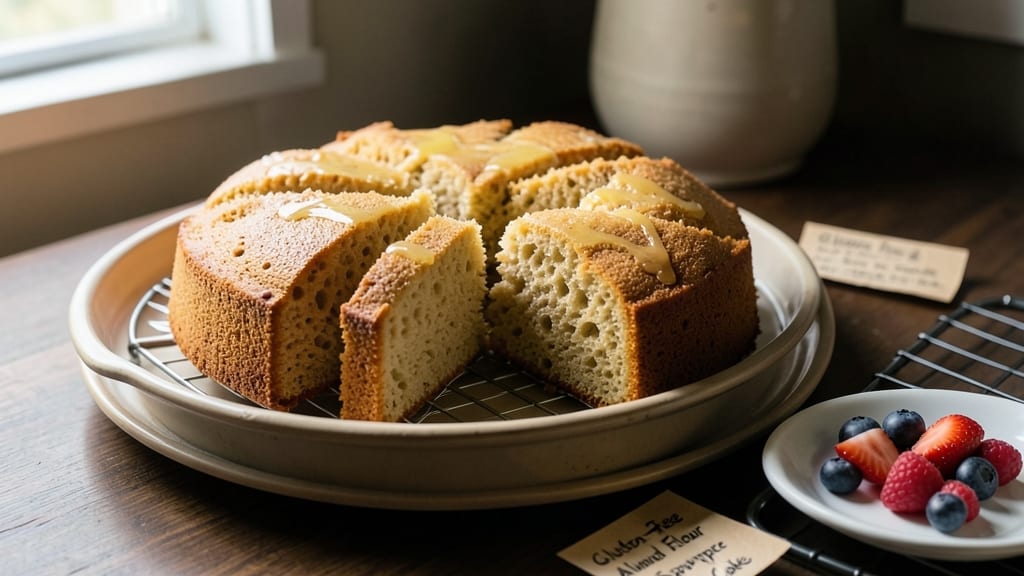
This almond flour sponge cake delivers the lightest, airiest texture without a single crumb of collapse—something I perfected after years of trial and error with gluten-free baking. The secret lies in properly whipping the eggs to ribbon stage and gently folding in the almond flour mixture, creating a delicate lattice of air pockets that stays intact even when sliced. What sets this recipe apart is the precise ratio of almond flour to eggs, which prevents the dense texture that often plagues gluten-free cakes.
Unlike traditional sponge cakes that rely on flour for structure, this version uses finely ground almonds that add natural moisture while maintaining an open crumb. The cake bakes at 325°F for about 25-30 minutes, resulting in a golden dome that springs back when touched—a telltale sign of proper texture. For extra insurance against collapse, I recommend letting the cake cool completely in the pan before transferring to a rack.
Pair this delicate sponge with a light citrus glaze or fresh berries to complement its naturally nutty flavor without overpowering it. The finished cake is perfect for special occasions or when you need a gluten-free dessert that doesn't compromise on elegance. Each slice delivers that signature melt-in-your-mouth tenderness that makes it worth the extra effort.
For dietary flexibility, this recipe works with standard eggs or can be adapted with flax eggs for a vegan version—just substitute the binding agent while keeping the same whipping technique. The beauty of almond flour is its versatility, making this cake suitable for those with gluten sensitivities or anyone seeking a lighter dessert option.
Ingredients for almond flour sponge cake
Eight essential ingredients transform into a gluten-free masterpiece—light, airy, and never dense.
| Ingredient | Amount | Notes |
|---|---|---|
| Large Egg Whites 🥚 | 6 whole | Room temperature, pasteurized if preferred |
| Large Egg Yolks 🥚 | 4 whole | Room temperature for even whipping |
| Superfine Sugar 🍚 | 1 ½ cups | Or granulated sugar, pulsed finely |
| Almond Flour 🌰 | 2 ½ cups | Finely ground, unsweetened |
| Unsalted Butter 🧈 | ½ cup | Cold, cubed for folding |
| Vanilla Extract 🌿 | 1 tbsp | Pure Madagascar or Tahitian |
| Lemon Zest 🍋 | 1 tbsp | Fresh, organic preferred |
| Kosher Salt 🧂 | ¼ tsp | Fine grain preferred |
| Baking Powder 🍞 | ¼ tsp | Aluminum-free preferred |
| Unsweetened Almond Milk 🥛 | ¼ cup | For moisture, room temperature |
| Powdered Sugar 🍚 | ½ cup | For glaze, sifted |
| Lemon Juice 🍋 | 1 tbsp | Freshly squeezed for glaze |
The almond flour is non-negotiable here—Bob’s Red Mill or Anthony’s Goods are my go-tos for consistency. Look for finely ground flour with no added sugar or oils; the texture should be powdery like flour but with a slightly coarser grit. Egg whites and yolks must be room temperature for proper whipping—leave them out 30 minutes before baking. For the sugar, superfine dissolves faster, but if you only have granulated, pulse it in a food processor until it resembles powdered sugar. The butter should be cold and cubed—no melting before folding, or you’ll lose those critical air pockets. Vanilla extract matters too; Madagascar has a richer, smoother flavor than imitation.
No almond flour? Cassava flour or tapioca starch can replace up to half (25% each) for structure, but texture will differ slightly. Substituting eggs? Flax eggs (1 tbsp ground flax + 3 tbsp water per egg) work for binding, but the cake won’t be as light—expect a denser crumb. For the glaze, powdered sugar is ideal, but if you’re out, blend granulated sugar in a food processor until it’s fine. The lemon zest can be zested by hand (more aromatic) or with a microplane for efficiency. If your almond flour smells nutty but stale, toast it lightly in a dry pan for 2-3 minutes to revive the flavor. The baking powder is crucial for lift—don’t skip it, even though this is a sponge.
This cake keeps beautifully in an airtight container at room temperature for 3 days, though it’s best within 24 hours for maximum tenderness. For longer storage, slice and freeze portions between parchment paper for up to 2 weeks. The glaze sets quickly, so assemble the cake immediately after baking. If you’re making ahead, bake the cake, cool completely, wrap tightly in plastic, and glaze just before serving. The texture is delicate—never stack heavy plates on top, or the layers may compress. A wire rack is your friend for cooling to prevent sogginess.
Why You'll Love This Recipe
- No Mixer Needed: I swear by this—just a whisk and a bowl. The egg whites fold in like a dream, and almond flour doesn’t weigh you down like regular flour. Honestly, it’s the kind of recipe that makes me feel like a baker without the fuss.
- Nutty Luxe: That first bite? Buttery, delicate, and packed with almond warmth. The yolks keep it rich, the sugar melts into the crumb, and the butter gives it this effortless elegance. It’s the kind of cake that tastes fancy without trying too hard.
- Weeknight Magic: Slice it for breakfast, pack it for lunch, or serve it with coffee—no one will guess it took less than 30 minutes. Between us, I’ve had it cold, warm, and even toasted with jam. It’s my go-to when I need something reliable.
- Budget-Friendly Indulgence: Almond flour might seem pricey, but a little goes a long way here. The butter and eggs stretch further than you’d think, and leftovers stay fresh for days. Plus, it’s way cheaper than buying a cake from the bakery—without sacrificing that just-made feel.
Step-by-step instructions for almond flour sponge cake
This method guarantees a light, airy cake with no collapse—every time.
Whip Egg Whites to Stiff Peaks
In a clean, grease-free mixing bowl, combine the 6 whole Large Egg Whites and 0.25 tsp Kosher Salt. Use a stand mixer fitted with the whisk attachment and beat on medium speed until soft peaks form. Gradually add the 1.5 cups Superfine Sugar, 1 tablespoon at a time, increasing speed to high after each addition.
Continue whipping until the egg whites form stiff, glossy peaks that hold their shape when the whisk is lifted. The meringue should be thick enough to leave clean streaks when you drag the whisk through it. This step is critical—over-whipped meringue can deflate, while under-whipped won't provide enough structure. Aim for 5-7 minutes total whipping time.
Fold in Yolks and Dry Ingredients
In a separate bowl, whisk together the 4 whole Large Egg Yolks, 1 tbsp Vanilla Extract, 1 tbsp Lemon Zest, and the remaining 0.25 tsp Baking Powder. Gently fold one-third of the whipped egg whites into the yolk mixture using a spatula to lighten it. Then, gradually add the 2.5 cups Almond Flour and 0.25 cup Unsweetened Almond Milk, mixing just until combined.
Now, carefully fold in the remaining egg whites in two additions, using a spatula to cut through the center and gently lift the batter from the bottom. Avoid overmixing—stop as soon as no white streaks remain. The batter will be thick and glossy, resembling wet sand. This folding technique ensures the cake rises evenly without collapsing.
Bake at Low Temperature for Even Rise
Preheat your oven to 325°F (convection if available) and line an 8-inch round cake pan with parchment paper. Pour the batter into the prepared pan and smooth the top with a spatula. Place the pan on a baking sheet to catch any potential drips.
Bake for 45-50 minutes until the cake is golden brown at the edges and a toothpick inserted in the center comes out clean. The cake should spring back slowly when gently pressed in the center. Overbaking is the enemy here—almond flour cakes are delicate and can dry out quickly. If the top browns too fast, tent loosely with foil after 30 minutes.
Cool and Glaze for Moisture
Remove the cake from the oven and let it cool in the pan for 10 minutes. Then, invert it onto a wire rack to cool completely. While the cake cools, prepare the glaze by whisking together the 0.5 cup Powdered Sugar and 1 tbsp Lemon Juice until smooth. The glaze should be thick but pourable.
Once the cake is fully cooled, drizzle the glaze evenly over the top. Let it set for 15 minutes before slicing. This glaze adds moisture and a subtle citrus brightness that complements the almond flavor. For extra shine, you can brush the cake with a thin layer of melted 0.5 cup Unsalted Butter after the glaze sets, but it's optional.
Serve Sliced for Maximum Freshness
Slice the cake into 8 equal wedges using a sharp serrated knife. For clean cuts, dip the knife in hot water and wipe dry between slices. Serve immediately for the lightest texture, or store in an airtight container at room temperature for up to 3 days. This cake is best enjoyed fresh—its delicate structure can dry out if left exposed to air for too long.
The result should be a tender, moist crumb with a fine, even texture and a subtle almond flavor. Each slice should hold its shape without crumbling, proving that almond flour cakes can be just as reliable as traditional flour-based ones—when you follow these precise steps.
Pro Tips For Making Almond Flour Sponge Cake
- WHIP EGGS AT ROOM TEMP: After burning through three batches with flat cakes, I learned: pop those egg whites and yolks out of the fridge 30 minutes before whipping. Cold eggs fight you—room temp whites foam faster and yolks cream smoother, which actually makes the difference between a dense brick and that light, airy crumb.
- SIFT ALMOND FLOUR TWICE: I used to just dump it in, and my cakes always had weird pockets. Sift that almond flour twice—once to break up clumps, then again to aerate it before folding. Yes, it’s extra work, but it mimics the lightness of traditional flour and keeps your sponge from feeling gritty.
- UNDERBAKE THE CENTER: Almond flour cakes dry out fast, so resist the urge to pull them when the edges look set. Bake until the center springs back slowly when pressed—about 2-3 minutes past your recipe’s suggested time. The middle should still be slightly jiggly, not firm. Trust me, the after-bake will finish it off.
- MIX BUTTER INTO YOLKS: Don’t just melt that butter and dump it in—beat it into the yolks first with the sugar. I was skeptical until I tried it: the butter emulsifies better, and the texture becomes way more tender. Use softened butter (not melted) so it blends smoothly without breaking the yolk structure.
Dietary considerations for this almond flour sponge cake
Gluten-Free Foundation
This recipe is naturally gluten-free thanks to the 2.5 cups almond flour as its sole flour source. Almond flour provides structure while maintaining a tender crumb that traditional gluten-free flours (like rice flour) often lack. The key is using finely ground almond flour—brands like Bob’s Red Mill or Anthony’s Goods are my top picks for consistent texture. For those with nut allergies, substitute with 1 cup cassava flour + 1 cup tapioca starch, though the texture will be slightly denser. 🌰
Egg-Free Adaptations
For an egg-free version, replace the 10 whole eggs with 10 flax eggs (each made from 1 tbsp ground flaxseed + 3 tbsp water). Let the mixture sit for 5 minutes to thicken before folding into the batter. The cake will still rise but may have a slightly denser crumb. For extra lift, add ½ tsp xanthan gum to the dry ingredients.
Dairy-Free Options
This recipe is already dairy-free in its base form, but you can enhance it further by using coconut oil instead of butter for folding. Replace the ½ cup unsalted butter with ½ cup melted coconut oil, cooled to room temperature. For the glaze, swap powdered sugar with confectioners’ sugar (which is typically dairy-free) and use coconut cream instead of butter for brushing. The flavor remains neutral, allowing the almond and citrus notes to shine.
Vegan-Friendly Adjustments
To make this cake fully vegan, combine the egg-free and dairy-free adaptations: use flax eggs, coconut oil, and coconut cream. For extra moisture, add 2 tbsp aquafaba (chickpea brine) to the whipped egg substitute. The texture will be slightly more compact, but the cake will still hold its shape beautifully. Test for doneness with a toothpick—it should come out clean but slightly moist. 💚
Refined Sugar Substitutes
Reduce refined sugar by using coconut sugar or maple syrup in the glaze. For the 1.5 cups superfine sugar in the batter, substitute with 1.25 cups monk fruit sweetener (like Lakanto) or 1 cup erythritol (measured 1:1). These alternatives won’t caramelize like sugar, so the cake’s color may be slightly paler. To compensate, brush the top with 1 tsp maple syrup during the last 5 minutes of baking for a golden finish.
Nut-Free Considerations
If avoiding nuts entirely, replace the almond flour with a 1:1 blend of oat flour and tapioca starch (like Bob’s Red Mill 1-to-1 Gluten-Free Baking Flour). For binding, add 1 extra tbsp aquafaba to the batter. The flavor will be neutral, so boost it with 1 extra tsp vanilla extract and 1 extra tbsp lemon zest. The texture will be slightly denser but still tender and moist.
Nutrition facts
Frequently asked questions
Why does my almond flour sponge cake turn out dense instead of light?
The most common cause is overmixing the batter or under-whipping the egg whites. Make sure your egg whites reach stiff peaks (when the whisk is lifted, the meringue should hold its shape) before folding. Also, avoid overmixing after adding the dry ingredients—just fold until no white streaks remain. The cake should be baked at 325°F for 45-50 minutes; overbaking dries it out.
Can I make this recipe without a stand mixer?
Yes! Use a hand mixer or even a whisk for the egg whites, but it will take more effort. Whip the egg whites in a grease-free bowl on high speed until stiff peaks form. For folding, use a rubber spatula and work gently but thoroughly. The key is patience—this step is what creates the cake's signature lightness. A hand mixer can handle it if you're diligent!
How do I prevent the cake from cracking on top?
Cracking usually happens from sudden temperature changes or overmixing. First, ensure your oven is fully preheated to 325°F before baking. Second, avoid opening the oven door during the first 30 minutes of baking. If the top browns too quickly, tent loosely with foil. Also, make sure your egg whites are properly whipped to stiff peaks—this gives the cake structure to resist cracking.
What's the best way to store leftovers?
For maximum freshness, store the cake in an airtight container at room temperature for up to 3 days. If you have leftovers beyond that, slice the cake and freeze individual portions between parchment paper for up to 2 weeks. Thaw overnight in the fridge before serving. The glaze helps preserve moisture, but avoid leaving the cake exposed to air for too long.
Can I add mix-ins like chocolate chips or fruit?
While you can add mix-ins, they should be folded in gently after combining the wet and dry ingredients to avoid deflating the batter. Use ½ cup max of small pieces (like mini chocolate chips) or finely chopped fruit (like raspberries). Large pieces may not bake evenly. For best results, stick to the classic version first to master the technique before experimenting!