
Desserts
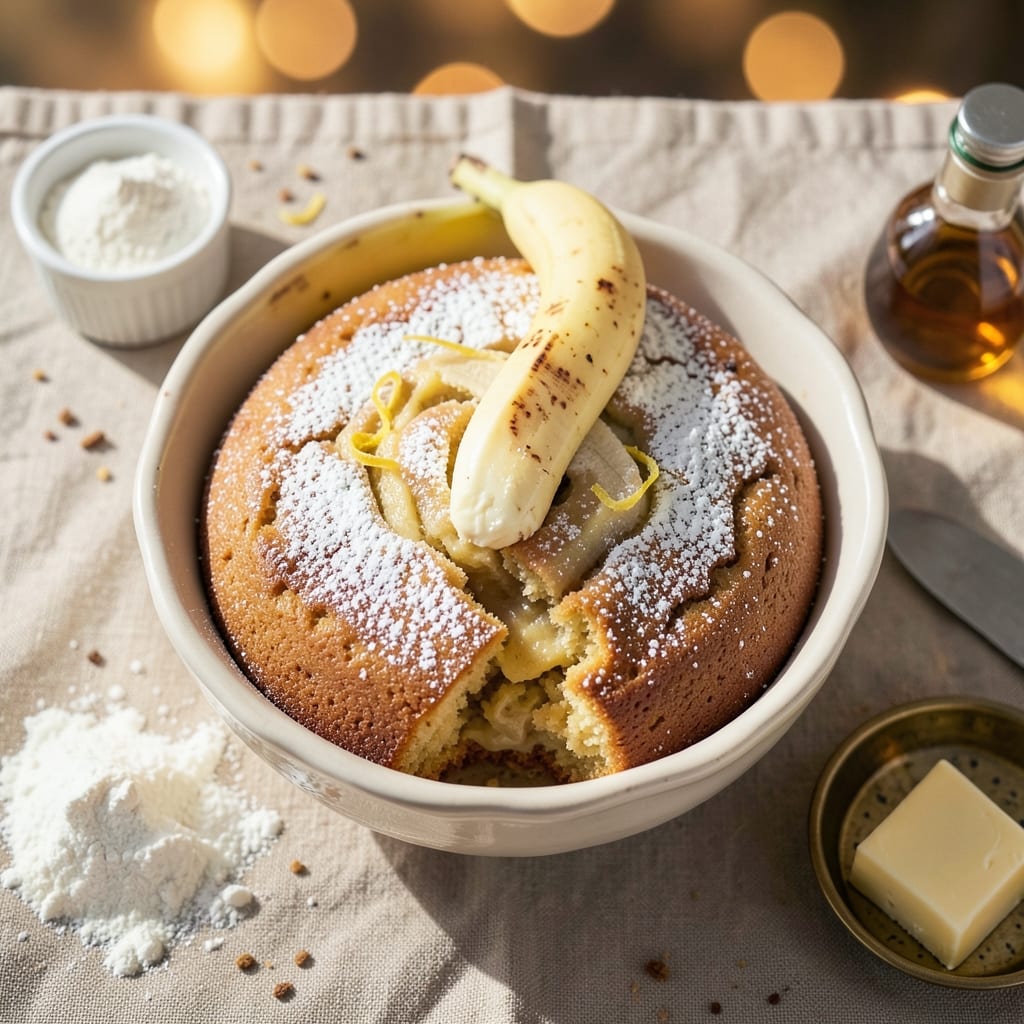
This banana cake recipe with one banana proves you don’t need a whole bunch of fruit to create ultra-moist, flavorful layers. The secret lies in proper mixing techniques and a few simple ingredients that maximize the banana’s natural sweetness and moisture. What starts as a small batch transforms into a tender, rich cake that’s perfect for satisfying cravings without waste.
The beauty of this recipe is its efficiency—just one ripe banana yields a cake with a tender crumb and subtle banana flavor. Using melted butter instead of oil adds richness, while a touch of vanilla enhances the natural sweetness. The cake bakes up golden and stays moist for days, making it ideal for meal prep or a quick dessert.
What sets this apart is the balance of texture and flavor—no dryness, no gummy centers, just perfectly tender layers. The recipe also accommodates substitutions, like swapping eggs for flaxseed or using oil if needed. It’s the kind of cake that feels indulgent yet simple, proving that sometimes less truly is more.
Whether you’re using up a lone banana or looking for a foolproof dessert, this recipe delivers. The instructions are straightforward, and the results speak for themselves—moist, flavorful, and impossible to resist. Let’s get baking!
Ingredients for banana cake recipe with one banana
Simple ingredients transform one banana into ultra-moist, flavorful cake layers with perfect texture.
| Ingredient | Amount | Notes |
|---|---|---|
| Ripe Banana 🍌 | 1 whole | Mashed, no brown spots |
| All-Purpose Flour 🌾 | 1 ½ cups | Sifted for even texture |
| Granulated Sugar 🍚 | ¾ cup | Light brown sugar for depth |
| Unsalted Butter 🧈 | ½ cup | Melted, full-fat preferred |
| Large Eggs 🥚 | 2 whole | Room temperature for blending |
| Pure Vanilla Extract 🌿 | 1 tsp | High-quality, no alcohol |
| Baking Powder 🧂 | 1 ½ tsp | Diamond Crystal preferred |
| Baking Soda 🧂 | ½ tsp | Freshly measured |
| Salt 🧂 | ½ tsp | Fine sea salt |
| Milk 🥛 | ½ cup | Whole milk for richness |
| Vegetable Oil 🫒 | ¼ cup | Substitute for butter if needed |
The banana is the star here—choose one that's ripe with brown spots for maximum sweetness and moisture. Whole Foods or local markets often carry perfectly ripe bananas in their produce section, but the grocery store works too. If your banana isn't quite ripe enough, let it sit on the counter overnight. The butter matters for richness—full-fat is non-negotiable—and the flour should be sifted to avoid dense layers. I always grab King Arthur flour for the best results, but any all-purpose brand will do. The baking powder and baking soda are the leavening duo, so measure them carefully—Diamond Crystal has more lift per teaspoon than other brands.
No butter? Vegetable oil works perfectly—just use the same amount. Eggs can be swapped for flax eggs (2 tbsp ground flaxseed + 6 tbsp water per egg), though the texture will be slightly denser. For a dairy-free option, use unsweetened almond milk instead of regular milk. The vanilla extract should be pure—imitation extracts often have a harsh aftertaste. If you're out of vanilla, a pinch of cinnamon or nutmeg adds warmth. The sugar can be swapped for light brown sugar if you prefer a caramel note, but granulated keeps it neutral and lets the banana shine.
This cake keeps beautifully—3-4 days in an airtight container at room temperature or 1 week in the fridge. For longer storage, wrap tightly and freeze for up to 3 months. I like to slice it before freezing for easy portions. The cake reheats well—just pop slices in the oven at 300°F for 5-10 minutes to restore moisture. Leftovers? Toast with a sprinkle of cinnamon for a breakfast treat.
Why You'll Love This Recipe
- No Waste, All Flavor: I’ll be real—this recipe turns a single overripe banana into something magical. That banana? It’s the secret weapon here, giving the cake a moist, caramel-like sweetness without needing extra sugar. Honestly, it’s the kind of dessert that makes me feel like I’m cheating the system.
- One-Bowl, Done: Mix, pour, bake. That’s it. No fancy layers, no last-minute scrambling for ingredients—I just toss the mashed banana, melted butter, and dry ingredients into one bowl, stir until just combined, and let the oven do the rest. Between us, it’s the kind of simplicity that makes me want to bake more often.
- Budget-Busting Comfort: This cake costs me pennies to make, yet it feels like a treat. A single banana, a stick of butter, a handful of flour—that’s all I need to pull off something that tastes like it belongs on a brunch table. (Yes, even on a Tuesday night when I’m too tired to care.)
- Leftovers That Don’t Suck: The cake stays fresh for days, and honestly? The second day is even better. I’ll slice it up for breakfast toast, pack it in lunches, or just grab a piece straight from the fridge—no reheating needed. It’s the kind of dessert that doesn’t disappear too fast, which is a win in my book.
Step-by-step instructions for ultra-moist banana cake
Here's how to transform one ripe banana into a perfectly moist cake with tender layers.
Prepare the Banana and Melt the Butter
Start by mashing the 1 whole ripe banana in a medium bowl until completely smooth—no lumps should remain. This ensures even distribution throughout the batter. In a separate microwave-safe bowl, melt the 0.5 cup unsalted butter in 30-second intervals until fully liquid. The butter should be warm but not hot—just enough to blend smoothly with the banana.
Here's the thing—mashing the banana properly prevents dense spots in your cake. I press the mashed banana through a fine-mesh sieve to remove any remaining skin fragments, which guarantees a silky texture. Keep the mashed banana at room temperature while you prepare the remaining ingredients.
Mix Wet Ingredients for Maximum Moisture
In the same bowl with the mashed banana, add the 0.75 cup granulated sugar, 2 whole large eggs, 1 tsp pure vanilla extract, 0.5 cup milk, and 0.25 cup vegetable oil. Whisk vigorously for 2-3 minutes until the mixture is light and airy. You'll notice the batter thicken slightly as the eggs incorporate air, which is crucial for that tender crumb structure.
Don't skip this step—I've found that whisking until the mixture is pale yellow (not curdled) ensures the cake rises properly and stays moist. If the batter looks too thick, add 1 tablespoon of milk at a time until it reaches a smooth, pourable consistency. The goal is to create a batter that coats the back of a spoon without being runny.
Combine Dry Ingredients and Fold Gently
In a separate large bowl, sift together the 1.5 cups all-purpose flour, 1.5 tsp baking powder, 0.5 tsp baking soda, and 0.5 tsp salt. This step prevents lumps and ensures even distribution of leavening agents. Using a rubber spatula, gently fold the dry ingredients into the wet mixture in three additions, mixing just until combined. Overmixing develops gluten, which can make the cake tough.
Here's where it gets critical: fold just until no dry spots remain. The batter should be thick but still able to hold its shape when dropped from a spoon. If you see streaks of flour, give it one more gentle fold—this ensures the cake rises evenly and maintains its moisture throughout baking.
Bake Until Golden and Springy
Preheat your oven to 350°F and grease an 8-inch round cake pan or line it with parchment paper. Pour the batter into the prepared pan and smooth the top with a spatula. Bake for 30-35 minutes, until a toothpick inserted in the center comes out clean and the edges are golden brown. The cake should also spring back slightly when pressed gently in the center.
I know it's tempting to open the oven door early, but resist! The cake needs that full baking time to develop its structure. If the top browns too quickly, tent the pan with aluminum foil after 20 minutes to prevent over-browning while the center finishes cooking. The internal temperature should reach 205-210°F for perfect doneness.
Cool and Serve for Maximum Moisture
Remove the cake from the oven and let it cool in the pan for 10 minutes, then transfer it to a wire rack to cool completely. This gradual cooling prevents cracking and allows the moisture to distribute evenly. For extra moisture, I brush the warm cake with a simple 2-tablespoon butter glaze made by mixing 2 tablespoons powdered sugar with 1 teaspoon milk.
Serve slices at room temperature for the best texture—the cake will be tender with a fine crumb and just the right amount of banana flavor. If storing, wrap tightly in plastic wrap and keep at room temperature for up to 3 days or refrigerate for up to 5 days. The cake actually tastes better the next day as the flavors meld and the texture improves.
Pro Tips For Making Banana Cake Recipe With One Banana
- Mash Until Smooth: Don’t just chop that banana—give it a good mash with a fork until it’s completely smooth. Lumps in the batter mean uneven texture, and you’ll end up with dry pockets where the flour didn’t properly bind. I learned this the hard way when my first attempt had a weird, grainy bite.
- Use Room-Temp Butter: Cold butter makes for a dense, heavy cake, and nobody wants that. Let your butter sit out for at least 30 minutes before creaming it with the sugar—this ensures a lighter, fluffier crumb. Trust me, your cake will thank you.
- Don’t Overmix the Batter: Once you add the flour, stop mixing the second everything comes together. Overworking it develops gluten, which turns your tender cake into a tough, chewy brick. Fold just until combined—about 10-12 strokes max.
- Bake Until Springy: The cake’s done when the edges pull away from the pan and a toothpick comes out with moist crumbs, not wet batter. Overbaking dries it out, so pull it when it’s just shy of perfect—it’ll finish cooking as it cools. (Yes, even if you’re impatient like me.)
Creative variations of banana cake recipe with one banana
Spiced Banana Variations
Add 1 tsp cinnamon and ½ tsp nutmeg to the dry ingredients for a warm, aromatic twist. The spices complement the banana’s natural sweetness while adding depth. For extra richness, fold in ¼ cup chopped walnuts or dark chocolate chips after mixing—just keep the batter thick. I love this version with a sprinkle of cinnamon sugar on top before baking. 🌶️
Lemon-Zest Brightness
Boost the flavor with 1 tbsp lemon zest and 1 tbsp lemon juice in the wet ingredients. The citrus cuts through the banana’s sweetness, creating a refreshing balance. Pair it with a lemon glaze (powdered sugar + lemon juice) for a tangy finish. This variation works especially well with slightly underripe bananas—just add 1 extra tbsp sugar to compensate. 🍋
Chocolate Swirl Magic
Create a marbled effect by swirling ¼ cup melted dark chocolate (60% cocoa) into half the batter before folding in the dry ingredients. Use a knife to gently drag lines through the batter in the pan for a stunning presentation. For a decadent touch, add ½ cup chocolate chips to the batter. This version feels indulgent but keeps the cake’s signature moisture. 🍫
Nutty Crunch Layer
Press ½ cup chopped pecans or almonds into the bottom of the pan before pouring the batter. Bake as usual, then top with a layer of cream cheese frosting (mix 4 oz cream cheese, 2 tbsp butter, and 2 tbsp powdered sugar) for a Southern-style twist. The nuts add texture contrast, while the frosting keeps the cake ultra-moist. 🌰
Dairy-Free Adaptation
Replace the milk with ½ cup unsweetened almond milk and the butter with ½ cup coconut oil (melted). Use flax eggs (2 tbsp ground flaxseed + 6 tbsp water per egg) if needed. The cake stays tender, though slightly denser. For extra moisture, add 1 tbsp applesauce to the wet ingredients. This version works beautifully with a dairy-free vanilla glaze (powdered sugar + almond milk). 🌱
Mini Muffin Twist
Divide the batter among 12 greased mini muffin tins and bake at 350°F for 12-15 minutes. The smaller size ensures even baking and a perfect bite-sized treat. Top with a dollop of Greek yogurt or a drizzle of honey for a breakfast-friendly option. These muffins freeze well—just reheat in the oven for 5 minutes at 300°F to restore moisture. 🧁
Nutrition facts
Frequently asked questions
Can I use an underripe banana for this cake?
The recipe works best with a ripe banana (with brown spots) for natural sweetness and moisture. If yours isn't ripe, let it sit at room temperature for 1-2 days until slightly soft. For underripe bananas, add 1 extra tablespoon of sugar to compensate for the lack of sweetness. The texture will still be tender, but the flavor may be subtler.
Why does my cake turn out dense instead of moist?
Overmixing the batter or underbaking are the most common culprits. Mix just until combined—no more than 30 strokes after adding dry ingredients. Also, ensure your cake reaches an internal temp of 205-210°F (a toothpick should come out clean). For extra moisture, brush warm slices with 2 tbsp milk mixed with 1 tbsp melted butter while still slightly warm.
Can I make this cake without eggs?
Yes! Replace each egg with 2 tablespoons ground flaxseed + 6 tablespoons water (let sit for 5 minutes to thicken). For best results, add 1 extra tablespoon of baking powder to compensate for lost lift. The texture will be slightly denser but still moist. This works perfectly for vegan adaptations too.
How do I store banana cake to keep it fresh?
Wrap tightly in plastic wrap and store at room temperature for 3-4 days or refrigerate for 5-7 days. For longer storage, freeze slices in an airtight container for up to 3 months. To restore freshness, reheat frozen slices at 300°F for 5-10 minutes or microwave for 10-15 seconds. The cake actually improves overnight as flavors meld!
What's the secret to making this cake extra moist?
The combination of melted butter (not oil) and proper mixing is key. Whisk the wet ingredients until pale yellow and thickened, then fold dry ingredients gently. For extra moisture, add 1 tablespoon of sour cream or Greek yogurt to the wet mix. The butter glaze mentioned in the recipe also helps lock in moisture. This method guarantees a tender crumb that stays fresh for days.