
Desserts
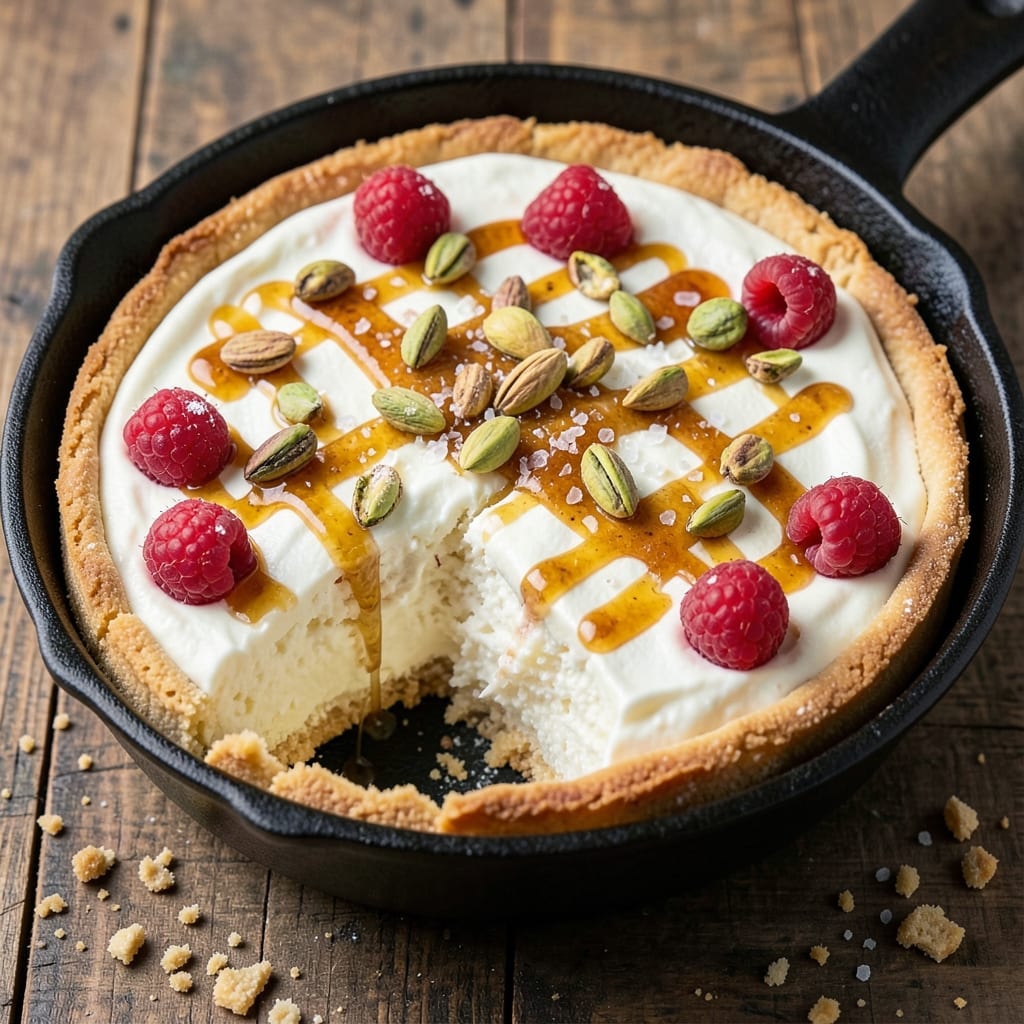
This baked cheesecake recipe with ricotta cheese delivers the perfect balance of lightness and richness—no jiggle, no cracks, just a velvety texture that melts in your mouth. 💛 The ricotta creates a silky base that stays tender while supporting a golden-brown crust, making it foolproof for both beginners and cheesecake enthusiasts. What sets this apart is the water bath method, which ensures even baking and a smooth finish every time.
The secret lies in the ricotta’s high moisture content, which prevents that dreaded dense center while adding subtle sweetness and a delicate crumb. We’ll use a buttery graham cracker crust for structure, then layer the filling with precision to avoid leaks. Baking at 350°F for 50 minutes in a water bath guarantees a creamy interior with a perfectly set exterior—no guesswork required.
Once cooled, you’ll have a cheesecake that’s light as air yet rich enough to satisfy any craving. The ricotta’s subtle tang cuts through the sweetness, creating a flavor profile that’s both elegant and comforting. Top it with fresh berries, a drizzle of caramel, or a dusting of powdered sugar for a restaurant-worthy finish that’s surprisingly easy to achieve at home.
This recipe scales beautifully for gatherings, and the water bath method makes it adaptable to any oven. Whether you’re celebrating a special occasion or simply treating yourself, this cheesecake delivers professional results with minimal effort. Let’s get started on creating your perfect slice.
Ingredients for baked cheesecake recipe with ricotta cheese
Ricotta's silky secret plus crust essentials—just 13 ingredients for velvety perfection.
| Ingredient | Amount | Notes |
|---|---|---|
| Whole Milk Ricotta Cheese 🧀 | 24 oz | Part-skim for creaminess, room temperature |
| Large Eggs 🥚 | 4 whole | Room temperature for even baking |
| Granulated Sugar 🍚 | 1 ½ cups | Superfine preferred for smooth texture |
| All-Purpose Flour 🌾 | ½ cup | Sifted for lightness in filling |
| Unsalted Butter 🧈 | ½ cup | Cold, cubed for crust |
| Graham Cracker Crumbs 🍪 | 2 cups | Honey or vanilla flavor preferred |
| Light Brown Sugar 🍯 | ¼ cup | Packed for crust sweetness |
| Vanilla Extract 🌿 | 2 tsp | Pure Madagascar preferred |
| Lemon Juice 🍋 | 1 tbsp | Freshly squeezed, bright flavor |
| Salt 🧂 | ½ tsp | Diamond Crystal preferred |
| Heavy Whipping Cream 🥛 | ½ cup | Full-fat for stability |
| Powdered Sugar 🍚 | ¼ cup | For final dusting |
| Fresh Blueberries 🫐 | 1 cup | Optional topping, macerated |
Ricotta is the star here, so skip the pre-drained tubs—look for whole milk ricotta with at least 18% fat for that signature creaminess. Trader Joe's and Whole Foods carry excellent brands, but any quality ricotta works if it's fresh (the fresher, the better). For the crust, graham crackers from the bakery section stay crisp longer than boxed ones. If you can't find vanilla graham crackers, regular ones with an extra half teaspoon of vanilla extract in the crust will do the trick. Pro tip: Toast the crumbs lightly with the butter before pressing into the pan for extra crunch.
No ricotta? Substitute mascarpone or a mix of cream cheese and sour cream—but expect a denser texture. Running short on eggs? Replace one with 3 tbsp aquafaba (chickpea brine), though texture may vary slightly. The vanilla extract is non-negotiable—imitation vanilla won't cut it here. For the berry topping, frozen works in a pinch, but fresh blueberries or raspberries add that restaurant-quality touch. If you're feeling fancy, toss them with a teaspoon of sugar and let them macerate for 15 minutes before baking.
Prep the crust first—it needs to chill for 30 minutes before filling to prevent leaks. The filling can be made a day ahead and stored in the fridge, but let it sit at room temperature for 30 minutes before baking to prevent condensation. Once baked, cool the cheesecake in the oven with the door slightly ajar for 1 hour—this prevents cracking. Store leftovers covered in the fridge for up to 5 days, though I've never had any last that long. For serving, dust with powdered sugar right before slicing to keep it looking fresh.
Why You'll Love This Recipe
- No Mixer Needed: I swear by this recipe when my stand mixer’s on the fritz—just fold the ricotta and eggs with a sturdy spoon. The ricotta’s thickness does most of the work, so no overmixing or lumps here.
- Creamy Without Overpowering: That buttery crust and lightly sweetened ricotta filling? It’s the perfect balance—rich but not cloying, like a hug from your favorite baker. Honestly, the eggs add just enough structure to keep it from being too dense.
- Weeknight Dinner Guest: Between us, this is my go-to when friends drop by unannounced. Slice it warm (yes, warm!) with a drizzle of honey or a sprinkle of flaky salt, and suddenly you’ve got a showstopper that’s ready in under an hour.
- Leftovers That Beg for More: The best part? It reheats like a dream—soft in the middle, crisp at the edges—so I always bake two. My kids fight over the slices, and I secretly stash extras in the freezer for lazy mornings. (No one judges.)
Step-by-step instructions for baked cheesecake with ricotta
Here's how to build a cheesecake so light it practically disappears on your fork.
👨🍳 Step 1: Prepare the Crust and Prep the Ricotta
First, preheat your oven to 325°F—this lower temperature is key for preventing cracks in the ricotta base. In a medium bowl, combine the 2 cups graham cracker crumbs, 0.5 cup unsalted butter (cold and cubed), 0.25 cup light brown sugar, and 0.5 tsp salt. Use your fingers to work the butter into the crumbs until the mixture holds together when pressed. Press this firmly into a 9-inch springform pan, tapping the bottom gently to compact it.
While the crust bakes, prepare the ricotta mixture. In a large bowl, whisk together the 24 oz whole milk ricotta cheese (make sure it's room temperature), 1.5 cups granulated sugar, 0.5 cup all-purpose flour, 2 tsp vanilla extract, and 1 tbsp lemon juice. The batter should be smooth but thick—if it looks too thin, add 1 tablespoon flour. This lemon juice is a game-changer; it brightens the ricotta and prevents a heavy texture.
🍳 Step 2: Bake the Crust and Assemble the Cheesecake
Bake the crust for 10 minutes—just until it's set at the edges but still soft in the center. Remove it from the oven and let it cool slightly while you prepare the filling. In a separate bowl, whisk the 4 whole large eggs until frothy, then gently fold them into the ricotta mixture using a spatula. Be careful not to overmix—just combine until no streaks remain. This step is where the magic happens; the eggs will create that signature light, airy texture.
Pour the ricotta mixture over the warm crust. Tap the pan gently on the counter to release any air bubbles, then smooth the top with a spatula. The filling should come about ½ inch from the top edge of the crust. Here's the thing—don't overfill. The cheesecake will rise slightly during baking, and you want room for that expansion.
🔥 Step 3: Bake to Golden Perfection
Place the assembled cheesecake in the preheated oven and bake for 50-55 minutes. You're looking for the edges to be set and the center to be just barely jiggly—it should look like a wobbly Jell-O when gently shaken. The top should be golden, but don't let it brown too much or it'll crack. If the edges are browning too quickly, loosely cover them with aluminum foil after 30 minutes.
I know it seems weird, but trust me—when you open the oven and see that slight wobble in the center, that's exactly what you want. The cheesecake will continue setting as it cools, but this slight jiggle ensures it stays moist and light. Turn off the oven, crack the door open, and let the cheesecake cool inside for 15 minutes—this gradual temperature drop prevents cracking.
⏰ Step 4: Cool and Finish with Cream Topping
Remove the cheesecake from the oven and let it cool completely at room temperature for 2 hours. This is the hardest part—patience! The longer it cools, the smoother the texture will be. While it cools, prepare the cream topping by whipping the 0.5 cup heavy whipping cream with the 0.25 cup powdered sugar until soft peaks form. Spread this evenly over the top of the cooled cheesecake.
For the blueberries, toss the 1 cup fresh blueberries with 1 teaspoon lemon juice and let them sit for 10 minutes to macerate. This step intensifies their flavor and prevents them from sinking into the cream. Arrange them decoratively on top of the cream layer, pressing lightly so they stick. Chill the cheesecake uncovered in the refrigerator for at least 4 hours or overnight—this final step ensures the cream sets properly and the flavors meld.
Pro Tips For Making Baked Cheesecake Recipe With Ricotta Cheese
- Drain That Ricotta: Ricotta’s watery side is the real enemy here—skip the straining, but press it in a clean kitchen towel for 10 minutes before mixing. I learned this the hard way after a batch turned out like pudding. (Yes, even if you’re impatient like me.)
- Mix Eggs Last: Whole eggs + ricotta = curdling city if you’re not careful. Beat the eggs separately with sugar first, then gently fold them into the ricotta mixture. This keeps the texture smooth—no one wants a lumpy cheesecake.
- Bake Low and Slow: 325°F is your friend. I used to blast the oven and ended up with a cracked, dense center. After burning three batches, I finally figured out: 50–60 minutes at 325°F guarantees a creamy middle without the drama.
- Butter the Pan Twice: Grease that springform pan with butter before lining it with parchment, then butter the parchment too. This isn’t the prettiest method, but it’s the tastiest—no sticking, no tearing, and the crust stays crisp. (Your future self will thank you.)
Common mistakes when making this recipe
Overmixing the Filling
Ricotta cheesecakes rely on delicate structure, so overmixing the filling is a common downfall. When you fold in those eggs, stop as soon as you eliminate visible streaks—overmixing incorporates too much air, which can cause cracks during baking. I’ve ruined more cheesecakes than I’d like to admit by beating the batter like I’m making pancakes. 💛 The filling should look smooth but still thick enough to coat the back of a spoon.
Skipping the Water Bath
This is a non-negotiable for ricotta-based cheesecakes—they need the water bath method to bake evenly and prevent sinking. Without it, the center will stay too wet while the edges overbake. I once baked a ricotta cheesecake without a water bath (don’t ask why), and it ended up with a dense, rubbery center. Use a deep baking dish filled with 1-2 inches of hot water in your oven, and place your springform pan inside. The steam helps create that signature light texture.
Room-Temperature Ingredients
Cold eggs and ricotta are the silent saboteurs of perfect cheesecakes. If your eggs are straight from the fridge, they won’t incorporate smoothly into the ricotta, leading to a grainy texture. Let them sit in warm water for 10 minutes before using. The ricotta should also be room temperature—cold ricotta won’t blend properly and can cause the filling to separate. I keep my ricotta out for 30 minutes before starting, and I’ve never had a separation issue since.
Overfilling the Pan
Filling your springform pan to the brim is a recipe for disaster—literally. Ricotta cheesecakes expand slightly during baking, and if you overfill, the mixture will spill over the edges, creating a messy, uneven top. Leave at least ½ inch of space between the filling and the rim of the crust. I measure my filling with a ladle to ensure it’s at the right level, and I always tap the pan gently on the counter to release any trapped air bubbles before baking.
Rushing the Cooling Process
Patience is key with ricotta cheesecakes, and skipping the proper cooling steps is a fast track to cracks. After baking, let the cheesecake cool in the oven with the door slightly ajar for 15 minutes—this gradual temperature drop prevents sudden contractions. Then, cool it completely at room temperature for 2 hours before refrigerating. I’ve seen cheesecakes crack within minutes of being moved from the oven to the fridge. Trust the process, and your cheesecake will reward you with a smooth, silky texture.
Ignoring the Cream Topping
The whipped cream topping isn’t just for looks—it adds a final layer of stability and prevents the cheesecake from drying out. Skipping it can leave your cheesecake looking flat and lacking that restaurant-quality finish. Whip the ½ cup heavy cream with ¼ cup powdered sugar to soft peaks and spread it evenly over the cooled cheesecake. This step also creates a barrier that helps the berries or other toppings stick without sinking into the filling. I always let the cream set for 4 hours before serving to ensure it holds its shape.
Nutrition facts
Frequently asked questions
Why does ricotta make this cheesecake lighter than traditional recipes?
The ricotta's high moisture content and delicate protein structure create a silky, airy texture that traditional cream cheese can't match. Its natural acidity also balances sweetness while preventing that dense, heavy feel. The water bath method then enhances this lightness by ensuring even heat distribution without overcooking the delicate filling.
Can I make this cheesecake without a springform pan?
You can use a regular 9-inch cake pan, but line the bottom with parchment paper and grease the sides thoroughly. When serving, run a knife around the edges first to loosen it. The crust will be slightly more fragile without the removable sides, so handle carefully when transferring. For best results, stick with a springform pan for that professional finish.
How do I prevent cracks in the ricotta cheesecake?
Cracks happen when the cheesecake cools too quickly. After baking, let it cool in the oven with the door slightly open for 15 minutes, then cool completely at room temperature for 2 hours before refrigerating. Avoid opening the oven door frequently during baking, and don't overfill the pan—leave at least ½ inch of space at the top.
What's the best way to store leftovers?
Cover tightly with plastic wrap and store in the refrigerator for up to 5 days. For longer storage, freeze individual slices wrapped in plastic for up to 2 months. Thaw overnight in the fridge to maintain texture. The cream topping may soften slightly when reheated, so it's best enjoyed fresh from the fridge.
Can I substitute ricotta with other cheeses?
For a similar texture, use mascarpone or a 50/50 mix of cream cheese and sour cream. However, the flavor will be richer and slightly denser. If you must substitute, reduce the sugar by 2 tablespoons since these cheeses are already sweeter. For a lighter texture, add 1 extra egg to compensate for the lower moisture content.