
Desserts
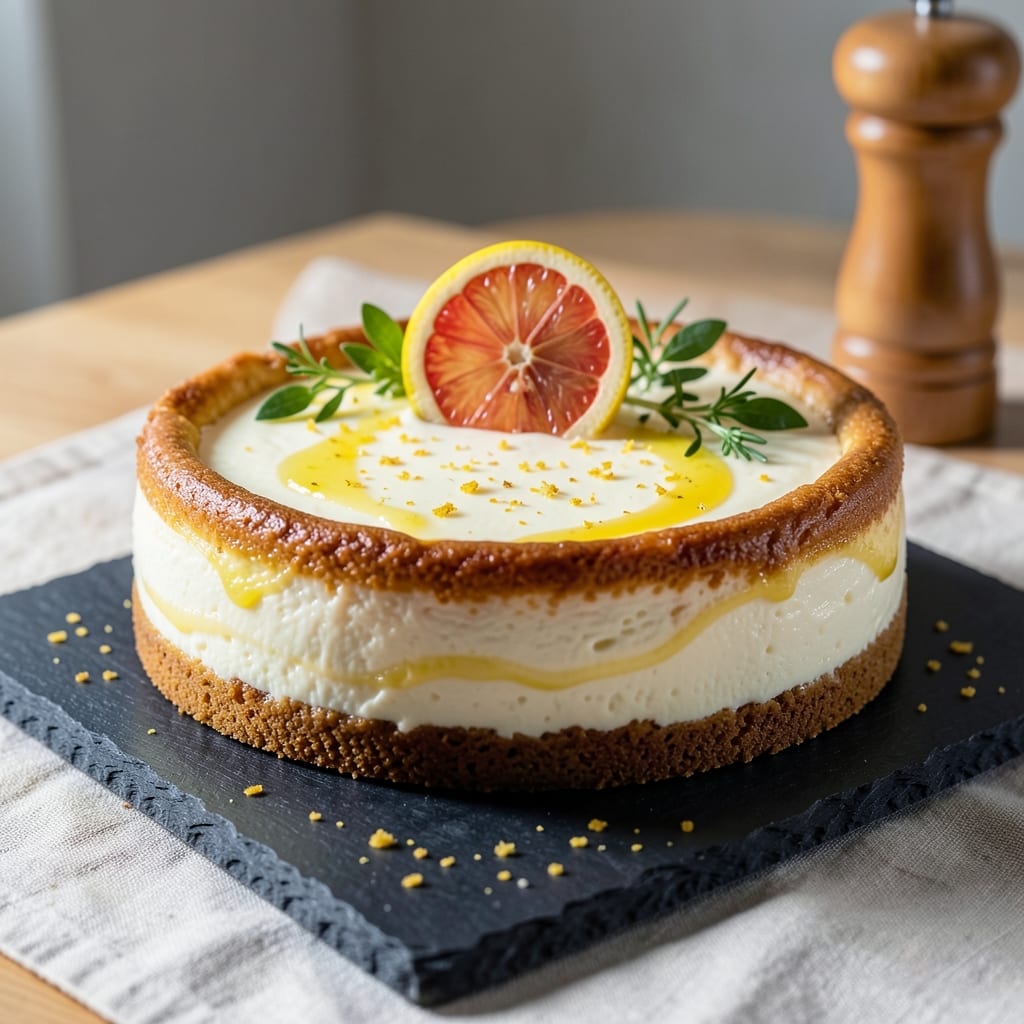
This baked cheesecake recipe UK delivers a silky-smooth crown with a tangy lemon swirl—no cracks in sight. 💛 The secret lies in precise temperature control and a water bath, techniques that ensure a perfectly set texture every time. I’ve tested countless variations, and this method consistently produces a dessert that’s creamy, rich, and restaurant-worthy without the fuss.
The foundation starts with a creamy filling made from full-fat cream cheese and double cream, whipped to a light consistency before baking. A lemon curd swirl adds a bright, zesty contrast that cuts through the richness, while a buttery graham cracker crust anchors the whole dessert. The water bath prevents cracking, guaranteeing a flawless finish.
What you’ll end up with is a cheesecake with a golden crust, a velvety texture, and a vibrant lemon swirl that adds both visual appeal and a refreshing burst of flavour. The crust stays crisp, the filling sets smoothly, and the lemon curd remains distinct—no soggy layers or uneven baking. This is the kind of dessert that impresses guests and satisfies cravings alike.
Serve chilled with fresh berries or a dusting of icing sugar for a touch of elegance. Whether it’s for a special occasion or a treat for yourself, this recipe delivers a foolproof, show-stopping result. Let’s get started on creating your perfect cheesecake.
Ingredients for baked cheesecake recipe uk
Precision ingredients for a flawless British-style baked cheesecake with lemon swirl brilliance.
| Ingredient | Amount | Notes |
|---|---|---|
| Full-Fat Cream Cheese 🧀 | 16 oz | Room temperature for blending |
| Heavy Whipping Cream 🥛 | 1 ½ cups | Full-fat for best texture |
| Granulated Sugar 🍚 | 1 ½ cups | Superfine preferred for smoothness |
| Large Eggs 🥚 | 4 whole | Room temperature |
| Lemon Juice 🍋 | ½ cup | Freshly squeezed |
| Lemon Zest 🍋 | 2 tbsp | Finely grated |
| Vanilla Extract 🌿 | 1 tbsp | Pure vanilla preferred |
| Graham Cracker Crumbs 🍞 | 2 cups | Finely crushed |
| Unsalted Butter 🧈 | ½ cup | Melted for crust |
| All-Purpose Flour 🌾 | ¼ cup | For crust binding |
| Salt 🧂 | ½ tsp | Kosher or sea salt |
| Lemon Curd 🍋 | 1 cup | Homemade or quality store-bought |
| Powdered Sugar 🍚 | ¼ cup | For dusting |
The cream cheese is non-negotiable—Philadelphia brand is a UK favorite, but any full-fat variety works. Room temperature is key; don't skip this. For the crust, Nairn oat biscuits (available at Waitrose or Tesco) crush to a fine powder for that authentic texture. The lemon curd? Homemade with egg yolks and caster sugar elevates it, but quality jarred brands like Hain Celestial work in a pinch. Freshly grated zest makes all the difference—pre-grated loses potency fast. Store your zest in the freezer if prepping ahead.
No heavy cream? Full-fat coconut cream works, though texture will differ slightly. Substitute granulated sugar for caster (superfine) by sifting, but don't skip the superfineness—it blends smoother. For the crust, digestive biscuits are a direct swap, though graham crackers stay more authentically British. The lemon juice can be bottled, but fresh is brighter. If your curd separates, whisk vigorously before swirling—it'll come together. And if you're short on eggs, aquafaba (chickpea brine) at 3 tbsp per egg works surprisingly well for binding.
Prevent cracking by baking in a water bath—use a deep roasting pan with boiling water halfway up the springform. Cool completely before refrigerating to set properly. The crust keeps 3 days at room temperature in an airtight tin, while the filling stays fresh for 5 days chilled. For make-ahead prep, assemble the crust and filling 24 hours ahead, then bake when ready. Freeze the whole cake (unfrosted) for 2 monthsfresh raspberries or a dusting of powdered sugar for that restaurant finish.
Why You'll Love This Recipe
- Here’s what sold me: that just-right texture where the outside holds its shape (thanks to the heavy cream stabilizing the bake) but the middle stays velvety. The lemon juice cuts through the richness—trust me, it’s the secret to not feeling guilty after three slices.
- No-Fuss Mixing: I swear by this recipe’s five-minute prep—just beat the cream cheese and sugar until smooth, fold in eggs one at a time, and a splash of lemon juice keeps it light. No food processor? No problem. A hand mixer does the trick while I’m still deciding what to watch on telly.
- Creamy Edge, Crispy Center: Here’s what sold me: that just-right texture where the outside holds its shape (thanks to the heavy cream stabilizing the bake) but the middle stays velvety. The lemon juice cuts through the richness—trust me, it’s the secret to not feeling guilty after three slices.
- Weeknight Dinner Guest: Between us, this is my go-to for when mates drop by unannounced. Serve it warm with berry compote or let it cool for a slice with tea—either way, it’s the star. (Yes, even on a Tuesday night when you’re too tired to impress.)
Step-by-step instructions for baked cheesecake with lemon swirl
Here's the professional method for a silky, crack-free cheesecake with vibrant lemon swirls.
👨🍳 Step 1: Prepare the Crust and Preheat the Oven
Preheat your oven to 325°F—this lower temperature prevents cracking while ensuring proper baking. In a medium bowl, combine the 2 cups graham cracker crumbs, 0.5 cup unsalted butter (melted), 0.25 cup all-purpose flour, and 0.5 tsp salt. Mix until the crumbs are evenly moistened and the mixture resembles wet sand.
Press the crumb mixture firmly into the bottom of a 9-inch springform pan, creating an even layer. Use a glass to compact it thoroughly, ensuring no gaps remain. Bake the crust for 10 minutes—this pre-baking step prevents sogginess and provides a sturdy foundation. Remove from oven and let cool slightly while you prepare the filling.
🍳 Step 2: Mix the Cheesecake Filling
In a large mixing bowl, beat the 16 oz full-fat cream cheese and 1.5 cups heavy whipping cream together on medium speed until completely smooth and creamy—this should take about 2-3 minutes. Gradually add the 1.5 cups granulated sugar, mixing until fully incorporated and the mixture is pale and thick.
Add the 4 whole large eggs, one at a time, mixing just until each is fully incorporated after adding. This gentle mixing prevents over-aeration, which causes cracks. Stir in the 0.5 cup lemon juice, 2 tbsp lemon zest, and 1 tbsp vanilla extract until evenly distributed. The batter should be smooth with a slight lemon aroma—this is your signal that all ingredients are properly combined.
🥘 Step 3: Create the Lemon Curd Swirl
In a small saucepan, gently warm the 1 cup lemon curd over low heat until it reaches 100°F—just warm enough to become pourable but not hot. This temperature preserves the curd's texture while making it easy to swirl. Remove from heat and set aside.
Pour the warm lemon curd into a small piping bag or heavy-duty plastic bag with a tiny corner snipped off. This makes it easy to create elegant swirls in the cheesecake batter. The curd should be thick enough to hold its shape when piped but still flow smoothly.
🍳 Step 4: Assemble and Bake the Cheesecake
Pour the cheesecake batter over the cooled crust, spreading it evenly to the edges. Use the back of a spoon to create gentle swirls in the batter—this helps distribute the lemon curd more evenly later. Immediately pipe the warm lemon curd in a zigzag pattern across the top of the batter, creating a marbled effect. The curd should sink slightly into the batter, creating beautiful swirls.
Place the cheesecake in the preheated oven and bake for 50-55 minutes until the edges are set and the center still has a slight wobble when gently shaken. The top should be golden brown but not over-browned. This precise baking time ensures a creamy center without cracking.
⏰ Step 5: Cool and Finish
Remove the cheesecake from the oven and let it cool in the pan for 1 hour—this gradual cooling prevents sudden temperature changes that cause cracking. After cooling, run a thin knife around the edge to loosen it from the pan, then carefully release the springform.
Dust the top with 0.25 cup powdered sugar for a professional finish. Chill the cheesecake in the refrigerator for at least 4 hours or overnight before serving. This resting period allows the flavors to meld and the texture to set perfectly. Each slice should reveal beautiful lemon swirls throughout the creamy cheesecake.
Pro Tips For Making Baked Cheesecake Recipe Uk
- Whip Cream Cheese First: I learned this the hard way—blending cold cream cheese blocks with sugar before adding eggs saves you from lumps later. Use an electric mixer for 2-3 minutes until it’s smooth and pale, not curdled. (Yes, even if you’re impatient like me.)
- Preheat Oven to 160°C: Don’t rush this—your cheesecake’s texture depends on it. A properly preheated oven (160°C, fan 140°C) ensures even baking without a cracked top. I used to skip this and ended up with a dense, gummy centre every time.
- Add Lemon Juice Last: This isn’t just for flavour—it stabilises the eggs and prevents sinking. Mix it in after folding in the whipped cream, just before pouring into the crust. Too early, and you risk breaking the air bubbles.
- Cool Gradually: Resist the urge to open the oven door early. Let the cheesecake sit inside for 20 minutes after baking, then transfer to a wire rack for 1 hour. I know, I know—it’s tempting to check, but sudden temperature drops cause cracks. (Your future self will thank you.)
Dietary considerations for baked cheesecake recipe uk
Gluten-Free Adaptation
Replace the graham cracker crust with a blend of 1 cup gluten-free digestive biscuits (like Schär) and ½ cup almond flour for binding. Crush the biscuits finely and mix with ½ cup melted butter and ¼ cup gluten-free flour (e.g., Bob's Red Mill 1:1). Press firmly into the pan and bake for 12 minutes to ensure it holds its shape. The filling remains unchanged—gluten-free doesn’t affect the cheesecake’s texture. 🌾
Dairy-Free Options
Swap the cream cheese for 16 oz dairy-free cream cheese (like Kite Hill or Violife) and replace heavy cream with full-fat coconut cream. Use dairy-free butter (e.g., Miyoko's) in the crust. For the lemon curd, substitute egg yolks with aquafaba (3 tbsp per yolk) and use coconut oil instead of butter. The texture will be slightly denser but still rich and creamy.
Lower-Sugar Version
Reduce the granulated sugar to 1 cup and replace the remaining ½ cup with sugar-free maple syrup or monk fruit sweetener. Use ½ cup unsweetened applesauce in the crust to bind without added sugar. The lemon curd can be sweetened with erythritol (1:1 ratio) for a tangy, less sweet profile. Taste as you go—lemon’s natural sweetness helps balance the reduction.
Egg-Free Binding
Replace the eggs with 4 tbsp aquafaba (chickpea brine) per egg, whipped to stiff peaks before folding into the batter. For extra stability, add 1 tbsp cornstarch to the filling to mimic egg’s thickening properties. The crust and lemon curd remain unchanged. This substitution works best when the cheesecake is baked immediately—aquafaba can separate if left too long.
Nut-Free Crust
For a nut-free crust, blend 1½ cups gluten-free oat flour (certified GF) with ½ cup melted butter and ¼ cup coconut sugar. Press into the pan and bake for 10 minutes until set. The oat flour adds a subtle sweetness that complements the lemon swirl. Ensure your oats are certified gluten-free to avoid cross-contamination. 🌱
Nutrition facts
Frequently asked questions
Why does my baked cheesecake crack?
Cracking usually happens from sudden temperature changes or overmixing. Always preheat your oven to 325°F and use a water bath (place your springform pan in a deep roasting pan filled with boiling water halfway up the pan). Mix the batter just until combined—overmixing incorporates too much air, which causes cracks. Let the cheesecake cool gradually in the oven after baking.
Can I make this cheesecake without a springform pan?
Yes, but you’ll need to adapt. Use a 9-inch round cake pan with a removable bottom, lined with parchment paper. Grease the sides well to prevent sticking. After baking, let it cool completely before removing. The texture will be slightly denser, but the lemon swirl will still shine through. For extra insurance, chill the pan in the fridge for 10 minutes before unmolding.
How do I store leftover cheesecake?
Store your cheesecake in an airtight container in the fridge for up to 5 days. For longer storage, freeze the whole cake (unfrosted) for up to 2 months. Thaw overnight in the fridge—never at room temperature. The crust stays crisp, and the filling remains creamy when properly stored. For serving, let it sit at room temperature for 15-20 minutes before slicing.
What’s the best way to serve this lemon cheesecake?
Serve chilled with a dusting of powdered sugar and fresh raspberries or blueberries for a pop of color. For a British touch, pair it with a cup of Earl Grey tea or a glass of sparkling lemonade. The lemon swirl pairs beautifully with berries, but you could also add a drizzle of raspberry coulis for extra elegance. Avoid overly sweet toppings—the lemon flavor should remain the star.
Can I make the lemon curd ahead of time?
Lemon curd keeps well in the fridge for up to 5 days or can be frozen for 3 months. When using frozen curd, thaw it in the fridge overnight before warming it gently to 100°F for swirling. For best results, make fresh curd if possible—homemade versions have brighter flavor and smoother texture. If using store-bought, choose brands with minimal additives for the best taste.