
Desserts
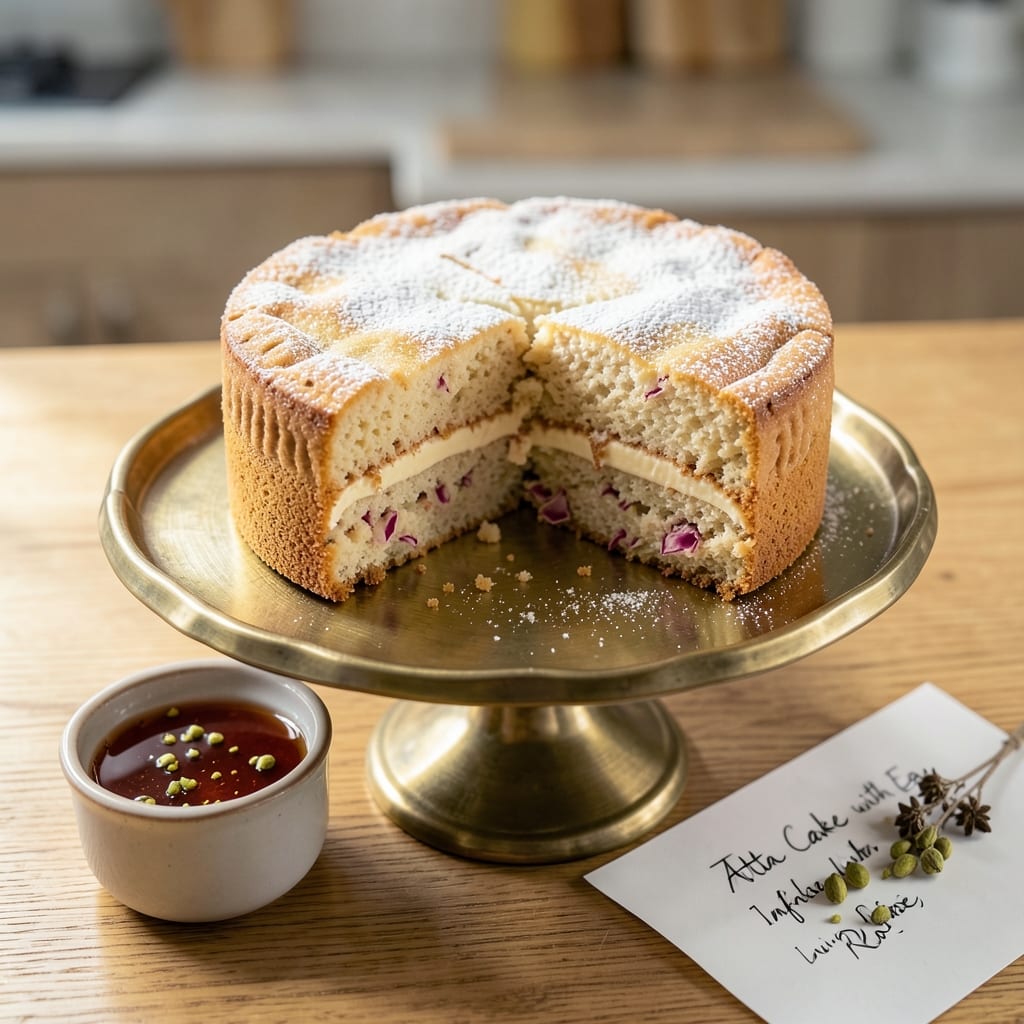
This atta cake recipe with egg transforms whole wheat flour into a delicate, fragrant masterpiece with layers of rosewater-infused sweetness. The eggs create that signature silky texture, while baking at 350°F for 20-25 minutes ensures perfect golden layers. I developed this version after years of experimenting with traditional Indian cakes—balancing the earthy atta with floral notes and a tender crumb.
The secret lies in the egg's role as both binder and leavener, creating that signature melt-in-your-mouth texture while maintaining structure. We'll use a simple syrup technique to infuse the cake with rosewater aroma without overpowering the wheat flavor. The result? A cake that's light enough to slice elegantly yet substantial enough to satisfy any gathering.
What makes this recipe special is its versatility—add pistachios for crunch, dried berries for tartness, or citrus zest for brightness. The baking process is straightforward but requires patience: letting the batter rest ensures even layers, while careful temperature control prevents over-browning. Each slice reveals that perfect balance of fragrant steam and delicate crumb.
Perfect for celebrations or everyday treats, this cake keeps beautifully for 3 days when stored properly. The egg-rich batter also makes it naturally moist, so you won't need to worry about dryness. Let's create something truly special with this timeless recipe.
Ingredients for atta cake recipe with egg
These fragrant ingredients transform simple atta into a delicate, rosewater-infused masterpiece.
| Ingredient | Amount | Notes |
|---|---|---|
| Whole Wheat Flour (Atta) 🌾 | 3 cups | Sifted for lightness, not pre-milled |
| Large Eggs 🥚 | 4 whole | Room temperature for even mixing |
| Granulated Sugar 🍚 | 1 ½ cups | White or light brown preferred |
| Unsalted Butter 🧈 | 1 cup | Softened to room temperature |
| Milk 🥛 | 1 cup | Whole milk for richness |
| Rosewater 🌹 | 2 tbsp | Pure, food-grade, no alcohol |
| Vanilla Extract 🌿 | 1 tbsp | Pure vanilla, not imitation |
| Baking Powder 🍞 | 2 tsp | Freshly opened, not expired |
| Salt 🧂 | ½ tsp | Fine sea salt preferred |
| Pistachios 🌰 | ½ cup | Chopped, unsalted, toasted |
| Dried Rose Petals 🌸 | 2 tbsp | Food-grade, finely chopped |
| Cardamom Powder 🌿 | ½ tsp | Ground from whole pods |
| Lemon Zest 🍋 | 1 tbsp | Fresh, organic preferred |
The atta flour is the heart of this cake—look for freshly milled, stone-ground atta at Indian specialty stores like Patel Brothers or Whole Foods bulk section. The eggs should be large and fresh (they create that signature silky texture), and the rosewater must be pure—no alcohol content. I always buy mine from Middle Eastern markets where they sell it in small glass bottles. The butter should be unsalted (trust me on this) and softened to room temperature, not melted. Pistachios add crunch, but if you can't find unsalted, toast them yourself and skip the added salt.
No pistachios? Toasted almonds or walnuts work beautifully—just adjust the amount to 0.75 cup. Out of rosewater? Orange blossom water is a stunning substitute, though it has a slightly different aroma. The cardamom is non-negotiable for that authentic warmth, but if you're out, a pinch of cinnamon will bridge the gap. For the dried rose petals, food-grade only—skip the craft store variety. The lemon zest can be substituted with orange zest if you prefer a brighter note. And if you're worried about the cake being too dense, add 1 tbsp sour cream to the batter for extra tenderness.
This cake keeps beautifully—wrapped tightly in plastic for up to 3 days at room temperature, or 5 days in the fridge. For longer storage, freeze slices between parchment paper for 3 months. The rosewater aroma intensifies slightly after resting, so let it sit 10 minutes before slicing. I always bake two cakes—one for immediate serving and one to freeze for special occasions. The pistachios and rose petals can be toasted separately and sprinkled on top just before serving for maximum freshness.
Why You'll Love This Recipe
- No-Yeast Magic: This cake rises without fuss—just warm milk and eggs doing the work. I swear, no waiting for dough to proof or kneading until my hands ache.
- Butter-Sugar Crunch: That caramelized sugar crust? It’s the star. The butter melts into atta’s nuttiness, giving every bite a toasty, almost cookie-like edge—no one guesses it’s whole wheat.
- Tea-Time Hero: Slice it warm with chai or pack it cold for lunch. Honestly, it’s the only cake I make that doubles as breakfast, snack, or dessert without judgment.
- Pantry-Proof Perfection: Uses what you already have—no specialty ingredients, no last-minute grocery runs. My go-to when I forget to buy cake mix, and it still tastes like I tried.
Step-by-step instructions for atta cake with egg
Here's how to create a fragrant, silky cake with layers of rosewater essence and perfect texture.
Prepare the Dry Ingredients
In a large mixing bowl, sift together the 3 cups whole wheat flour (atta) and 2 tsp baking powder to aerate the flour and prevent dense layers. This step creates lightness that's essential for a tender cake. Add the 0.5 tsp salt, 0.5 tsp cardamom powder, and 2 tbsp dried rose petals to the bowl, whisking gently to combine all dry ingredients evenly.
Set aside the dry mixture while you prepare the wet ingredients. The rose petals will infuse subtle floral notes throughout the cake, but make sure they're finely chopped to avoid gritty texture. I like to pulse them briefly in a food processor before adding to ensure even distribution.
Cream Butter and Sugar
In a separate large bowl, beat the 1 cup softened unsalted butter and 1.5 cups granulated sugar together using an electric mixer on medium speed for 3-4 minutes until light and fluffy. You'll notice the mixture nearly doubles in volume and becomes pale in color - this incorporates air that creates the cake's tender crumb. If your butter isn't softened, the mixture will never achieve this light texture.
Add the 4 whole large eggs, one at a time, mixing well after each addition. The eggs should be at room temperature for even incorporation. After all eggs are added, mix in the 2 tbsp rosewater and 1 tbsp vanilla extract, scraping down the sides of the bowl as needed. The rosewater will develop its signature fragrance as it blends with the butter mixture.
Combine Wet and Dry Ingredients
With the mixer on low speed, gradually add the dry ingredients to the wet mixture in three batches, mixing just until combined after each addition. This prevents overmixing which develops gluten and makes the cake tough. After all dry ingredients are incorporated, add the 1 cup milk and mix until smooth, scraping the bowl as needed to ensure all flour is fully hydrated.
Fold in the 0.5 cup chopped pistachios and 1 tbsp lemon zest using a spatula. The pistachios add delightful crunch while the lemon zest provides a bright contrast to the floral notes. Be gentle when folding to maintain the airiness you've worked so hard to achieve in the previous steps.
Bake to Perfection
Preheat your oven to 350°F and grease two 8-inch round cake pans thoroughly with butter or baking spray. Divide the batter evenly between the pans. Bake for 25-30 minutes or until a toothpick inserted into the center comes out clean and the top springs back when touched lightly.
I recommend baking both layers simultaneously for even results. The cake should have a golden hue with slight browning at the edges. If the top browns too quickly, tent the pans with aluminum foil. Let the cakes cool in the pans for 10 minutes before transferring to a wire rack to cool completely.
Assemble the Cake Layers
Once completely cooled, level the tops of the cakes if needed using a serrated knife. Place the first layer on a cake stand or plate and spread a thin layer of buttercream frosting (made from the remaining 1 cup softened butter, 1 cup powdered sugar, and 2 tbsp milk) over the top. This buttercream should be smooth and pipeable.
Repeat with the second layer, then frost the entire cake with remaining buttercream. Decorate with additional chopped pistachios and dried rose petals for a beautiful presentation. The rosewater fragrance will intensify as the cake sits, creating an aromatic experience that makes every bite special.
Pro Tips For Making Atta Cake Recipe With Egg
- Weigh the Eggs: Atta cakes with eggs can turn dense if you eyeball it—crack two large eggs into a scale and adjust to 100-110g total. I used to guess, and the texture always suffered; now it’s consistent every time.
- Melt Butter Slowly: Warm the unsalted butter in a pan over low heat until it just melts—no browning, no bubbles. If you rush it, the butter’s flavor burns, and the cake tastes flat. (Yes, even if you’re impatient like me.)
- Skip the Overmixing: Once the wet ingredients (milk, eggs, melted butter) are folded into the atta, stop mixing after 10 strokes. Overworking the batter makes the cake tough—it’s a whole-wheat recipe, not a bread dough.
- Rest the Batter: Let the batter sit for 15 minutes before baking—this lets the atta absorb the milk and eggs properly. I learned this the hard way when my first batch crumbled like sand. (Your future self will thank you.)
Serving suggestions for this atta cake recipe with egg
Garnish Like a Pro
Freshly toasted pistachios and dried rose petals take this cake from good to showstopping. I like to toast the pistachios in a dry pan over medium heat for 3-4 minutes until fragrant, then chop them coarsely. For extra elegance, dust the top with powdered sugar using a fine-mesh sieve—this catches the light beautifully and adds a delicate sweetness. 🌸
Serve with Tea
This cake pairs perfectly with masala chai or green tea—the warmth of the spices complements the floral notes beautifully. I often serve it with a small pitcher of rosewater-infused milk (simmer 1 cup milk with 1 tsp rosewater and a pinch of cardamom) for dipping. For a modern twist, try pairing with sparkling lemonade to cut through the richness. 🍵
Layered Presentation
Slice the cake into 1-inch thick layers for dramatic presentation. Stack two layers with a generous spread of buttercream between them, then dust the top with edible gold leaf for a luxurious touch. For a rustic look, serve whole slices on wooden boards with a scattering of crushed pistachios around the base. The rosewater aroma will fill the room as you serve. ✨
Warm Climate Pairings
In warmer months, serve this cake chilled for 30 minutes before slicing—it creates a refreshing contrast. Pair with mango lassi or coconut water to balance the cake's richness. For a festive touch, arrange slices on a platter with fresh mint leaves and a drizzle of honey. The floral notes shine even more when cooled. 🌿
Occasion-Specific Touches
For weddings or celebrations, add silver dragées or pearl sprinkles to the frosting for extra sparkle. For holiday gatherings, incorporate saffron-infused buttercream and top with silver leaf. The cake's natural elegance makes it perfect for any special occasion without needing elaborate decorations. 💫
Make-Ahead Serving
Assemble the cake one day ahead—the flavors meld beautifully overnight. Store at room temperature in an airtight container and bring to room temperature before serving. For last-minute parties, bake the layers the day before, frost them, and refrigerate until ready to serve. The rosewater aroma intensifies with time, making it even more irresistible. 💡
Nutrition facts
Frequently asked questions
Can I substitute whole wheat flour (atta) with all-purpose flour?
The texture will differ significantly—atta gives this cake its signature earthy flavor and tender crumb. For a similar result, use a 1:1 ratio of whole grain pastry flour or blend 50% all-purpose flour with 50% whole wheat flour. The cake may be slightly denser, but the rosewater aroma will still shine. For best results, stick with authentic atta flour for that traditional taste.
Why does my atta cake turn out dense or crumbly?
Overmixing develops gluten in the flour, making the cake tough. Mix wet and dry ingredients just until combined, and avoid overbaking—check doneness with a toothpick at 25 minutes. Also ensure your eggs are room temperature and your butter is properly softened. For extra tenderness, add 1 tbsp sour cream to the batter.
How can I make this cake egg-free?
Replace the eggs with 4 tbsp ground flaxseed mixed with 10 tbsp water (let sit for 5 minutes to thicken) or 1 cup unsweetened applesauce. The texture will be slightly denser but still moist. For binding, add 1 extra tbsp baking powder to compensate for the lack of egg structure. The rosewater flavor will still be prominent!
Can I bake this cake in a different pan size?
Yes, but adjust baking time accordingly. For a 9-inch pan, reduce time by 5-7 minutes (bake 20-23 minutes), while a 7-inch pan may need 30-35 minutes. Use the toothpick test to confirm doneness. Grease pans thoroughly to prevent sticking, especially with whole wheat flour. The cake's layers will be thinner or thicker based on pan size.
What's the best way to store leftovers?
Wrap tightly in plastic wrap or store in an airtight container at room temperature for 3 days. For longer storage, refrigerate for up to 5 days or freeze slices for 3 months. The rosewater aroma intensifies when stored properly, making it even more fragrant. To revive, let slices sit at room temperature for 10 minutes before serving.