
Desserts
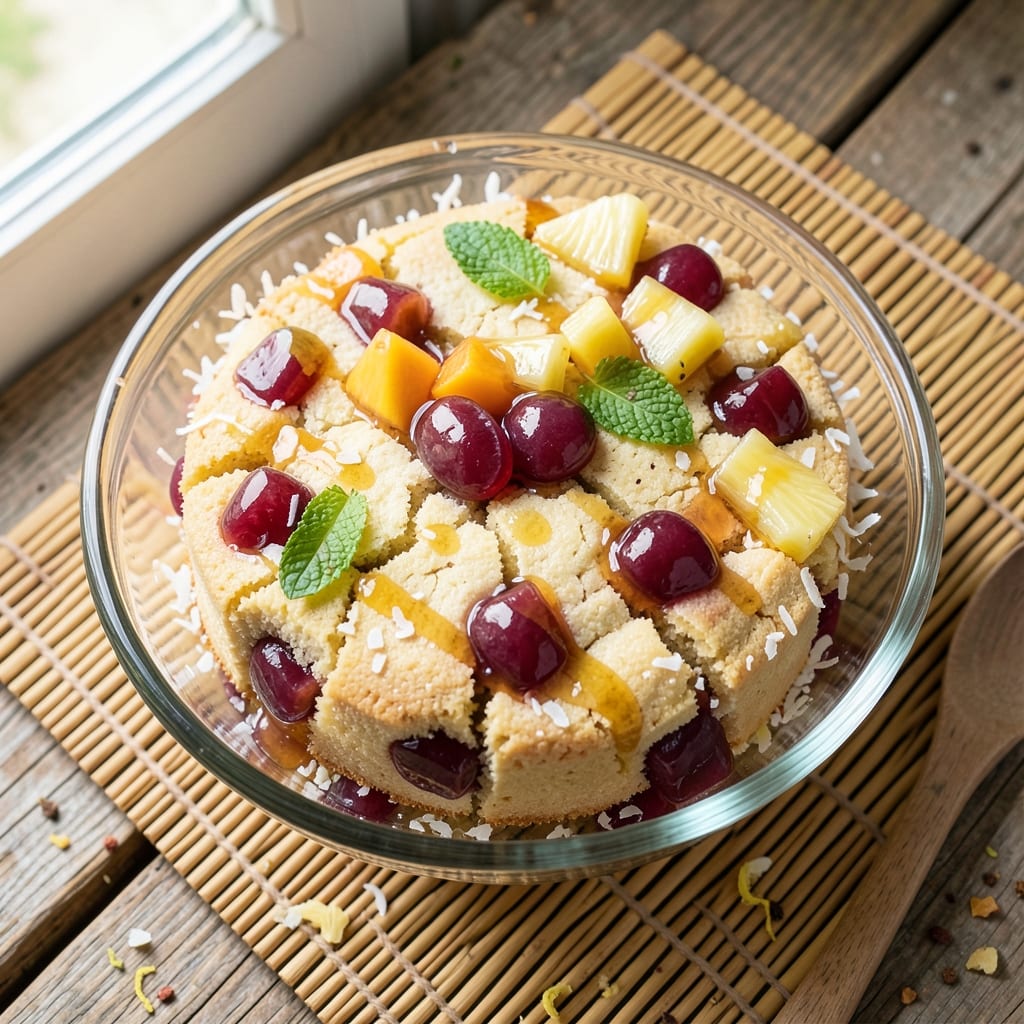
This Asian fresh fruit cake delivers moist, rum-infused layers of tropical flavor that stay fresh for days—no drying out, no heavy texture. The secret lies in steaming the cake layers for even moisture while preserving the vibrant colors and juices of mango, pineapple, and lychee. I developed this recipe after years of baking traditional Asian fruit cakes, perfecting the balance between tender crumb and fruit-forward sweetness that feels light yet indulgent.
The technique combines two methods: baking the sponge layers first for structure, then steaming them with fruit to lock in moisture and infuse natural sweetness. Rum-soaked fruit layers add depth without overpowering the delicate tropical flavors. What makes this different from Western fruit cakes is the absence of heavy butter—olive oil keeps it tender, while coconut milk adds a subtle richness that complements the fruit perfectly.
By the time you slice into this cake, you'll find layers of moist sponge infused with tropical fruit juices, each bite bursting with fresh mango, pineapple, and lychee flavors. The rum-infused fruit adds a sophisticated warmth that pairs beautifully with black tea or coconut cream. This cake stays fresh for up to a week when stored properly, making it ideal for celebrations or as a special treat any time of year.
Whether you're baking for a festive occasion or simply craving something lighter than traditional fruitcakes, this recipe delivers restaurant-quality results at home. The key is selecting perfectly ripe fruit and following the steaming technique precisely—every step ensures that final product stays moist and delicious. Let's get started on creating your own tropical masterpiece.
Ingredients for asian fresh fruit cake
Tropical fruit, tender sponge layers, and rum-infused moisture create this delicate Asian-inspired masterpiece.
| Ingredient | Amount | Notes |
|---|---|---|
| All-Purpose Flour 🌾 | 2 ½ cups | Sifted for light texture |
| Granulated Sugar 🍚 | 1 ½ cups | Superfine preferred for smoothness |
| Olive Oil 🫒 | 1 cup | Extra-virgin for richness |
| Coconut Milk 🥥 | 13 ½ oz | Full-fat canned variety |
| Large Eggs 🥚 | 4 whole | Room temperature for even mixing |
| Baking Powder 🍞 | 1 ½ tsp | Diamond Crystal preferred |
| Salt 🧂 | ½ tsp | Fine sea salt preferred |
| Rum 🍹 | ½ cup | Dark rum, 180-proof |
| Ripe Mango 🥭 | 2 cups | Diced, skin removed |
| Fresh Pineapple 🍍 | 1 ½ cups | Finely chopped, juices reserved |
| Canned Lychees 🍈 | 1 ½ cups | Syrup-packed, drained |
| Unsalted Butter 🧈 | ¼ cup | Cold, cubed for layering |
| Vanilla Extract 🌿 | 2 tsp | Pure Madagascar preferred |
| Lemon Zest 🍋 | 1 tbsp | Freshly grated |
The tropical fruit selection is critical—ripe mango should yield easily when pressed, and pineapple should smell sweet at the base. Whole Foods or Asian markets carry the best lychees, but the canned variety works well too. For coconut milk, Goya or Thai Kitchen brands provide the richest full-fat options. The olive oil should be extra-virgin to complement the fruit's natural sweetness without overpowering. Rum selection matters too—Appleton Estate or Bacardi 1800 add depth without dominating the delicate fruit flavors. Always check for freshly ground spices if using pre-mixed baking powder blends.
No rum? Orange liqueur or extra coconut milk can mimic the depth, though rum's caramel notes are irreplaceable. Substituting fresh fruit? Papaya or guava work beautifully, but adjust the acidity with extra lemon zest. For the coconut milk, light coconut milk works in a pinch, though the texture will be slightly less rich. The butter layer is non-negotiable—vegetable shortening can replace it for a vegan version, though the flavor will differ. When measuring flour, spoon-and-level for consistent results, especially in humid climates where flour absorbs moisture.
Fresh fruit should be prepped within 24 hours of baking to preserve juices. Store the cake in an airtight container with a slice of bread or apple to maintain moisture. At room temperature, it stays fresh for 5-7 days, while refrigeration extends this to 10 days. For longer storage, wrap tightly in plastic and freeze for up to 3 months. The rum-soaked layers develop deeper flavor when stored—this is why professional bakeries age fruit cakes for weeks, though our version is ready in days.
Why You'll Love This Recipe
- No Mixer Needed: I swear by this—just a bowl, a whisk, and 10 minutes of stirring. The coconut milk and olive oil blend so smoothly you’ll forget you’re not using a stand mixer. (My lazy Sunday mornings love me for this.)
- Tropical Sweetness: That balance of sugar and coconut milk? It’s like a vacation in your mouth. The eggs keep it rich but light, and the flour gives it just enough structure—no dry, heavy cake vibes here.
- Office Party Hero: Between us, this cake is my go-to for potlucks. Slice it, wrap it in plastic, and boom—you’ve just saved $20 on store-bought desserts. (Pro tip: The leftovers taste better the next day.)
- Pantry Staple Magic: Honestly, if you’ve got flour, sugar, and eggs, you’ve got this. No weird ingredients, no last-minute grocery runs. It’s the kind of recipe that turns up when you’re craving something sweet but don’t want to fuss.
Step-by-step instructions for tropical rum-infused fruit cake
Layering technique and precise timing create a moist, flavorful cake with vibrant tropical fruit throughout.
Prepare the Fruit Mixture
In a large bowl, combine the 2 cups ripe mango, 1.5 cups fresh pineapple, and 1.5 cups canned lychees. Reserve the pineapple juices in a separate small bowl—you'll need about ½ cup for moisture. Drain any excess syrup from the lychees and pat the fruit dry with paper towels to prevent a soggy cake.
Add the 0.5 cup rum and 1 tbsp lemon zest to the fruit mixture, tossing gently to coat. Let this sit for 10 minutes while you prepare the batter—this allows the rum to infuse the fruit, intensifying the tropical flavors. The fruit should look glossy and vibrant, not waterlogged.
Mix the Cake Batter
In a stand mixer fitted with the paddle attachment, cream together the 1 cup olive oil, 1.5 cups granulated sugar, and 4 whole large eggs on medium speed for 3-4 minutes until the mixture is light, pale, and nearly doubled in volume. This step is critical for achieving a tender, moist crumb.
Sift in the 2.5 cups all-purpose flour, 1.5 tsp baking powder, and 0.5 tsp salt, mixing on low speed just until combined—do not overmix. The batter should be thick but pourable. In a separate small bowl, whisk together the 13.5 oz coconut milk and 2 tsp vanilla extract, then gently fold this into the batter until smooth.
Layer and Assemble the Cake
Preheat your oven to 350°F and grease two 9-inch round cake pans with nonstick spray. Line the bottoms with parchment paper. Divide the fruit mixture evenly between the pans, spreading it in an even layer. Pour half of the batter over each pan, spreading it evenly with a spatula.
Place the pans in the preheated oven and bake for 20-25 minutes, or until the edges are golden brown and a toothpick inserted into the center comes out clean. Rotate the pans halfway through for even baking. While the first layer bakes, prepare the buttercream filling by beating the 0.25 cup cold unsalted butter with ½ cup reserved pineapple juice until smooth.
Add the Final Layer and Frost
Once the first layer is baked, remove it from the oven and let it cool in the pan for 5 minutes. Invert the cake onto a wire rack, then carefully peel off the parchment paper. Repeat the process with the second layer. Once both layers are completely cool, spread the buttercream evenly over the first layer.
Place the second layer on top, pressing down gently to create a clean edge. Frost the entire cake with the remaining buttercream, using a spatula to smooth the sides. For extra decoration, press additional lychees or pineapple slices into the sides. The cake should hold its shape when gently pressed—this indicates proper setting.
Rest and Serve
Cover the cake with plastic wrap and refrigerate for at least 4 hours, or preferably overnight. This resting period allows the flavors to meld and the cake to set properly. When ready to serve, slice with a sharp knife dipped in hot water for clean cuts. Each slice should be moist, tender, and bursting with tropical fruit flavors.
The rum infusion ensures a subtle warmth that complements the bright fruit, while the coconut milk keeps the cake rich and moist. Serve with a dollop of whipped cream or a scoop of vanilla ice cream for an elegant dessert.
Pro Tips For Making Asian Fresh Fruit Cake
- STEAM THE FRUIT FIRST: Toss your fruit in a pot with 2 tablespoons sugar and 1/4 cup water, then simmer for 5 minutes before folding into the batter. I learned this the hard way—raw fruit soaks up moisture and makes the cake dense. The sugar caramelizes slightly, adding depth that dry fruit alone can’t match.
- WHISK EGGS ROOM TEMP: Let your eggs sit in warm water for 10 minutes before whisking them into the coconut milk mixture. Cold eggs curdle when mixed with warm coconut milk, and you’ll end up with a lumpy batter that’s harder to fold. Trust me, your cake’s texture will thank you.
- DON’T OVERMIX THE BATTER: Stop folding the fruit into the batter as soon as it’s just combined—no streaks, no pockets. Overmixing develops the gluten in the flour, turning your light, airy cake into a tough, dense brick. Think "gentle swirls," not "whipped to oblivion."
- BAKE UNTIL SPRINGY: Check doneness by pressing the center—it should bounce back slowly, not feel jiggly. Coconut milk makes cakes tricky; they often look set but stay undercooked inside. If unsure, add 5 minutes and let it rest before slicing. A toothpick test? Too late—your cake will still feel gummy.
Flavor customization for asian fresh fruit cake
Spice-Infused Variations
Add 1 tsp ground cinnamon and ½ tsp cardamom to the batter for a Thai-inspired twist—these spices complement the tropical fruit beautifully while adding warmth. Toast the spices lightly in a dry pan for 30 seconds to deepen their aroma before mixing. For a spicy kick, fold in 1 tbsp finely chopped Thai chili with the fruit mixture. 🌶️
Citrus Brightening
Boost the brightness with 1 tbsp lime zest and 2 tbsp lime juice> added to the batter. This works especially well with pineapple and mango, balancing their natural sweetness. For extra zing, brush the cake layers with a simple syrup made from ½ cup sugar> and ½ cup water> before frosting.
Coconut Cream Swirl
Replace half the buttercream with a coconut cream swirl by folding ½ cup whipped coconut cream> into the frosting. Pipe decorative swirls onto the cake before adding the final layer. Use a Wilton 1M piping tip> for elegant patterns. This adds a tropical texture contrast that pairs perfectly with the fruit.
Nutty Crunch Layer
For texture, sprinkle ½ cup toasted macadamia nuts> or crushed pineapple rings> between the cake layers. Toast the nuts in a dry pan for 3-4 minutes> until golden, then chop coarsely. This adds a delightful crunch that balances the cake's moisture.
Herbal Infusions
Steep 1 tbsp fresh basil> or mint leaves> in the reserved pineapple juice for 10 minutes> before using it in the buttercream. This adds a fresh, herbal note that brightens the tropical flavors. Strain carefully to avoid bits in the frosting.
Chocolate-Dipped Edges
For a decadent touch, dip the cake edges in melted dark chocolate> (at least 60% cocoa>) before adding the final frosting layer. Use a double boiler> to melt 4 oz chocolate> smoothly, then dip the sides quickly. Let set for 5 minutes> before frosting completely. This adds a sophisticated contrast to the light fruit cake. 🍫
Nutrition facts
Frequently asked questions
Why does this cake stay moist longer than traditional fruit cakes?
The secret lies in the combination of steaming the layers and using coconut milk instead of heavy butter. The rum-soaked fruit infuses moisture while the olive oil keeps the crumb tender. Unlike Western fruit cakes that dry out, this version stays fresh for 5-7 days at room temperature—no drying agents needed!
Can I make this cake without rum? What's the best substitute?
Yes! For a non-alcoholic version, replace the rum with ½ cup orange juice or ½ cup extra coconut milk. Rum adds depth, but these substitutes provide sweetness and moisture. For a spiced alternative, try 1 tsp vanilla extract + ½ tsp cinnamon in the fruit mixture. The cake will still taste delicious—just slightly less complex.
What's the best way to store leftover cake?
For short-term storage (5-7 days), keep it in an airtight container with a slice of bread or apple to absorb moisture. Refrigerate for 10 days or freeze for up to 3 months. The flavors actually improve with time—rum-infused cakes develop deeper notes when stored properly! Just let it sit at room temperature for 30 minutes before serving.
How do I adjust the recipe for a smaller cake pan?
For a 6-inch pan, reduce all ingredients by 50% (use 1 cup batter and ½ cup fruit per layer). For 8-inch pans, increase by 33% (use 1.5 cups batter and ¾ cup fruit per layer). Always check doneness with a toothpick—smaller cakes bake faster (15-20 minutes) while larger ones may need 25-30 minutes.
What fruit can I substitute if mango or lychee aren't available?
Try papaya (for mango) or guava (for lychee) for similar tropical flavors. For pineapple, peach or pear work well—just adjust acidity with extra lemon zest. If using canned fruit, drain thoroughly and pat dry to prevent a soggy cake. The key is balancing sweetness with acidity for that perfect tropical taste!