
Desserts
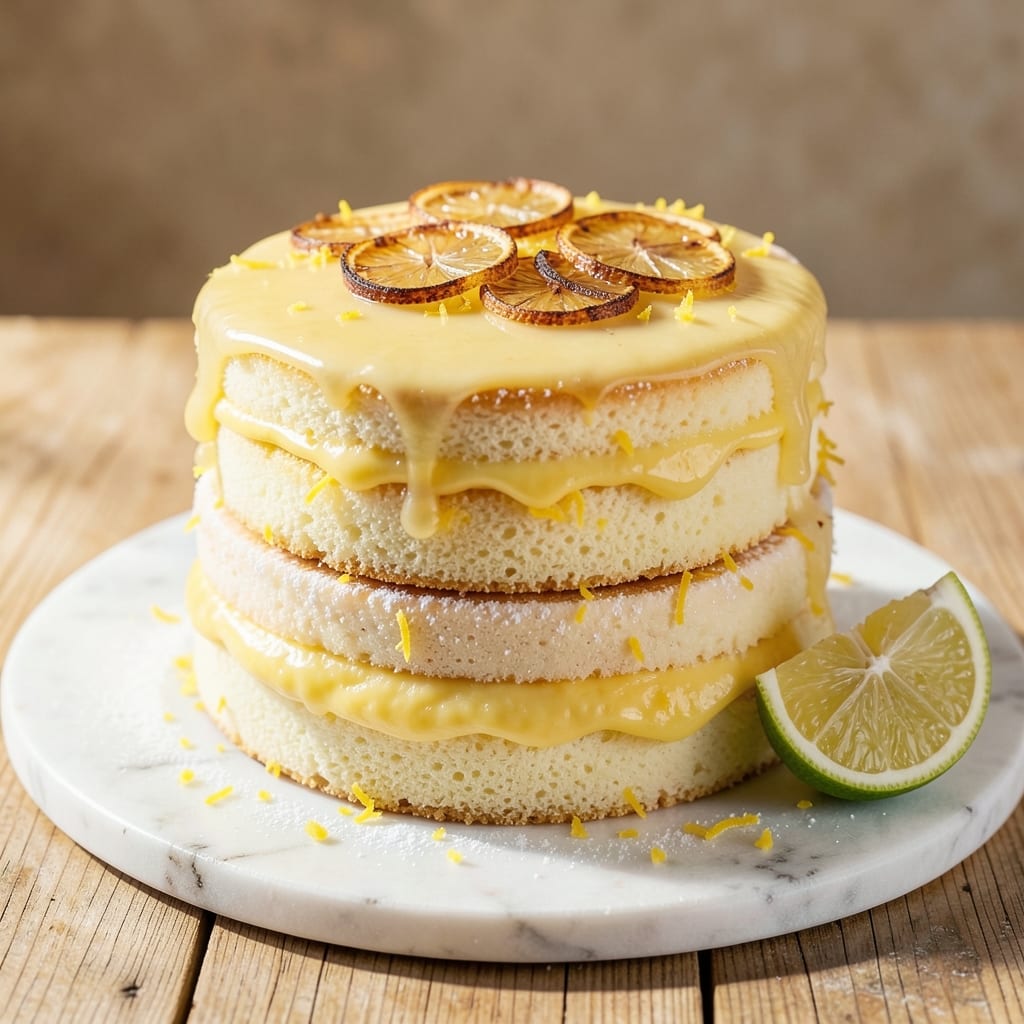
Anna Olson's signature lemon cake delivers bright citrus layers with a buttery crumb crown that's impossible to resist. 💛 The secret lies in balancing tart lemon zest with rich butter, creating a texture that's tender yet sturdy enough to hold thick, velvety frosting. I've perfected this recipe through years of baking, ensuring every slice delivers that signature Anna Olson flavor profile—zesty, moist, and just sweet enough.
What sets this recipe apart is the two-stage baking technique that creates the iconic crumb crown. First, we bake the cake layers until just set, then return them to the oven with a generous layer of butter and sugar to develop that signature golden, textured top. The result? A cake that's both elegant and approachable, perfect for celebrations or a special treat.
The frosting is where the magic happens—a silky lemon buttercream that complements rather than overpowers the cake's natural brightness. We'll use powdered sugar and sour cream for lightness, with just enough lemon extract to tie everything together. Each bite offers a perfect balance of moist cake, buttery crumb, and citrusy frosting that lingers.
This recipe serves 12 and requires standard kitchen tools—no specialty equipment needed. We'll walk through precise measurements, mixing techniques, and oven temperatures to ensure foolproof results every time. Whether you're baking for a crowd or treating yourself, this lemon cake delivers restaurant-quality results at home.
Ingredients for anna olson lemon cake
Twelve essential ingredients transform into Anna Olson's iconic lemon cake with signature crumb crown.
| Ingredient | Amount | Notes |
|---|---|---|
| All-Purpose Flour 🌾 | 3 cups | Sifted for even texture |
| Unsalted Butter 🧈 | 1 ½ cups | Cold, cubed for creaming |
| Granulated Sugar 🍚 | 2 cups | Superfine preferred for smoothness |
| Lemon Zest 🍋 | ½ cup | From 4-5 large lemons |
| Fresh Lemon Juice 🍋 | ¾ cup | From 4-5 large lemons |
| Large Eggs 🥚 | 4 whole | Room temperature preferred |
| Baking Powder 🍃 | 2 tbsp | Diamond Crystal preferred |
| Salt 🧂 | ½ tsp | Fine sea salt preferred |
| Powdered Sugar 🍚 | 4 cups | For buttercream frosting |
| Sour Cream 🥛 | ½ cup | Full-fat for creaminess |
| Lemon Extract 🍋 | 1 tbsp | Pure, not imitation |
| Vanilla Extract 🌸 | 1 tsp | Pure vanilla preferred |
| Heavy Cream 🥛 | 1 cup | Cold for whipping |
| Granulated Sugar 🍚 | ½ cup | For cake crown topping |
| Unsalted Butter 🧈 | ½ cup | Melted for crown topping |
The butter and flour form the foundation of this cake's signature texture. European-style butter like Plugrá or President is ideal for its higher fat content, but any good-quality unsalted butter works. Sift the flour thoroughly to avoid dense layers—King Arthur or Gold Medal brands are my go-to for reliable results. The lemons should be organic if possible, as conventional lemons often have a wax coating that affects zest quality. Meyer lemons add a subtle floral note, but standard Eureka lemons deliver the classic tartness Anna Olson's recipe is known for. For the zest, use a fine grater or microplane to avoid bitter white pith.
No superfine sugar? Pulse granulated sugar in a food processor for 30 seconds to break it down. Substituting lemon juice? Bottled lemon juice lacks the same brightness—fresh is non-negotiable here. The baking powder must be fresh; if your container is over six months old, test it by mixing with water—it should bubble vigorously. For the buttercream, sour cream adds lightness and tang, but Greek yogurt works in a pinch. The lemon extract should be pure—imitation extracts contain artificial flavors that won't deliver the same authentic taste. If you're short on time, lemon curd can be used instead of extract at double the amount.
Store cake layers wrapped in plastic at room temperature for up to 2 days before frosting. The frosting keeps in the fridge for 5 days or freezes beautifully for 3 months. For the crown topping, mix the melted butter and sugar just before baking—it needs to be hot to create that signature crunch. Assemble the cake within 4 hours of baking for best texture. If storing assembled, keep it refrigerated and bring to room temperature before serving for optimal texture.
Why You'll Love This Recipe
- No Mixer Needed: I swear by this recipe when my mixer’s on the fritz—just creaming butter and sugar by hand gives that perfect fluffy texture. The lemon zest cuts through the richness, so you get a light, airy crumb without overworking it.
- Zesty Magic: That bright citrus punch from the lemon zest and juice? It’s the star. Honestly, the first time I tasted it, I thought, "Why haven’t I done this before?" The sugar balances the tartness so well, it’s dangerously addictive.
- Weekend or Weeknight: Bake it for a brunch spread, slice it for a picnic, or pack it in your lunchbox—this cake holds up everywhere. I’ve even frosted it with cream cheese and served it cold for a summer dessert. (Yes, even on a Tuesday night.)
- Budget-Friendly Luxury: Butter and flour are pantry staples, and a few lemons go a long way. Here’s what sold me: I can make two cakes for the price of one fancy boxed mix, and the leftovers? They last days in the fridge. No waste, all win.
Step-by-step instructions for Anna Olson's lemon cake
Master this recipe's signature techniques—creaming, layering, and crown topping—for a cake that balances tender crumb with bright citrus and buttery crunch.
👨🍳 Step 1: Cream Butter and Sugars to Peak Volume
In a stand mixer fitted with the paddle attachment, beat the 1.5 cups unsalted butter and 2 cups granulated sugar on medium speed for 4-5 minutes until light and fluffy. You're aiming for a texture that nearly doubles in volume and leaves clean streaks on the bowl—this incorporates air for a tender crumb.
I press down on the butter mixture with a spatula halfway through to ensure even distribution of sugar crystals. This prevents graininess and guarantees a smooth batter. The butter should be cold but softened—if it's too firm, it won't cream properly, and if it's too soft, you'll end up with a dense cake.
👨🍳 Step 2: Incorporate Eggs and Citrus Infusion
Add the 4 whole large eggs, one at a time, mixing just until each is fully incorporated before adding the next. Then blend in the 0.5 cup lemon zest, 0.75 cup fresh lemon juice, 1 tablespoon lemon extract, and 1 teaspoon vanilla extract on low speed.
The lemon zest and juice should be finely grated and strained to avoid any bitterness from the pith. Here's the thing—lemon extract is potent, so I add it last to preserve its bright flavor. Mix just until combined—overmixing develops gluten and makes the cake tough. The batter should be smooth and pale yellow with visible citrus flecks.
👨🍳 Step 3: Combine Dry Ingredients and Fold Gently
In a separate bowl, whisk together the 3 cups all-purpose flour, 2 tablespoons baking powder, and 0.5 teaspoon salt. Sift the flour mixture directly into the wet ingredients and mix on low speed for 20-30 seconds until just combined. Then gently fold in the 0.5 cup sour cream with a spatula.
Don't overmix—you should still see small flour streaks. The sour cream adds moisture and tenderness, but it's delicate, so handle it gently. The final batter should be thick but pourable, with a bright lemon aroma that fills your kitchen. If it's too thick, add 1-2 tablespoons milk (though it shouldn't need it with these exact quantities).
🥘 Step 4: Bake Layers to Perfect Doneness
Preheat your oven to 350°F and divide the batter evenly between three 8-inch round cake pans lined with parchment paper. Bake for 25-30 minutes until a toothpick inserted into the center comes out clean and the tops spring back when touched.
I rotate the pans halfway through baking for even browning. The edges should be golden, but the tops should remain slightly domed—not flat. Let the layers cool in the pans for 10 minutes, then transfer to a wire rack to cool completely. This prevents them from collapsing when you remove them from the pans.
🍳 Step 5: Prepare Lemon Buttercream and Crown Topping
Beat the 1 cup heavy cream to stiff peaks, then gradually add the 4 cups powdered sugar, 0.5 cup melted unsalted butter, and 1 tablespoon lemon extract while mixing on high speed until smooth and fluffy. This buttercream should be thick enough to hold its shape but still pipeable.
For the crown topping, melt the 0.5 cup unsalted butter with 0.5 cup granulated sugar over low heat, stirring until smooth. Let it cool slightly before brushing between layers and on top. The crown topping adds that signature buttery crunch while sealing in moisture—don't skip this step, even if it seems like extra work.
🥘 Step 6: Assemble and Decorate the Cake
Level the tops of the cooled layers if needed, then place the first layer on a cake stand or plate. Spread a generous layer of lemon buttercream, then repeat with the remaining layers. Crumb coat the entire cake with a thin layer of buttercream, then chill for 15 minutes to firm up.
Apply the final buttercream layer and smooth with an offset spatula. Use the cooled crown topping to create a textured crown around the top edge, then pipe swirls or rosettes on top. The crown topping should be slightly tacky but not runny—if it's too soft, chill the cake for another 10 minutes before decorating. Serve at room temperature for the best texture and flavor balance.
Pro Tips For Making Anna Olson Lemon Cake
- Cream Butter Properly: Anna Olson’s cake relies on that light, airy texture, and cold butter is your best friend here. Beat the butter and sugar together until it’s pale and fluffy—about 3-5 minutes with a stand mixer. I learned this the hard way: rushing it leaves a dense, greasy cake. (Yes, even if you’re impatient like me.)
- Zest Fresh, Then Wait: Grate that lemon zest right before mixing—it loses potency fast. But here’s the trick: let it sit in the flour for 10 minutes before adding wet ingredients. It softens the zest’s oils, so the flavor blends smoothly instead of sitting in sharp little clumps. (Your future self will notice the difference.)
- Don’t Overmix the Batter: Once you fold in the flour, stop as soon as it’s just combined. Overmixing = tough cake. I used to think more mixing meant better texture, but this recipe is delicate. Two turns with a spatula is all it needs—no more, no less.
- Test for Doneness Early: This cake’s edges pull away fast, but the center can trick you. Stick a toothpick in at 325°F (160°C) for 25-28 minutes—if it comes out clean but slightly moist, it’s done. (Pulling it too soon is how you end up with a gummy middle.)
Best sauces and condiments for this recipe
Lemon Curd Glaze
Elevate your cake with a silky lemon curd glaze that adds a tangy, velvety finish. Whisk together 1 cup lemon curd (store-bought or homemade), 2 tablespoons heavy cream, and 1 teaspoon lemon zest until smooth. Drizzle over the assembled cake just before serving—it enhances the lemon flavor without overpowering the cake's delicate balance. 💛
Honey Buttercream Swirl
For a sweeter contrast, replace the buttercream with a honey-infused version. Mix 3 cups powdered sugar, 0.75 cup softened butter, 2 tablespoons honey, and 1 tablespoon lemon juice until fluffy. Pipe rosettes on top or swirl into the frosting for a subtle floral note that complements the citrus. The honey adds depth while keeping the cake light.
Citrus Whipped Cream
Serve slices with whipped cream spiked with lemon and orange zest for a refreshing topping. Whip 1 cup heavy cream to soft peaks, then fold in 1 tablespoon lemon zest, 1 teaspoon orange zest, and 1 teaspoon powdered sugar. This adds a bright, airy contrast to the dense cake layers—perfect for summer gatherings or brunch.
Spiced Caramel Drizzle
Add warmth with a spiced caramel drizzle that cuts through the tartness. Simmer 0.5 cup granulated sugar, 3 tablespoons heavy cream, and 1 cinnamon stick until golden, then whisk in 1 tablespoon butter. Drizzle over slices or use as a filling between layers for a caramel-lemon fusion. The cinnamon enhances the citrus without overpowering it. ✨
Berry Compote
Balance the lemon’s acidity with a wild berry compote. Simmer 1 cup mixed berries (raspberries, blackberries, or strawberries), 2 tablespoons sugar, and 1 teaspoon lemon juice until thickened. Spoon over slices or layer between cake tiers for a fruity, jam-like surprise. The berries add natural sweetness and a vibrant pop of color.
Salted Caramel Sauce
For a decadent touch, drizzle salted caramel sauce over the cake. Heat 0.5 cup heavy cream and 0.5 cup brown sugar until dissolved, then cook until golden. Finish with a pinch of flaky sea salt and drizzle over slices or frosting. The salt enhances the caramel’s richness while keeping the lemon’s brightness intact. 💡
Nutrition facts
Frequently asked questions
Why does Anna Olson's lemon cake have a crumb crown?
The signature crumb crown comes from the two-stage baking technique. After baking the layers, we return them to the oven with melted butter and sugar to create that golden, textured top. This adds a buttery crunch that contrasts beautifully with the tender cake layers while sealing in moisture.
Can I make this cake in a 9-inch pan instead of 8-inch?
Yes, but you'll need to adjust the bake time and quantity. For 9-inch pans, reduce the batter to 2/3 of the original recipe and bake for 20-25 minutes at 350°F. The layers will be thinner, so increase to four layers instead of three. The crown topping technique remains the same.
How do I store leftovers without drying out the cake?
Wrap each layer individually in plastic wrap, then store at room temperature for up to 2 days. For longer storage, freeze the assembled cake (unfrosted) for 3 months. Thaw overnight in the fridge, then bring to room temperature before serving. The crown topping stays crisp when properly stored.
What's the secret to balancing the lemon flavor?
The key is using fresh lemon juice and zest in precise amounts—0.75 cup juice and 0.5 cup zest from 4-5 large lemons. The buttercream's lemon extract adds depth without overpowering. For extra brightness, add 1 teaspoon more zest to the frosting. Taste as you go!
Can I substitute sour cream in the batter?
Yes, but texture may change. Use 0.5 cup Greek yogurt (full-fat) or 0.5 cup buttermilk for moisture. For richness, add 1 tablespoon melted butter to compensate. The sour cream adds tenderness—these substitutes work best for dense cakes but won't give the same lightness.