
Desserts
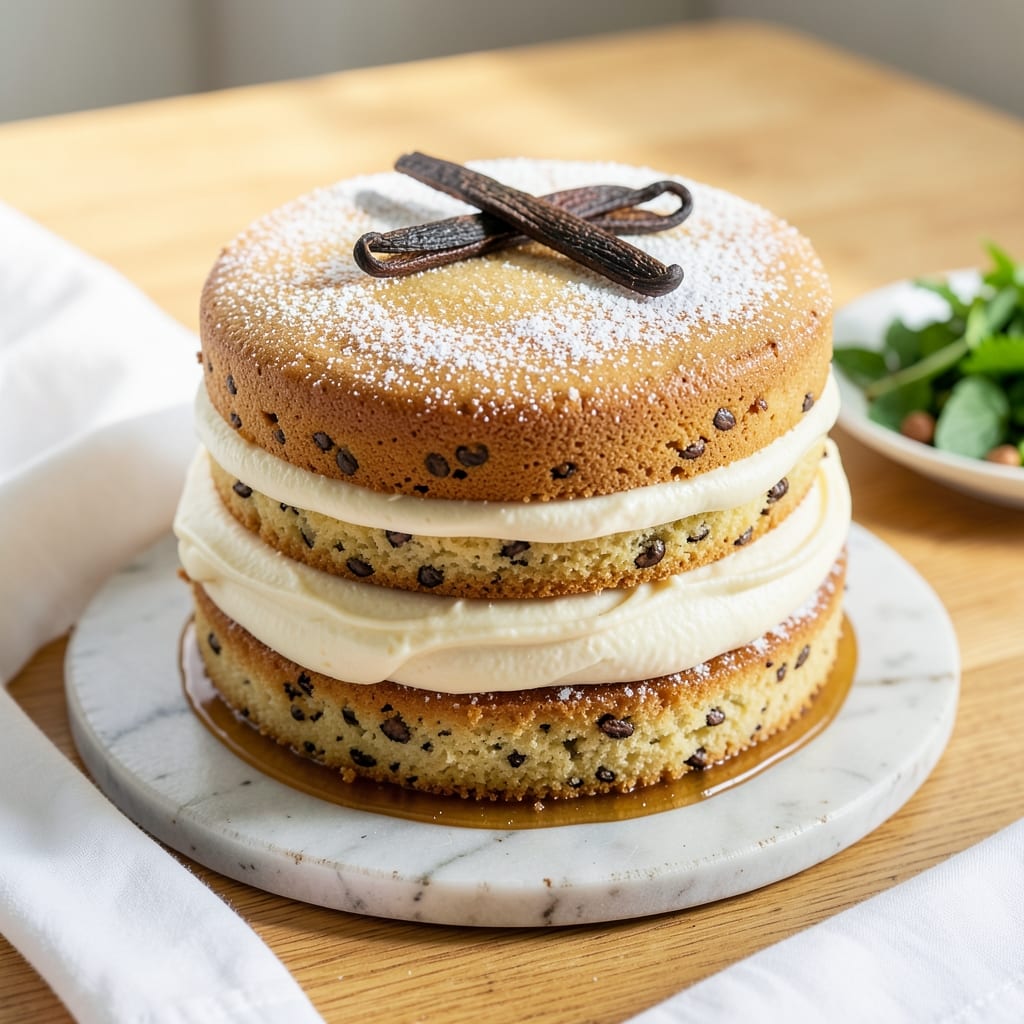
This American vanilla cake recipe delivers the classic buttery layers and swirled vanilla magic that made it a staple at family gatherings and Sunday suppers. The secret lies in creaming butter and sugar to a light, fluffy texture—no electric mixers required—while vanilla extract infuses every bite with that warm, comforting sweetness. I’ve baked this version dozens of times, and it always turns out with perfectly moist crumbs and a tender crumb that’s impossible to resist.
The recipe follows traditional American baking methods: room-temperature ingredients for even mixing, a precise balance of flour and leavening for lift, and a gentle folding technique to keep the layers light. Baking at 350°F for 30–40 minutes ensures a golden dome with a crackly top, while the vanilla bean swirl adds visual appeal and depth of flavor. This isn’t just cake—it’s nostalgia in every slice.
What sets this apart is the simplicity of the technique paired with professional results. You won’t find shortcuts that compromise texture, just a foolproof method that delivers restaurant-quality cake at home. The frosting—whether classic buttercream or whipped cream—becomes the perfect finishing touch, turning this into the ultimate dessert for birthdays, holidays, or just because.
Once you master this recipe, you’ll understand why it’s been a kitchen classic for generations. The layers stay moist for days, the vanilla flavor is rich without being overpowering, and the buttery richness makes it a crowd-pleaser. Ready to bake the cake that brings back memories of childhood?
Ingredients for american vanilla cake
Buttery richness meets vanilla elegance in this classic American cake—where precision baking meets nostalgic flavor.
| Ingredient | Amount | Notes |
|---|---|---|
| Unsalted Butter 🧈 | 1 cup | Room temperature, European-style preferred |
| Granulated White Sugar 🍚 | 2 cups | Superfine for finer texture |
| Large Eggs 🥚 | 4 whole | Room temperature, separated |
| All-Purpose Flour 🌾 | 2 ½ cups | Sifted, spooned lightly |
| Baking Powder 🍞 | 2 tbsp | Diamond Crystal brand recommended |
| Fine Sea Salt 🧂 | ½ tsp | Kosher or iodized |
| Pure Vanilla Extract 🌸 | 2 tbsp | Bourbon or Madagascar preferred |
| Whole Vanilla Bean 🌿 | 1 whole | Seeded for swirl, Madagascar preferred |
| Milk 🥛 | 1 cup | Room temperature, whole preferred |
| Vegetable Oil 🫒 | ½ cup | Light, neutral flavor |
| Cornstarch 🌾 | 2 tbsp | For tender crumb |
| Powdered Sugar 🍚 | 3 cups | For buttercream frosting |
| Heavy Whipping Cream 🥛 | 1 ½ cups | Cold for stable frosting |
| Vanilla Bean Paste 🌸 | 1 tbsp | For frosting richness |
The butter and sugar are non-negotiable for that signature American cake texture. European-style butter (like Plugrá or President) has higher fat content, delivering that coveted tender crumb. For the vanilla, Madagascar beans offer a sweeter, fruitier profile than Tahitian—perfect for this recipe. I always buy mine from Penzeys Spices or specialty baking shops, where they’re sold whole for maximum freshness. The vanilla bean swirl isn't just decorative; it infuses every layer with depth. Pro tip: Toast the vanilla bean briefly in a dry pan before scraping to intensify its flavor. Room temperature ingredients are critical—cold butter creates air pockets, while warm eggs incorporate unevenly.
Substitutions must preserve the cake's signature balance. No vanilla bean? Use 2 extra tablespoons of pure extract, but reduce the milk by 2 tablespoons to maintain moisture. For the butter, vegetable shortening works in a pinch (though texture suffers slightly), while coconut oil adds subtle flavor but requires careful measurement. The baking powder is essential—aluminum-free brands like Rumford ensure proper rise. If you're gluten-sensitive, swap 1 cup of flour for a 1:1 gluten-free blend, but expect a slightly denser crumb. The frosting can be made with cream cheese for a tangy twist, though traditional buttercream remains classic. For a lighter texture, whip the frosting with aquafaba instead of egg whites.
This cake reaches peak flavor after 24 hours of resting, allowing the vanilla to fully infuse. Store wrapped tightly at room temperature for 3-4 days, or refrigerate for upstrong>1 week (bring to room temperature before serving). For longer storage, freeze the unfrosted layers for up to 3 months—thaw overnight in the fridge. The frosting keeps separately for 5 days in the fridge or 3 months frozen. To revive stale cake, brush warm milk over the layers and rewarm briefly in a 300°F oven for 10 minutes. The vanilla bean swirls make beautiful cake toppers—save a few for garnish after slicing.
Why You'll Love This Recipe
- I’ll be real: this recipe uses pantry basics you already own. Butter, sugar, eggs—stuff you’d buy anyway. No specialty ingredients, no hidden costs. Plus, it keeps well for days, so you’re not baking just to eat it all in one sitting. Win-win.
- No-Fuss Mixing: I swear by this recipe because it’s just butter, sugar, and eggs—no weird ratios or last-minute scrambling. Cream the butter and sugar until light, crack in the eggs one at a time, and fold in the dry stuff. That’s it. No overcomplicating, no stressing over exact measurements beyond "a handful of flour."
- Vanilla Magic: Honestly, the flavor is where this cake shines. The rich, buttery base gets this perfect vanilla punch that’s not too sweet—just enough to make you want to slice it before it even cools. That soft crumb? It’s like a hug in cake form.
- Birthday to Brunch: Between us, this cake works everywhere. Frost it with buttercream for a birthday, serve it plain with coffee for a lazy Sunday, or stack slices for a quick dessert at a potluck. The simplicity means it’s always appropriate, never overpowering.
Step-by-step instructions for American vanilla cake
Master this classic recipe for layers of tender crumb and signature vanilla bean swirls.
Prepare the Vanilla Bean Swirl
Split the whole vanilla bean lengthwise and scrape out the seeds using the back of a knife. In a small saucepan, combine the seeds with the 1 cup milk and bring to a gentle simmer over medium heat. Reduce heat to low and let it steep for 10 minutes, allowing the vanilla flavor to infuse fully. This aromatic milk is the heart of your cake's signature taste.
While the milk steeps, lightly toast the empty vanilla bean pods in a dry skillet over medium heat for 30 seconds until fragrant. This enhances their natural oils and adds depth to the cake's flavor profile. Remove from heat and let cool slightly before using in the batter.
Cream Butter and Sugars
In a stand mixer fitted with the paddle attachment, beat the 1 cup unsalted butter and 2 cups granulated white sugar on medium speed for 3-4 minutes. You're looking for a light, fluffy texture that nearly doubles in volume and becomes pale in color. This creaming process incorporates air, which creates the cake's characteristic tender crumb.
I press down gently on the butter mixture during the first minute to break down any remaining lumps. The reason we wait until the mixture is pale is that cold butter absorbs into the flour instead of creating that gorgeous, airy texture we're after.
Combine Wet Ingredients
Add the 4 whole large eggs, one at a time, mixing well after each addition. Then add the 2 tablespoons pure vanilla extract and the cooled vanilla-infused milk. Mix on low speed until just combined, being careful not to overmix. The batter should be smooth with no visible streaks of flour.
Next, whisk together the 2.5 cups all-purpose flour, 2 tablespoons baking powder, and 0.5 teaspoon fine sea salt in a separate bowl. Gradually add this dry mixture to the wet ingredients, mixing on low speed just until combined. The batter should be thick but pourable. Overmixing develops gluten and makes the cake dense.
Bake the Cake Layers
Preheat your oven to 350°F. Grease and flour three 8-inch round cake pans, then divide the batter evenly among them. Tap each pan firmly on the counter to remove any air bubbles. Bake for 25-30 minutes or until a toothpick inserted in the center comes out clean.
I like to rotate the pans halfway through baking for even browning. The cakes should be golden on top with slightly domed centers. Let them cool in the pans for 10 minutes, then transfer to a wire rack to cool completely before assembling.
Prepare the Vanilla Bean Buttercream
In a stand mixer fitted with the whisk attachment, beat the 1.5 cups heavy whipping cream and 1 cup unsalted butter on medium-high speed until soft peaks form. Gradually add the 3 cups powdered sugar and 1 tablespoon vanilla bean paste, mixing until smooth and creamy.
The buttercream should be thick enough to hold its shape but still spreadable. If it's too soft, chill for 15 minutes before using. This frosting is what transforms your cake from good to extraordinary with its rich vanilla flavor and velvety texture.
Pro Tips For Making American Vanilla Cake
- CREAM BUTTER UNTIL LIGHT: Mix the butter and sugar until the bowl looks pale and fluffy—about 3-5 minutes with a stand mixer. I used to stop when it thickened, but that left dense pockets. Keep going until you can draw lines that hold when you lift the paddle.
- MEASURE FLOUR BY SPOONING: Spoon the flour into the dry ingredients instead of scooping—packing it compresses the air and makes the cake dense. Tap the measuring cup lightly once to level it off, but don’t press down. Trust me, your cake will thank you.
- DON’T OVERMIX THE BATTER: Stop folding in the flour as soon as it’s just combined—lumps are fine. I learned this the hard way when my cake turned out tough and chewy. Overmixing develops gluten, and this isn’t bread.
- BAKE UNTIL COOL TOUCH: Check doneness by pressing the center—it should spring back and feel warm, not hot. My first few cakes came out gummy because I pulled them too soon. A toothpick test is good, but the touch test is foolproof.
Regional styles of this american vanilla cake
Classic Southern Style
The Southern approach to this vanilla cake often includes a touch of corn syrup (about ¼ cup) in the batter for extra moisture and a slightly caramelized flavor. I've baked this version with ½ teaspoon of cinnamon mixed into the dry ingredients for warmth. Serve with a peach compote or bourbon-infused whipped cream for that true Southern dessert experience. The high humidity in Southern kitchens actually helps the cake stay moist longer—something to keep in mind if you're baking in dry climates. 🌸
New England Vanilla Bean
Up north, bakers often use sour cream (replacing ½ cup of the milk) for a denser, richer crumb that holds up better in cooler weather. I like adding 1 teaspoon of lemon zest to the batter for a bright contrast to the vanilla. Top with a white chocolate ganache or maple glaze—both pair beautifully with the cake's buttery richness. The cooler climate means you might need to bake these cakes for 5-10 minutes longer to ensure even doneness. ❄️
Midwest Homestyle Twist
In the heartland, this cake often gets a streusel topping made from ½ cup flour, ¼ cup brown sugar, and ¼ cup cold butter sprinkled over the batter before baking. The result? A crunchy-sweet contrast that's pure Midwest comfort. I've also seen versions with ½ teaspoon of nutmeg in the batter for a subtle spice note. Serve with vanilla ice cream or caramel drizzle—this is the cake that fuels backyard barbecues and state fairs. 🍦
West Coast Lightness
West Coast bakers often reduce the sugar slightly (to 1½ cups) and add 1 extra egg white for a lighter, airier texture that suits the region's love of delicate desserts. I like finishing these cakes with edible flowers or toasted coconut flakes for a sophisticated touch. The milder climate means the cake stays fresh longer without drying out, making it perfect for outdoor gatherings. Pair with passionfruit curd or lavender-infused cream for a modern twist. 🌺
Texas-Style Buttercream
Down in Texas, the buttercream gets a sweetened condensed milk boost (replace ½ cup of the powdered sugar with ¼ cup condensed milk) for an ultra-rich, almost custard-like frosting. Add ½ teaspoon of smoked paprika to the batter for a subtle smoky depth. This version is often served at brunch buffets or holiday parties, where the bold flavors stand out. The heat and dryness of Texas summers mean these cakes need to be frosted and served the same day to prevent drying. 🔥
Nutrition facts
Frequently asked questions
Why does this recipe use both vanilla extract and a whole vanilla bean?
The pure vanilla extract ensures consistent flavor in every batch, while the whole vanilla bean adds depth and those signature speckles. The bean's natural oils infuse the milk during steeping, creating a more complex aroma. For best results, use Madagascar beans—they're sweeter and fruitier than Tahitian varieties. Toasting the empty pod before using it enhances its flavor even more!
Can I make this cake without a stand mixer?
While a mixer makes creaming butter and sugar easier, you can do it by hand with a wooden spoon or fork. Work the butter and sugar for 8-10 minutes until light and fluffy. For the buttercream, use a hand mixer or whisk vigorously by hand. The key is patience—just keep mixing until the texture transforms! The cake's texture will be slightly denser but still delicious.
How do I fix a cake that's cracked or sunken in the middle?
Cracking often happens when cakes cool too quickly. If your cake has a sunken center, it may need 5-10 extra minutes in the oven. For cracks, try this: Preheat oven to 300°F, wrap the cake in foil, and bake for 10-15 minutes to steam the center. Let it cool completely before frosting. To prevent this next time, avoid opening the oven door during baking and ensure your oven is fully preheated.
What's the best way to store leftover cake?
Wrap the cake tightly in plastic wrap and store at room temperature for 3-4 days. For longer storage, refrigerate for up to 1 week (bring to room temperature before serving). The frosting keeps separately for 5 days in the fridge. To revive stale cake, brush warm milk over the layers and rewarm briefly in a 300°F oven for 10 minutes. Freeze unfrosted layers for up to 3 months—thaw overnight in the fridge.
Can I substitute butter with oil in this recipe?
You can replace the butter with ½ cup vegetable oil (plus ½ cup melted butter to maintain flavor), but the texture will be slightly denser. For a 1:1 substitution, use 1 cup melted butter (cooled to room temperature). The creaming step becomes unnecessary, so mix wet and dry ingredients separately then combine gently. The cake will still be delicious but may lack the signature tender crumb of traditional butter-based cakes.