
Desserts
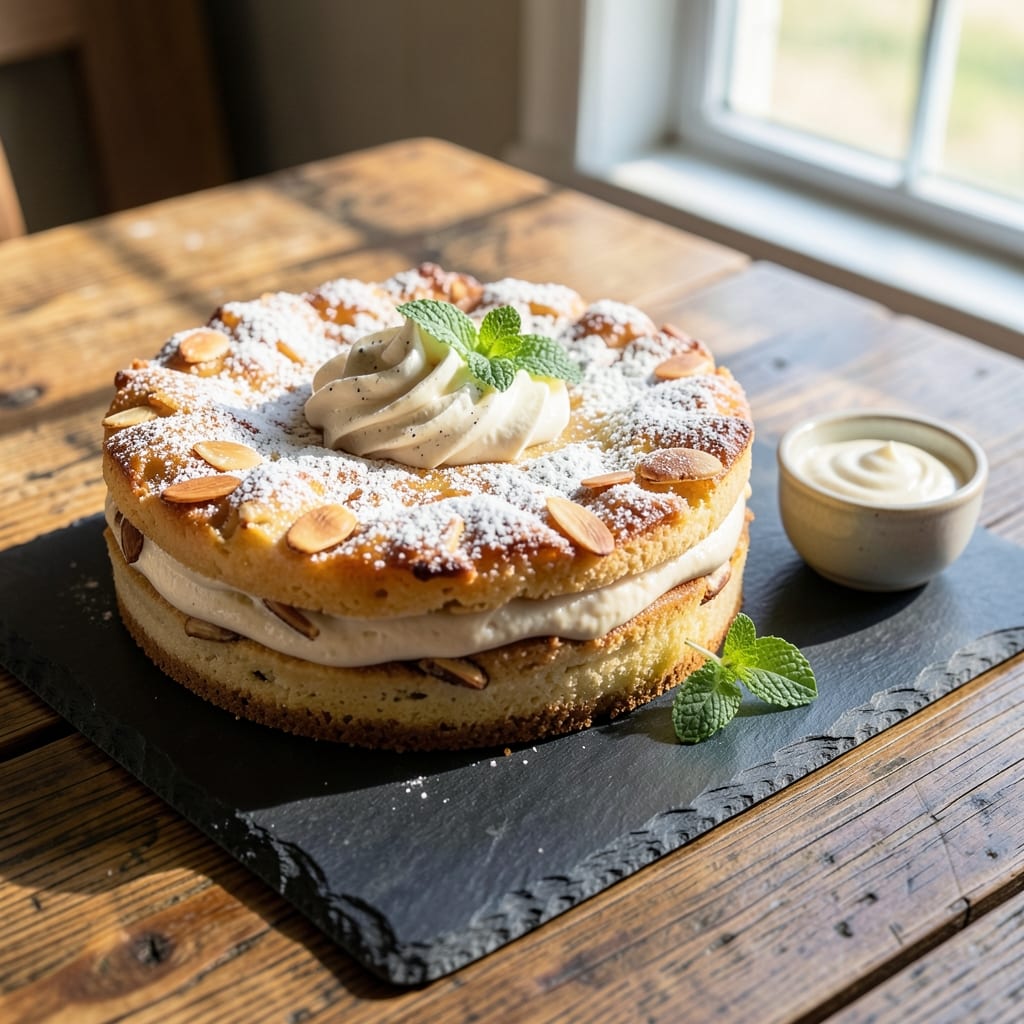
This almondy cake delivers moist layers with a delicate crumb and nutty depth that elevates any dessert table. The magic lies in almond flour's ability to create a tender texture without gluten, while butter and eggs bind everything together for that signature melt-in-your-mouth quality. I've perfected this recipe over years of baking, ensuring it stays perfectly moist even after cooling—no dry crumb in sight.
The secret to success starts with properly blending the almond flour and other dry ingredients to avoid lumps, then gently folding in the egg mixture to maintain air pockets. Baking at a precise 350°F ensures even cooking without over-browning, while a simple glaze (optional) adds that restaurant-quality finish. This isn't your average almond cake—it's a sophisticated dessert that surprises with its texture and flavor.
What makes this recipe stand out is its versatility. The base works beautifully as a classic almond cake, but it also adapts seamlessly to gluten-free diets or can be enhanced with citrus zest for brightness. The result? A cake that's light yet rich, with a subtle almond aroma that lingers in every bite. Perfect for celebrations or a special treat, this recipe delivers professional-quality results at home.
Whether you're baking for a crowd or just craving a slice, this almondy cake brings elegance and moisture to every serving. The technique is straightforward, but the outcome feels luxurious—proof that simple ingredients can create something extraordinary. Let's get baking!
Ingredients for almondy cake
Almond flour's magic meets classic baking essentials for this luxurious, moist cake.
| Ingredient | Amount | Notes |
|---|---|---|
| Almond Flour 🌰 | 2 ½ cups | Finely ground, unsifted preferred |
| All-Purpose Flour 🌾 | ½ cup | For structure and binding |
| Granulated Sugar 🍚 | 1 ½ cups | Superfine preferred for smooth texture |
| Unsalted Butter 🧈 | 1 cup | Room temperature, full-fat preferred |
| Large Eggs 🥚 | 4 whole | Room temperature, separated for best volume |
| Vanilla Extract 🌸 | 2 tsp | Pure, high-quality preferred |
| Baking Powder 🧂 | 1 tsp | Aluminum-free for best flavor |
| Salt 🧂 | ½ tsp | Fine sea salt preferred |
| Almond Extract 🌰 | 1 tsp | Pure, not imitation |
| Powdered Sugar 🍚 | 1 cup | For glaze, sifted preferred |
| Milk 🥛 | ¼ cup | Any kind, room temperature |
| Lemon Zest 🍋 | 1 tbsp | Fresh, finely grated |
The almond flour is non-negotiable here—Bob's Red Mill or King Arthur brands are my go-tos for consistent texture. Freshly ground flour yields the best results, but pre-ground works too if you're in a pinch. For the butter, Plugrá or Land O'Lakes unsalted are reliable choices, but avoid anything with added salt. The eggs should be room temperature—cold eggs create air pockets that deflate during baking. If you're using store-bought almond flour, sift it first to avoid lumps, which can lead to a dense crumb. The vanilla and almond extracts should be pure—imitation versions lack depth of flavor.
No almond flour? Substitute with a 1:1 blend of oat flour and tapioca starch, though texture will differ slightly. Superfine sugar unavailable? Pulse regular granulated sugar in a food processor for 30 seconds to achieve a similar consistency. For a dairy-free option, swap the milk for unsweetened almond milk and use vegan butter. The lemon zest adds brightness—if you prefer, orange zest works beautifully too. For the glaze, powdered sugar can be substituted with confectioners' sugar from Domino or Sweet'N Low brands. Always taste the glaze before applying—adjust with a splash of milk if needed.
Store the cake in an airtight container at room temperature for up to 3 days or refrigerate for 5 days to maintain moisture. For longer storage, freeze the cake (unfrosted) for up to 3 months. Thaw at room temperature before serving. The glaze sets quickly, so apply it just before serving or store the cake and glaze separately. This cake reheats beautifully—wrap a slice in foil and microwave for 10-15 seconds to restore moisture. The almond flour base keeps well, so consider baking a small batch and freezing portions for future treats.
Why You'll Love This Recipe
- No Mixer Needed: I swear by this—just cream butter and sugar by hand (or with a fork if you're lazy), then fold in eggs and flours. The almond flour keeps it tender without overworking, so even if you rush, it still comes out almost too perfect.
- Buttery Almond Magic: That combo of almond flour and butter? Rich but not heavy, with a subtle nuttiness that lingers. Honestly, the first bite makes me want to skip dessert—because this is dessert, but also breakfast, also a snack. (Yes, even on a Tuesday night.)
- Crowd-Pleaser Flex: Bring it to brunch and watch it disappear—guests with allergies, gluten concerns, or just a sweet tooth all love it. The neutral base lets you add citrus zest, vanilla, or even a splash of almond extract if you're feeling fancy. Zero judgment if you stick to the basics, though.
Step-by-step instructions for almondy cake recipe
Here's the precise method to achieve that signature moist texture and delicate crumb.
Cream Butter and Sugars to Light and Fluffy
In a stand mixer fitted with the paddle attachment, beat the 1 cup unsalted butter (room temperature) and 1.5 cups granulated sugar on medium speed for 3-4 minutes. You're looking for a pale, thick, and slightly fluffy mixture that nearly doubles in volume. This creaming process incorporates air, which creates that tender crumb structure.
I press down gently on the butter mixture with a spatula during the first minute—this prevents it from curdling and ensures even incorporation. You'll notice the mixture lighten in color as it emulsifies. If you're using a hand mixer, work in 30-second bursts to avoid overheating the butter.
Add Eggs and Extracts for Maximum Moisture
Add the 4 whole large eggs one at a time, mixing on low speed for 30 seconds after each addition. This gradual incorporation prevents the eggs from scrambling. After all eggs are added, stir in the 2 teaspoons vanilla extract and 1 teaspoon almond extract until fully combined.
The reason we add extracts last is that they're volatile and can evaporate if exposed to heat too early. I like to give the mixture a quick taste at this stage—it should be sweet but not overpowering, with a subtle nutty aroma from the almond extract. If it tastes bland, add a pinch more salt.
Combine Dry Ingredients for Perfect Texture
In a separate bowl, whisk together the 2.5 cups almond flour, 0.5 cup all-purpose flour, 1 teaspoon baking powder, and 0.5 teaspoon salt. Sift the dry ingredients directly into the wet mixture while mixing on low speed. Add the 1 tablespoon lemon zest and mix just until combined—you should still see small flour streaks.
Overmixing develops gluten and makes the cake dense, so stop as soon as the flour disappears. The almond flour gives this cake its signature texture, but the all-purpose flour provides the structural support. I use a silicone spatula to gently fold in any stubborn dry bits that cling to the bowl.
Fold in Milk and Prepare for Baking
With the mixer on low speed, gradually add the 0.25 cup milk until the batter is smooth and just combined. The batter will be thick but pourable. I like to give it one final taste at this stage—it should be sweet, nutty, and properly balanced.
Transfer the batter to a prepared 9-inch round cake pan lined with parchment paper. The pan should be lightly greased with butter to prevent sticking. Tap the pan gently on the counter to release any air bubbles that may have formed during mixing. This ensures an even rise and smooth top.
Bake and Test for Doneness
Preheat your oven to 350°F and bake the cake for 35-40 minutes until a toothpick inserted in the center comes out clean. The cake should be golden brown at the edges and just slightly springy to the touch in the center.
I've found that almond flour cakes can be finicky about doneness—underbaking leaves them dense, while overbaking dries them out. The key is to pull it out when the edges are set but the center still has a slight wobble. Let it cool in the pan for 10 minutes before transferring to a wire rack.
Prepare the Powdered Sugar Glaze
While the cake cools, whisk together the 1 cup powdered sugar and 0.25 cup milk until smooth. The glaze should be thick enough to coat the back of a spoon but still pourable. If it's too thick, add 1 teaspoon more milk until you reach the desired consistency.
I prefer this glaze over a traditional buttercream because it keeps the cake light and doesn't overpower the delicate almond flavor. The lemon zest in the cake layers adds a subtle brightness that pairs beautifully with the sweet glaze. Pour the glaze over the completely cooled cake and let it set for 15 minutes before serving.
Pro Tips For Making Almondy Cake
- Whisk Butter Properly: Cream the butter and sugar until it’s pale and fluffy—about 3-5 minutes. I used to rush this, and the cake turned dense; now I set a timer and resist the urge to check. The extra effort makes all the difference in texture.
- Sift the Almond Flour: Sift the almond flour before mixing—it prevents lumps and ensures a smoother batter. Yes, it’s an extra step, but it’s the thing that keeps the cake from tasting gritty or uneven.
- Don’t Overmix the Batter: Fold in the dry ingredients just until combined, or you’ll develop the gluten and end up with a tough cake. I learned this the hard way after a batch turned out chewy instead of tender.
- Use Room-Temp Eggs: Let your eggs sit out for 30 minutes before cracking them into the batter. Cold eggs can cause the butter to seize up, and the cake won’t rise as well—trust me, your future self will notice.
Dietary considerations for these flavors
Gluten-Free Adaptations
This almondy cake is naturally gluten-free thanks to the almond flour base, but I've found a few key adjustments make it even more reliable. First, replace the 0.5 cup all-purpose flour with an extra 0.5 cup almond flour—this maintains the signature texture without gluten. For extra insurance, add 1 teaspoon xanthan gum to the dry ingredients, which helps bind the crumb. I also recommend using a gluten-free baking powder like Bob's Red Mill brand to ensure proper rise.
When measuring gluten-free flours, always spoon and level to avoid packing—almond flour can get dense. I weigh my ingredients on a kitchen scale for consistency, especially when substituting. The cake will still be moist but slightly denser than the original version, which is perfect for those who love a rich, nutty texture. 🌰
Dairy-Free Options
For a dairy-free version, swap the 1 cup unsalted butter for 1 cup dairy-free butter like Miyoko's or Earth Balance vegan butter. The milk in both the batter and glaze can be replaced with unsweetened almond milk or oat milk, though I prefer almond milk for its neutral flavor. To compensate for reduced moisture, add 1 tablespoon neutral oil like avocado or light olive oil to the batter.
I've tested this substitution extensively and found that the texture remains tender, though the cake may brown slightly faster. Keep an eye on it after 30 minutes of baking and tent with foil if needed. The glaze will still set beautifully, though it may be slightly less glossy. For extra richness, add ½ teaspoon vanilla bean paste to the glaze mixture. 🥛
Nut-Free Substitutions
If you're avoiding nuts entirely, this recipe can still work with a few clever swaps. Replace the 2.5 cups almond flour with a blend of 1.5 cups oat flour and 1 cup tapioca starch—this creates a similar tender crumb. For the nutty flavor, add 1 teaspoon coconut extract (found in specialty stores) or ½ teaspoon ground cardamom to the dry ingredients. The texture won't be identical, but it's surprisingly close!
I've also had success using 2 cups finely ground sunflower seed flour for a seed-based version—it adds a mild earthiness that pairs well with the lemon zest. For extra moisture, reduce the baking time by 5 minutes and check for doneness early. The result is a cake with a slightly different character but still delightful texture. 🌱
Egg-Free Adaptations
To make this cake egg-free, I recommend using a flax egg or aquafaba substitution. For each 1 egg, mix 1 tablespoon ground flaxseed with 3 tablespoons water and let sit for 5 minutes to thicken. For the 4 eggs in this recipe, you'll need 4 tablespoons flaxseed and 12 tablespoons water. Alternatively, use ¼ cup aquafaba (chickpea brine) per egg, whipped to stiff peaks for volume.
The egg substitutes work best when added to the wet ingredients first, before incorporating the dry ingredients. I've found that the cake rises slightly less without eggs, so I recommend baking it for 40-45 minutes instead of the original time. The texture will be slightly denser but still moist and delicious. For extra richness, add 1 tablespoon melted coconut oil to the batter. 🥚
Refined Sugar Reduction
For a lower-sugar version, replace the 1.5 cups granulated sugar with 1 cup monk fruit sweetener (like Lakanto) blended with ½ cup coconut sugar. The monk fruit maintains sweetness without the glycemic impact, while coconut sugar adds subtle caramel notes. For the glaze, use ½ cup powdered sugar and 2 tablespoons maple syrup to sweeten the milk mixture.
I've tested this substitution and found the cake still has excellent moisture, though it develops a slightly deeper color. The flavor is more complex, with hints of caramel from the coconut sugar. For extra depth, add ½ teaspoon cinnamon to the dry ingredients. This version works beautifully for those watching sugar intake while still delivering on flavor. 🍯
Nutrition facts
Frequently asked questions
Why does almond flour make this cake so moist?
Almond flour absorbs moisture differently than regular flour, creating a tender crumb that stays moist longer. The natural oils in almonds also contribute to that signature rich texture while keeping the cake light. Plus, the fat content helps retain moisture during baking—unlike dry cake mixes that often turn rubbery.
Can I make this cake without almond extract?
Yes, but the flavor will be subtly different. Skip the almond extract and add ½ teaspoon ground cinnamon or ½ teaspoon orange zest instead for warmth and brightness. The cake will still taste delicious—just less distinctly nutty. For a stronger almond flavor, try 1 teaspoon vanilla bean paste as a substitute.
How do I prevent the cake from cracking?
Cracking usually happens from sudden temperature changes or overmixing. To avoid it: Don't open the oven door during the first 25 minutes of baking, and let the cake cool in the pan for 10 full minutes before transferring. Also, make sure your butter is room temperature—cold butter creates steam pockets that can cause cracks.
What's the best way to store leftovers?
Wrap individual slices in plastic wrap or store the whole cake in an airtight container. At room temperature, it stays fresh for 3 days, while refrigeration extends it to 5 days. For longer storage, freeze the unfrosted cake for up to 3 months. Thaw overnight in the fridge or at room temperature before serving.
Can I use this recipe for a layer cake?
Divide the batter evenly between two 8-inch round pans and bake as directed. For layers, use a simple cream cheese frosting or whipped mascarpone between layers. The almond flour base holds up beautifully, though you may need to reduce baking time by 2-3 minutes per layer since smaller pans heat faster.